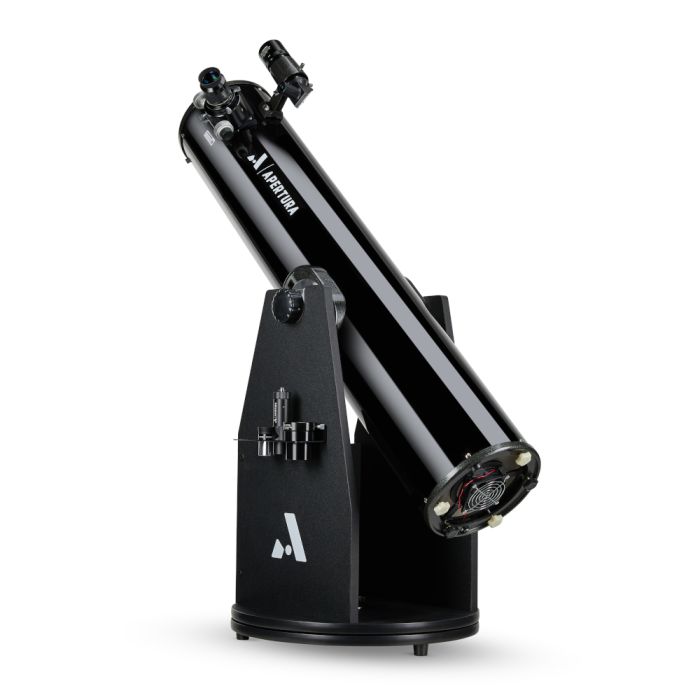

Buying Guide: How to Choose the Right 8-Inch Dobsonian Telescope
For beginners venturing into backyard astronomy, an 8-inch Dobsonian telescope often represents a compelling entry point. It offers a substantial aperture for observing planets, the Moon, and many deep-sky objects, while remaining comparatively affordable. However, not all 8-inch Dobsonians are the same, and understanding how to evaluate models like the Apertura AD8 can help you make an informed choice tailored to your needs. This guide walks you through the key factors to consider, the tradeoffs involved, and where the Apertura AD8 fits into the broader landscape.
What Buyers Should Decide Before Choosing an 8-Inch Dobsonian Telescope
Before zeroing in on a specific 8-inch Dobsonian, it’s important to clarify what you want to achieve with your telescope and how you plan to use it. Ask yourself:
- Where will I primarily use the telescope? Will it stay mostly in your backyard, or do you want to travel with it?
- What objects am I most interested in observing? Planets, the Moon, star clusters, galaxies, or all of the above?
- How much setup complexity am I comfortable with? Are you looking for something simple to assemble and operate or willing to learn more involved procedures?
- What is my budget and what value do I expect for it? Are you looking for an all-in-one package or willing to buy accessories separately?
Answering these questions upfront will help you weigh the tradeoffs inherent in 8-inch Dobsonians and decide if a model like the Apertura AD8 matches your expectations or if another solution might be better.
Key Decision Factors When Buying an 8-Inch Dobsonian Telescope
1. Price and Value
Price is often the first filter for beginners. The Apertura AD8 sits in a budget-friendly range (around $179.99 as a reference price), but what sets it apart is the inclusion of several accessories that many competitors do not bundle. This can save you money and time sourcing additional gear later.
Consider how much value you get beyond just the telescope optics. The AD8’s package includes:
- Two eyepieces (30mm and 9mm) to cover low and high magnification
- A full-sized right-angle 8×50 finder scope for easier object location
- A dual-speed focuser for precise focusing
- Collimation tools to maintain optical alignment
- An extension tube and 1.25” adapter for eyepiece flexibility
- Additional accessories like a moon filter and laser collimator depending on the listing
These inclusions improve out-of-the-box usability and reduce future expenses, making the AD8 a strong value proposition. However, some cheaper alternatives may offer fewer accessories but still deliver good optical performance, so weigh whether the bundled extras justify the price difference for your needs.
2. Performance: Aperture and Optical Quality
The 8-inch (203mm) aperture on the AD8 is a significant size for a beginner telescope, enabling bright and detailed views of planets, the Moon, and many deep-sky objects. Aperture directly correlates to light-gathering ability and resolution, so this size balances capability with cost effectively.
The AD8 uses a Dobsonian reflector design, which typically offers excellent aperture-to-price ratio. Optical quality on the AD8 is generally solid for its class, delivering sharp images under good viewing conditions. However, optical performance also depends on proper collimation and setup, which requires some learning.
Tradeoff: The Dobsonian’s large primary mirror provides impressive views but requires occasional maintenance and collimation to keep performance optimal, which may be a barrier for some beginners.
3. Ease of Use and Setup
Dobsonians are known for their simplicity compared to computerized or equatorial mounts. The Apertura AD8’s design facilitates straightforward manual pointing and tracking by moving the telescope on its base. The included right-angle finder scope simplifies locating objects, which benefits beginners.
Still, the AD8’s size and weight mean that initial assembly and collimation can be somewhat involved, especially if you’re unfamiliar with telescope optics. The inclusion of collimation tools helps, but expect a learning curve. The dual-speed focuser is a helpful feature for fine adjustments, improving the viewing experience once you’re comfortable.
Tradeoff: The AD8 balances beginner usability with offering enough features and accessories to support learning advanced skills, but it’s not as plug-and-play as smaller, fully automated telescopes.
4. Portability and Storage
The 8-inch Dobsonian form factor, including the Apertura AD8, is inherently bulky and heavy. This makes it less convenient for frequent transport or travel. The AD8 is best suited for stationary backyard use where it can remain setup or be moved short distances.
If you plan to carry your telescope to dark sky sites regularly or need a compact option for storage, the AD8’s size could be a drawback. Alternatives like Schmidt-Cassegrain telescopes offer greater portability but at a higher price and with smaller apertures for the same cost.
Tradeoff: You gain aperture and performance at the expense of portability and storage convenience.
5. Use Case Fit
The Apertura AD8 excels for:
- Amateur astronomy enthusiasts focusing on detailed planetary and lunar observation
- Backyard stargazing where the telescope can stay mostly stationary
- Beginners ready to invest time learning telescope operation and maintenance
It is less ideal for:
- Users prioritizing travel-friendly or portable telescopes
- Those wanting a minimal learning curve with fully automated targeting
- Buyers who prefer a very compact or lightweight design
Understanding your intended use helps avoid frustration. For example, if you want to casually observe from your backyard and are willing to learn, the AD8 offers strong optical capability with a comprehensive accessory kit. If you want to travel frequently or need a compact package, consider other designs.
Where the Apertura AD8 Fits Well
The Apertura AD8 is a practical choice for beginner astronomers who want to maximize aperture and optical performance without breaking the bank. Its bundled accessories reduce the need for additional purchases, making it a near-complete starter kit.
Because of its size and weight, it fits best in stationary or semi-stationary settings such as a backyard or home observatory. It is well-suited for users interested in:
- Exploring detailed views of planets like Jupiter and Saturn with their moons and rings
- Observing the Moon in high detail with included filters
- Learning basic telescope maintenance like collimation
- Building foundational astronomy skills with a manual mount and finder scope
Its value proposition lies in combining an 8-inch aperture with a well-rounded accessory set at a budget-conscious price point. This makes it particularly compelling for those who want a capable, all-in-one solution for backyard astronomy.
Where the Apertura AD8 Is the Wrong Fit
Despite its strengths, the Apertura AD8 is not ideal for every buyer. Its bulk and weight make it cumbersome if you need a telescope that can be easily transported to remote observing locations or stored in tight spaces.
If you prioritize portability, compactness, or minimal setup time, alternatives like Schmidt-Cassegrain telescopes (e.g., Celestron C5, C6, or C8) may better suit your needs. These models trade aperture size and some optical performance for a smaller footprint and easier transport.
Additionally, if you want a fully automated, computerized telescope that can locate and track objects for you, the manual Dobsonian design of the AD8 may feel limiting. While it encourages learning fundamental astronomy skills, it requires patience and manual operation.
What Kind of Buyer Should Choose the Apertura AD8
The Apertura AD8 is best for:
- Beginners committed to learning: Those willing to invest time understanding telescope setup, collimation, and manual operation will benefit from the AD8’s features and included tools.
- Value-focused buyers: If you want a comprehensive package with quality accessories included, the AD8 offers strong value for its price, reducing further accessory expenses.
- Backyard astronomers: Users who plan to keep their telescope primarily at home or in a fixed location where portability is less critical.
- Observers prioritizing aperture: Those who want the largest possible light-gathering power without moving into significantly higher budgets.
Conversely, avoid the AD8 if you:
- Need a telescope that travels easily or can be quickly set up and packed away
- Want a fully automated system with computerized object tracking
- Prefer a lighter, more compact design for storage constraints
Final Buying Advice
Choosing an 8-inch Dobsonian telescope like the Apertura AD8 involves balancing aperture, performance, ease of use, and portability against your personal preferences and observing habits. The AD8 stands out by offering a robust aperture and a full complement of accessories in a budget-friendly package, making it a strong candidate for many beginners focused on backyard astronomy.
Before purchasing, consider:
- Your observing location: If you have space to keep the telescope at home and don’t require frequent transport, the AD8’s size is manageable and rewarding.
- Your willingness to learn: Embrace the manual operation and maintenance aspects to get the most from this telescope.
- Accessory needs: The AD8’s included eyepieces, finder scope, collimation tools, and filters reduce startup costs
More Shopping Guide Articles
- Apertura AD8 Review: Best Value 8-Inch Dobsonian for Beginners
- Apertura AD8 vs GSO Dobsonian N 200/1200 Dob Deluxe: Which 8-Inch Dobsonian is Right for You?
- Apertura AD8 vs Sky-Watcher 8" Dobsonian: Balancing Price and Features
- Top 5 Alternatives to Apertura AD8: Best 8-Inch Telescopes for Backyard Stargazing