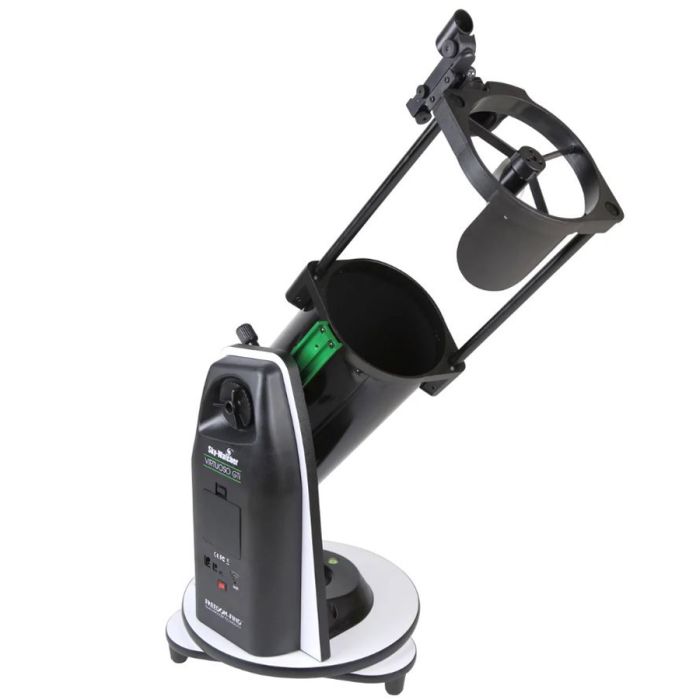

Buying Guide: How to Choose a Tabletop Dobsonian Like the Virtuoso GTi 150
For beginners and casual stargazers, a tabletop Dobsonian telescope offers an approachable way to explore the night sky without the complexity or bulk of traditional setups. The Virtuoso GTi 150 represents a modern, computerized take on this classic design, blending a manageable size with GoTo automation and decent optical performance. However, deciding if this type of telescope—and this model in particular—is right for you involves understanding key tradeoffs around portability, ease of use, imaging capability, and value.
This guide will help you clarify your priorities before purchase, weigh important decision factors, and see where the Virtuoso GTi 150 fits best—and where it might fall short—so you can make an informed choice tailored to your astronomy goals.
What Buyers Should Decide Before Choosing This Product
Before focusing on any specific tabletop Dobsonian like the Virtuoso GTi 150, clarify what you want most from your first telescope. Here are some essential questions to consider:
- What will I primarily observe? Are you mostly interested in planets, the Moon, bright deep-sky objects, or wide star fields? This affects aperture and focal length needs.
- How important is portability and ease of setup? Will you mostly use the telescope in your backyard, or do you want something compact for occasional travel?
- Do I want computerized GoTo and tracking? Automated object location can be a big help for beginners but may add complexity and power demands.
- Will I try astrophotography? Casual phone-based imaging is one thing; long-exposure deep-sky photography requires more specialized gear.
- What is my budget? Balancing features and performance within your price range is key to avoiding buyer’s remorse.
Answering these upfront will help you see if a tabletop Dobsonian, and the Virtuoso GTi 150 specifically, match your needs or if another style of telescope might serve you better.
Key Decision Factors
When evaluating the Virtuoso GTi 150 and similar telescopes, focus on several critical factors rather than just specs or brand reputation. Understanding tradeoffs here will clarify what you gain and what you compromise.
Aperture Size and Focal Length
The Virtuoso GTi 150 has a 150mm (6-inch) aperture with a 750mm focal length (~f/5), creating a balance between light-gathering power and a wide field of view. This aperture size is large enough to reveal impressive planetary detail and many brighter deep-sky objects. However, it is smaller than many manual Dobsonians in the 8-inch range, which offer more light gathering but at the cost of size and weight.
Choosing a 150mm aperture keeps the telescope portable and manageable while delivering solid performance for casual observing. If you prioritize maximum brightness and detail in faint objects, a larger manual Dobsonian might be better, but note the tradeoff in portability and setup effort.
GoTo and Tracking vs Manual Operation
The Virtuoso GTi 150’s integrated GoTo and tracking functions simplify finding and following celestial objects using a smartphone app. This feature dramatically lowers the learning curve for beginners and can enhance enjoyment during shorter observing sessions. The built-in WiFi control means no need for external hand controllers, adding convenience.
However, the GoTo system depends on battery power and adds some weight and complexity. Manual Dobsonians, by contrast, offer simplicity, no power needs, and often larger apertures for the price but require star-hopping skills and patience. For buyers unsure about learning manual navigation, the Virtuoso’s automation is a strong advantage, though it limits astrophotography potential due to mount stability and focuser design.
Portability and Storage
Portability is a major consideration. The Virtuoso GTi 150 is a lightweight, collapsible tabletop Dobsonian designed to be compact and easy to transport. Its size makes it ideal for backyard use and short trips, fitting easily in a car or storage closet. Still, as a tabletop scope, it requires a stable surface for setup, which may not always be convenient outdoors.
Buyers seeking ultra-compact travel scopes or those who want to carry their telescope on hikes or flights might find this model less ideal. In contrast, larger manual Dobsonians or dedicated astrophotography setups tend to be bulkier and heavier, making the Virtuoso a better choice if portability within a car or home is your priority.
Imaging Capabilities and Focuser Types
The Virtuoso GTi 150 supports casual planetary imaging and phone-based astrophotography thanks to its GoTo tracking and helical focuser. The helical focuser, while lightweight and simple, offers limited precision and stability, restricting long-exposure astrophotography potential.
Serious deep-sky imaging demands more robust focusers and stable equatorial mounts, which are absent here. Thus, if your goal is extensive astrophotography, especially with heavier cameras and long exposures, a dedicated astrophotography setup will serve you better. For visual observers or casual imaging, the Virtuoso’s features hit a sweet spot between simplicity and capability.
Battery and Power Requirements
The GoTo system on the Virtuoso GTi 150 is battery-powered, which enhances portability but requires monitoring power levels to avoid losing tracking mid-session. Unlike manual scopes, which need no external power, this telescope’s convenience comes with the responsibility of keeping batteries charged.
This factor is worth considering if you plan extended observing sessions far from power sources or if you prefer minimal equipment management. Some users supplement with portable power packs, but this adds to gear complexity.
Where the Virtuoso GTi 150 Fits Well
The Virtuoso GTi 150 excels as a beginner-friendly, value-packed tabletop Dobsonian for casual visual astronomy and short-exposure planetary imaging. It suits users who want a manageable size without sacrificing too much aperture, desire automated object location to avoid steep learning curves, and appreciate the convenience of smartphone control.
- Home and backyard astronomy: Easy setup on a porch or patio and enough aperture for rewarding views.
- Beginners seeking guided entry: GoTo tracking helps overcome early frustration in finding targets.
- Casual planetary and lunar imaging: Phone-based photography combined with built-in tracking supports simple astrophotography experiments.
- Users valuing strong price-to-feature ratio: The $141 price point offers impressive capability for the cost.
Its collapsible design and lightweight build make it practical for car trips and quick star parties, provided you have a stable tabletop surface. The integrated WiFi control streamlines operation, reducing setup time and enhancing enjoyment.
Where It Is the Wrong Fit
While versatile, the Virtuoso GTi 150 is not ideal for every stargazer. Buyers should look elsewhere if:
- Portability is paramount: Backpacking or hiking with your scope demands ultra-compact, lightweight designs smaller than this tabletop Dobsonian.
- Imaging ambitions exceed casual planetary shots: Serious astrophotographers need stable equatorial mounts, precise focusers, and larger apertures—features lacking here.
- Deep-sky performance is the priority: Larger manual Dobsonians with 8-inch or greater apertures deliver more light-gathering power for faint nebulae and galaxies.
- Battery-free operation is desired: Manual telescopes or non-computerized scopes avoid power dependencies and risk of mid-session outages.
- Surface availability is limited: Since it requires a tabletop or solid platform, this scope is less suited for uneven terrain or field use without a sturdy base.
Understanding these limitations helps set realistic expectations and prevents disappointment from mismatched equipment and use cases.
What Kind of Buyer Should Choose the Virtuoso GTi 150
The Virtuoso GTi 150 is best suited for:
- Beginner buyers who want an easy-to-use, guided introduction to astronomy without complex setup or manual star-hopping.
- Value-conscious hobbyists seeking a solid balance of aperture, portability, and computerized features at an affordable price.
- Casual observers who primarily engage in backyard astronomy sessions and want quick, reliable object location.
- Those interested in casual planetary imaging with smartphone adapters and short exposures rather than full astrophotography rigs.
Buyers who prioritize convenience, a good field of view, and moderate aperture without stepping into specialized astrophotography or large aperture territory will find the Virtuoso GTi 150 a compelling option.
Final Buying Advice
Choosing a tabletop Dobsonian like the Virtuoso GTi 150 boils down to balancing your astronomy goals against practical tradeoffs. This telescope offers a compelling package for beginners and casual users who want:
- Easy setup and intuitive smartphone-controlled GoTo operation.
- Aperture sufficient for crisp planetary views and many deep-sky objects.
- Portability that fits car travel and backyard use, albeit requiring stable surfaces.
- Good value at an accessible price point around $141.
However, be mindful of its limitations: the helical focuser and mount restrict astrophotography beyond short exposures; battery dependence requires planning; and the tabletop form factor demands a flat setup surface. If you want larger aperture, enhanced astrophotography capability, or ultra-portable hiking scopes, consider other telescope types.
Ultimately, the Virtuoso GTi 150 is a sensible, beginner-friendly choice for those seeking a modern Dobsonian experience with automated convenience and solid optical performance. If your priorities align with these strengths and you accept the inherent tradeoffs, this telescope will serve as an excellent gateway to the cosmos.
More Shopping Guide Articles
- Virtuoso GTi 150 Review: Best Beginner Tabletop Dobsonian?
- Virtuoso GTi 150 vs Larger Aperture Manual Dobsonians: Portability vs Power
- Virtuoso GTi 150 vs Dedicated Astrophotography Setups: Casual Use or Serious Imaging?
- Top Alternatives to the Virtuoso GTi 150: Manual Dobsonians and Smart Astrophotography Scopes