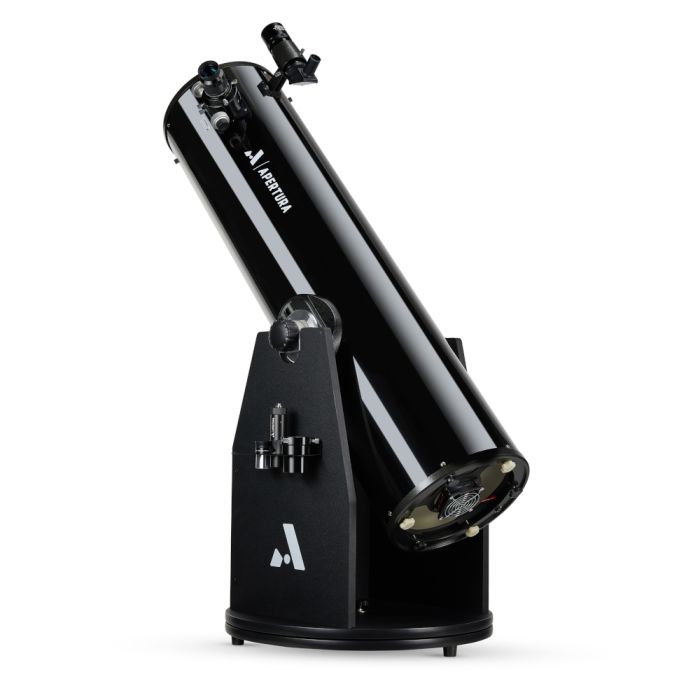

Apertura AD10 Review: A Mid-Range 10″ Dobsonian for Serious Stargazers
For intermediate and advanced amateur astronomers ready to move beyond smaller telescopes, the Apertura AD10 offers a compelling mix of aperture, optical quality, and value. Positioned as the “Goldilocks” model in Apertura’s AD series, this 10″ Dobsonian aims to balance the desire for deep-sky viewing with manageable size and price. But does it truly deliver in real-world backyard astronomy, and who will find it the perfect fit? This hands-on review digs into the performance, build, portability, and tradeoffs to help you decide if the AD10 deserves a spot in your observatory.
Quick Verdict
The Apertura AD10 delivers excellent optical performance for its price point, offering wide-field views of deep sky objects that will satisfy serious stargazers upgrading from smaller scopes. Its solid Dobsonian mount provides stable tracking during extended observation sessions, and the scope’s size strikes a reasonable balance between aperture and portability. However, the AD10’s heavier weight and basic included accessories mean it’s best suited for users willing to invest time in setup tweaks and potential upgrades. If you want a large aperture reflector that performs well out of the box but don’t require ultra-light travel or premium extras, the AD10 is a strong contender in the mid-range Dobsonian market.
What This Product Does Well
At the core of the Apertura AD10’s appeal is its 10-inch aperture, which gathers 125% more light than its smaller AD8 sibling. This aperture size unlocks detailed views of planetary features like Jupiter’s belts and Saturn’s rings, as well as thousands of deep sky objects including galaxies, nebulae, and star clusters. The scope’s parabolic primary mirror and smooth optical coatings provide sharp, contrast-rich images that hold up well even at higher magnifications.
The Dobsonian mount is another highlight. Designed for stability and smooth manual tracking, it allows long, steady observations without frequent vibrations or drift. While the mount is straightforward, it’s robust enough to support the 10″ optical tube without wobble, which is vital for deep-sky work where subtle details matter.
Included accessories like the Telrad finder enhance the user experience, making object location easier in dark skies. Optional add-ons such as a coma corrector and upgraded eyepieces allow users to tailor the system for improved wide-field views and sharper edge-to-edge clarity—important for a Newtonian design of this size.
- Strong optical performance: sharp, bright views with good contrast
- Stable, no-frills Dobsonian mount: reliable manual tracking
- Good aperture to price ratio: accessible for many intermediate astronomers
- Upgrade-friendly: supports coma corrector, collimation tools, and custom accessories
The Compromises Buyers Need to Understand
Despite its strengths, the Apertura AD10 has tradeoffs that buyers should weigh carefully. The 10″ aperture and Dobsonian design naturally bring bulk and weight. At roughly 40 pounds or more, the scope is significantly heavier and larger than compact SCTs or Maksutov-Cassegrains. While Apertura offers DIY caster modifications that improve mobility, transporting the AD10 remains a challenge for users without a dedicated vehicle or storage space.
Another consideration is the mount and accessory package. The AD10 includes a basic Dobsonian base and a Telrad finder but lacks premium features such as friction brakes or sophisticated altitude bearings found on higher-end models. This means the mount requires manual adjustments and occasional re-centering during sessions, which could frustrate beginners or those expecting a “set and forget” experience.
Optically, the Newtonian design can exhibit coma—star elongation near the field edges—especially at low magnifications. While a coma corrector is available as an upgrade, it adds to the overall cost and complexity. Users who want perfect wide-field star shapes will want to budget for this accessory. Finally, the scope’s collimation (mirror alignment) demands some skill and regular checks to maintain peak performance, which adds a learning curve.
- Moderate to heavy weight: portability limited without modifications
- Basic mount features: manual tracking requires user attention
- Coma present without corrector: upgrade needed for best wide-field views
- Collimation required: maintenance skill needed to maximize optics
Real-World Use Cases and Beginner Experience
In backyard star parties or amateur astronomy club meetings, the Apertura AD10 shines as a reliable workhorse. Its aperture allows detailed exploration of objects that smaller scopes can only hint at—bright galaxies, intricate nebulae, and complex star clusters become accessible and impressive. Users report satisfying views of the Orion Nebula’s core and the Andromeda galaxy’s spiral arms, experiences that can reignite one’s passion for stargazing.
For beginners stepping up from 6″ or 8″ scopes, the AD10 represents a noticeable jump in light gathering and resolution. However, the increased setup complexity and weight mean it’s not an instant plug-and-play device. New users should expect a learning curve with collimation, manual alignment, and mount balancing. The Telrad finder helps with star hopping, but patience and practice are necessary to locate faint deep sky targets efficiently.
Portability is a frequent discussion point in real use. The scope’s size demands a dedicated storage spot and a way to move it safely—some owners add wheels or casters to the base, which requires DIY skills but greatly eases transport. Without such modifications, the scope is best suited to semi-permanent backyard setups rather than frequent travel.
- Best for backyard and home observatories where size and setup time are manageable
- Great for visual deep-sky observation of galaxies, nebulae, and star clusters
- Requires beginner willingness to learn collimation and manual tracking
- Transport aided by DIY caster mods but not ideal for travel-first users
Who Should Buy It
If you’re an intermediate or advanced amateur astronomer ready to upgrade from smaller telescopes and want a solid 10″ aperture with wide-field capabilities, the Apertura AD10 is an excellent choice. It fits well for those who have a dedicated observing spot or backyard and can handle moderate setup and maintenance effort. Users who appreciate the value of good optics paired with a stable mount, and who are comfortable investing in optional upgrades to tailor the system, will find the AD10 rewarding.
The scope’s price range—typically between $350 and $1000 for used units—makes it accessible for serious hobbyists seeking a large aperture without jumping to the bulkier 12″ or 16″ Dobsonians. It’s particularly suitable for those focused on visual astronomy rather than astrophotography, as the manual mount and tube balance favor quick visual sessions over long exposures.
- Intermediate astronomers upgrading from 6″–8″ scopes
- Observers prioritizing aperture and image quality over ultra-portability
- Users with backyard or home observatories and transport options
- Enthusiasts open to tuning, collimation, and accessory upgrades
Who Should Not Buy It
The Apertura AD10 is not ideal for users who prioritize ultra-portability or frequent travel to dark sites. Its bulk and weight make it cumbersome for backpacking or carrying long distances. Beginners who want a no-fuss, out-of-the-box telescope with minimal setup and maintenance might find the collimation and manual tracking requirements frustrating. Likewise, those seeking computerized GoTo mounts or advanced tracking features will want to look elsewhere.
Additionally, users who want premium build materials, high-end accessories included, or a fully tuned optical system at purchase might find the AD10’s basic included package limiting. The need to purchase optional coma correctors, flocking paper, or upgraded eyepieces to achieve the best experience adds complexity and cost.
- Travel-first buyers needing lightweight, compact scopes
- Beginners seeking plug-and-play ease with minimal maintenance
- Observers wanting computerized or motorized tracking
- Users unwilling to invest time or money in upgrades
Final Recommendation
The Apertura AD10 stands out as a thoughtfully designed mid-range 10″ Dobsonian telescope that meets the needs of serious backyard stargazers and intermediate astronomers upgrading from smaller instruments. Its combination of ample aperture, solid optical quality, and stable mount delivers satisfying views of planets and deep sky objects alike. While the scope’s size and weight require planning for transport and storage, these tradeoffs are reasonable given the performance gains.
Buyers who value strong aperture-to-price ratio and are prepared to engage with collimation, manual tracking, and potential accessory upgrades will find the AD10 a reliable and enjoyable companion for years of visual astronomy. However, if your priorities include maximum portability, beginner-friendly simplicity, or advanced mount features, you should consider other options better aligned with those needs.
In sum, the Apertura AD10 is a solid “sweet spot” telescope for dedicated observers who want to push their viewing experience beyond entry-level gear without stepping up into the bulk and cost of larger Dobsonians. With some setup effort and possible upgrades, it unlocks a rewarding window to the night sky that will captivate intermediate and advanced amateur astronomers alike.
More Shopping Guide Articles
- Buying Guide: How to Choose the Right 10" Dobsonian Telescope Like the Apertura AD10
- Apertura AD10 vs Sky-Watcher 10" Dobsonian: Which 10" Dobsonian Offers Better Value?
- Apertura AD10 vs Orion 10" Dobsonian: Stability and Optics in the 10" Dobsonian Class
- Top Alternatives to the Apertura AD10: SCTs, Maksutov-Cassegrains, and Larger Dobsonians Compared