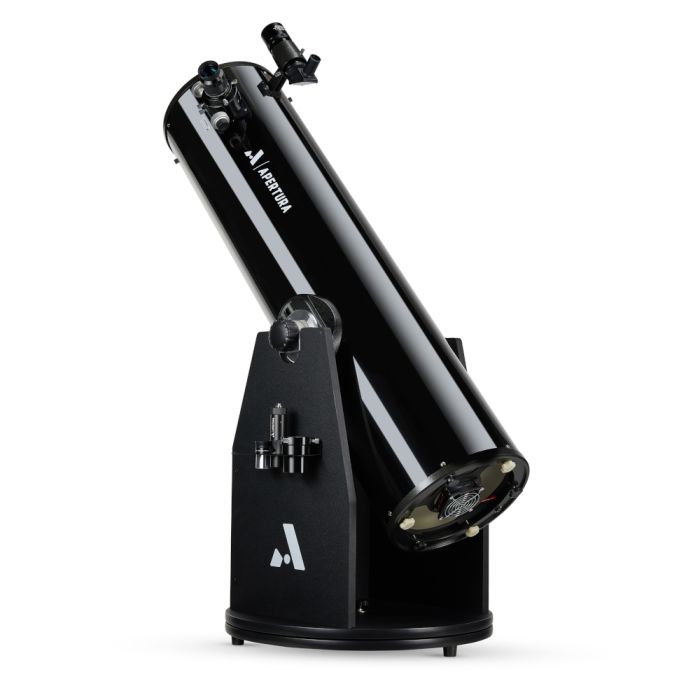

Apertura AD10 vs Orion 10″ Dobsonian: Stability and Optics in the 10″ Dobsonian Class
For intermediate astronomers looking to elevate their night sky observations, a 10-inch Dobsonian telescope is often the gateway to impressive planetary and deep sky views. Among the popular options, the Apertura AD10 and the Orion 10″ Dobsonian stand out as reliable choices with solid optics and traditional Dobsonian mounts. This comparison zeroes in on the practical differences that matter most: optical clarity, mount stability, pricing, and accessory completeness. Understanding these factors will help you decide which 10″ Dobsonian fits your observing style, budget, and upgrade ambitions.
Quick verdict
The Apertura AD10 delivers dependable 10-inch aperture optics with a slightly more adaptable mount design, offering optional upgrades like coma correctors and collimation tools that appeal to users who want to customize their setup over time. Its price point is competitive, especially in the used market, and it includes a Telrad finder, enhancing aiming precision out of the box.
The Orion 10″ Dobsonian, meanwhile, offers similarly solid optical performance with a reputation for a stable, well-constructed mount. It tends to come with a more basic accessory package but benefits from wide availability and strong brand recognition. The Orion is a dependable choice for those who want straightforward performance without immediate accessory upgrades.
Your choice boils down to whether you value the Apertura AD10’s upgrade potential and included finder or prefer the Orion’s traditional, stable mount and simpler package for a slightly lower entry barrier.
Key differences at a glance
- Optical performance: Both offer comparable 10″ parabolic mirrors with good light-gathering, but Apertura AD10 supports optional coma correctors for improved wide-field views.
- Mount stability: Orion’s mount is known for solid, no-nonsense stability, while Apertura’s base is stable but offers more adaptability like DIY caster additions.
- Price and value: Apertura AD10 is competitively priced in the $350–$1000 used range, including a Telrad finder; Orion often comes with fewer accessories but may have a slightly lower new retail price.
- Accessories: Apertura includes a Telrad finder and optional upgrade paths, whereas Orion’s package is more basic, typically including standard eyepieces and a simple finder scope.
- Portability and setup: Both are similarly sized Dobsonians with moderate portability; Apertura’s design allows caster modifications for easier movement.
Price and value
When evaluating price, the Apertura AD10 is typically found in the used market between $350 and $1000, a range that reflects its mid-tier positioning. This pricing is attractive for buyers wanting a substantial aperture without a premium price tag. The inclusion of a Telrad finder adds immediate value, improving target acquisition without requiring an additional purchase.
Orion’s 10″ Dobsonian often retails at a comparable or slightly lower price point in new condition, but generally includes fewer accessories. Buyers may need to invest in additional eyepieces or a better finder scope to match the Apertura’s out-of-box usability. However, Orion’s broad retail presence and frequent promotions can make it an accessible option for budget-conscious buyers.
In summary, if you prioritize a more complete starter package and optional upgrade paths, Apertura AD10 offers better value upfront. If your budget is tight and you’re comfortable adding accessories over time, Orion’s model might stretch your dollars further initially.
Performance and practical use
Both telescopes share a 10-inch parabolic primary mirror, delivering strong light-gathering capability for detailed planetary views and rich deep sky observations. Image sharpness and contrast are comparable, with users reporting crisp views of the Cassini Division on Saturn and intricate details on Jupiter’s cloud bands from either scope.
The Apertura AD10 has a slight edge in supporting coma correctors, an optional upgrade that significantly improves edge-of-field sharpness for wide-field deep sky viewing. This can be especially valuable for observers targeting nebulae and galaxies, where field distortion is more noticeable. Orion’s Dobsonian generally lacks this upgrade path, so wide-field observers may find the Apertura more appealing for extended sessions.
In practical use, both telescopes excel in backyard settings and semi-permanent installations. Their large apertures allow for deep sky observing, but users should note the tradeoff: these scopes are moderately heavy and bulky, so portability is limited compared to smaller or more compact designs.
- Apertura AD10: Slightly more adaptable optics with upgrade potential; supports coma corrector for sharper wide fields.
- Orion 10″ Dobsonian: Reliable optics with stable, traditional Dobsonian mount; straightforward but less customizable.
Ease of setup / ease of use
Both the Apertura AD10 and Orion 10″ Dobsonian are manual telescopes with simple Dobsonian mounts, which means setup mainly involves assembling the optical tube and base, collimating the optics, and balancing the mount. Neither model offers computerized tracking, so manual aiming and tracking skills are required.
The Apertura AD10 includes a Telrad reflex sight finder, which many users find easier for star hopping and initial alignment, especially under dark skies. This finder reduces the initial learning curve slightly compared to Orion’s typical included finderscope, which is a basic optical finder that can be less intuitive for beginners.
From a mechanical standpoint, the Orion mount is often praised for its smooth altitude and azimuth motions, providing stable viewing without wobble. The Apertura’s mount is similarly stable but offers DIY-friendly features such as the ability to add casters for easier transport, though this requires some assembly skill.
In terms of portability, both scopes require some effort to move due to their size and weight. The Apertura AD10’s moderate weight and caster upgrade potential make it somewhat easier to reposition in a backyard setting, while Orion’s mount is heavier but rock-solid once in place.
Accessories / feature completeness
Apertura’s AD10 comes with a Telrad finder included, which is a significant advantage for users who want precise, no-fuss target alignment. Additionally, Apertura offers optional upgrades such as collimation tools, coma correctors, better eyepieces, flocking paper to reduce internal reflections, and even transport cases. This upgrade path makes the AD10 attractive to users who plan to refine and enhance their setup over time.
Orion’s 10″ Dobsonian typically ships with a more basic accessory set: a standard 25mm Plossl eyepiece and a simple 8×50 finderscope. While these are adequate for casual observing, serious users often invest in additional eyepieces or a better finder to improve performance. The Orion mount and base are solid but don’t offer modular upgrade options like caster attachments or included collimation aids.
In summary, Apertura’s package is more complete for users who want to start observing immediately with a quality finder and the option to enhance the telescope’s capabilities. Orion offers a more barebones but reliable package that can serve casual observers or those who prefer to customize at their own pace.
Which buyer should choose which option
Choose the Apertura AD10 if you:
- Want a 10″ Dobsonian with a comprehensive starter package including a Telrad finder.
- Plan to upgrade your telescope over time with coma correctors, better eyepieces, or collimation tools.
- Value a mount design that can be modified with casters for easier backyard mobility.
- Are an intermediate astronomer seeking detailed deep sky views and willing to invest in tweaks for improved optics.
Choose the Orion 10″ Dobsonian if you:
- Prefer a straightforward, stable Dobsonian mount with proven reliability.
- Are looking for a dependable 10″ telescope at a potentially lower upfront cost.
- Don’t need advanced accessory upgrades immediately and are comfortable adding to your kit gradually.
- Value brand recognition and a widely available model with strong community support.
Both telescopes are well-suited for backyard stargazing, planetary and deep sky observation, and users upgrading from smaller scopes. The choice hinges on whether you want a more complete package with upgrade paths (Apertura AD10) or a solid, simple setup with a stable mount (Orion 10″ Dobsonian).
Conclusion
In the competitive 10″ Dobsonian segment, the Apertura AD10 and Orion 10″ Dobsonian provide close optical performance and similar mount stability, making either a capable companion for intermediate astronomers. The Apertura AD10’s inclusion of a Telrad finder and optional upgrade accessories give it an edge for buyers interested in customizing and improving their setup over time. Its mount’s adaptability, including the possibility of DIY casters, also appeals to users who want easier mobility in their backyard or observing site.
Conversely, the Orion 10″ Dobsonian shines as a reliable, no-frills option with a sturdy mount and solid optics, ideal for buyers who want a proven performer with less complexity and a potentially lower initial investment. While its accessory package is more basic, Orion’s broad availability and brand reputation provide confidence and ease of purchase.
Ultimately, if you prioritize a more complete starter kit with upgrade potential and flexibility, the Apertura AD10 is the better fit. If you prefer a dependable, traditional Dobsonian experience with fewer bells and whistles, the Orion 10″ Dobsonian is a sensible choice. Both will deliver rewarding views of the night sky, so consider your budget, willingness to upgrade, and observing style when making your decision.
More Shopping Guide Articles
- Apertura AD10 Review: A Mid-Range 10" Dobsonian for Serious Stargazers
- Buying Guide: How to Choose the Right 10" Dobsonian Telescope Like the Apertura AD10
- Apertura AD10 vs Sky-Watcher 10" Dobsonian: Which 10" Dobsonian Offers Better Value?
- Top Alternatives to the Apertura AD10: SCTs, Maksutov-Cassegrains, and Larger Dobsonians Compared