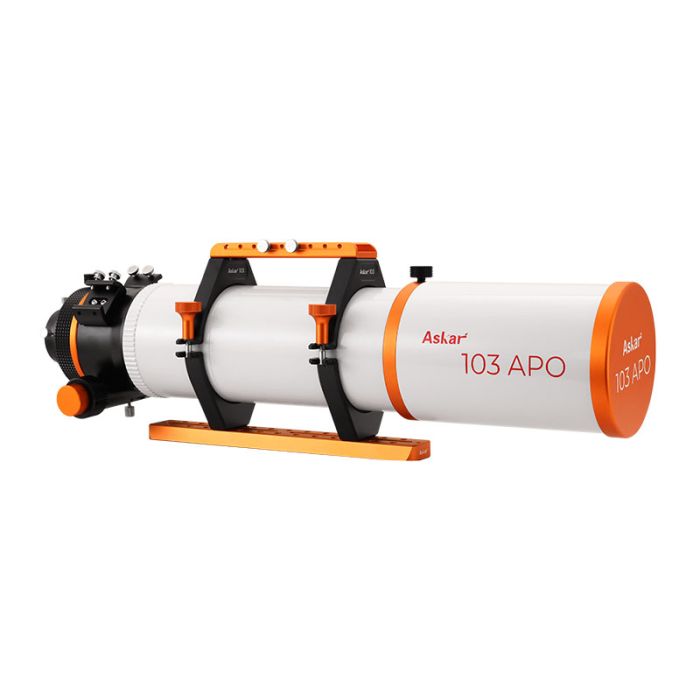

Askar 103APO vs Sky-Watcher 72ED: Portability and Imaging Quality Compared
Intermediate astrophotographers often face a pivotal choice when upgrading their gear: selecting a refractor telescope that balances optical quality, ease of use, and portability. The Askar 103APO and the Sky-Watcher 72ED are two popular options in the mid-aperture and beginner-friendly categories, respectively. This comparison will clarify their key differences, helping you decide which scope aligns best with your astrophotography goals and practical needs.
Quick Verdict
The Askar 103APO delivers higher optical performance with a larger aperture and versatile reducer options, making it ideal for intermediate users focusing on detailed deep-sky and planetary imaging. However, it requires a sturdier mount and involves a heavier, less portable setup. The Sky-Watcher 72ED, by contrast, offers good image quality in a lighter, more compact package that’s easier for beginners to handle and set up, especially if wide-field imaging and mobility are priorities. Your choice hinges on whether you prioritize imaging versatility and optical power or simplicity and portability.
Key Differences at a Glance
- Aperture & Optics: 103mm triplet apochromatic (Askar) vs. 72mm ED doublet (Sky-Watcher)
- Weight & Portability: ~10.5 lbs (Askar) requiring mid-range mounts vs. lighter, more compact Sky-Watcher
- Imaging Versatility: Multiple reducers and flattener included with Askar for focal length flexibility vs. fixed focal length and simpler setup on Sky-Watcher
- Ease of Use: More complex modular system on Askar vs. beginner-friendly simplicity on Sky-Watcher
- Price Point: Around $1000 for Askar 103APO vs. generally lower cost for Sky-Watcher 72ED
Price and Value
The Askar 103APO is priced around $1000, positioning it as a solid mid-level investment for astrophotographers upgrading from entry-level scopes. This price includes multiple optical reducers (1.0x flattener, 0.8x reducer, and 0.6x reducer), providing flexibility in framing and sensor compatibility without requiring additional costly accessories. The modular design also supports optional accessories like a guidescope, enhancing its appeal for imaging versatility.
In contrast, the Sky-Watcher 72ED typically comes at a lower price point, offering a more budget-friendly entry into quality refractor telescopes. While it doesn’t include the range of reducers or modular features of the Askar, it delivers good optical performance and portability at a value that suits beginners or those prioritizing simplicity. For buyers seeking to minimize initial investment without sacrificing decent image quality, the 72ED represents solid value.
Ultimately, the Askar 103APO’s higher cost is justified by its larger aperture and accessory completeness, whereas the Sky-Watcher 72ED offers a cost-effective, lightweight solution with fewer bells and whistles.
Performance and Practical Use
Optical quality is a core consideration. The Askar 103APO’s 103mm triplet apochromatic design provides sharper star images and more contrast across a full-frame sensor compared to the Sky-Watcher 72ED’s 72mm ED doublet. This translates to better resolution on smaller deep-sky objects and planets, allowing intermediate astrophotographers to capture more detailed images.
The Askar’s native focal length of 700mm (f/6.8) is versatile, and with included reducers, it supports focal lengths down to 420mm, broadening field of view options for wide-field imaging. This makes the 103APO suitable for a wide range of targets, from nebulae to planetary details.
Conversely, the Sky-Watcher 72ED’s shorter focal length results in a naturally wider field of view, making it well-suited for large star clusters and expansive nebulae. Its optical design yields good contrast and sharpness within its aperture category, but it cannot match the Askar 103APO’s light-gathering power or fine detail resolution on smaller targets.
In practical terms, users looking to image faint, small celestial objects or aiming for higher-resolution planetary shots will benefit from the Askar’s enhanced performance. Those prioritizing ease of capturing wide-field scenes or who mostly focus on brighter, larger objects may find the Sky-Watcher 72ED sufficient and easier to manage.
Ease of Setup / Ease of Use
The Sky-Watcher 72ED shines in ease of use. Its lighter weight and simpler optical configuration mean it can be mounted on a wider variety of mounts, including lighter and more affordable options. This lowers the barrier for beginners or casual users who want a straightforward setup and quick deployment in the field.
On the other hand, the Askar 103APO’s weight of approximately 10.5 lbs and modular design demand a more robust mount capable of supporting the scope’s mass and accessories. The inclusion of multiple reducers and a removable body extension adds setup complexity, requiring users to understand which configuration suits their imaging goals. While not overly complicated for intermediate users, this system can be a hurdle for newcomers or those wanting minimal fuss.
Therefore, the Sky-Watcher 72ED is generally better for users who value quick and simple operation or who may not have a heavy-duty mount. The Askar 103APO appeals to those comfortable managing a more involved setup to unlock expanded imaging capabilities.
Accessories / Feature Completeness
The Askar 103APO comes well-equipped with a set of optical reducers and a flattener, allowing users to tailor the focal length between 700mm and 420mm. This versatility supports a broad range of astrophotography projects and sensor sizes without additional purchases. The optional guidescope available through pre-order further enhances guiding accuracy for long exposures, an important feature for serious imagers.
In contrast, the Sky-Watcher 72ED typically includes fewer accessories, offering a fixed optical path without reducers or flatteners. While this simplifies the system, users who want to expand their imaging options may need to invest in compatible reducers or flatteners later, increasing total cost and setup complexity.
From a completeness standpoint, the Askar 103APO provides a more comprehensive package out of the box, supporting modular growth and advanced imaging needs. The Sky-Watcher 72ED is more basic but sufficient for users who prefer a leaner, straightforward system.
Which Buyer Should Choose Which Option?
Choose the Askar 103APO if you:
- Are an intermediate astrophotographer aiming to capture detailed deep-sky and planetary images with a versatile optical system.
- Have or plan to invest in a mid-range mount capable of supporting a heavier refractor and accessories.
- Value the flexibility of multiple reducers and a modular setup that adapts to various imaging scenarios.
- Prioritize optical performance and are willing to manage a slightly more involved setup process.
Choose the Sky-Watcher 72ED if you:
- Are a beginner or intermediate user seeking a lightweight, easy-to-use telescope that delivers good image quality without complexity.
- Prefer a more portable and compact setup that can be mounted on lighter, more affordable mounts.
- Focus primarily on wide-field astrophotography of larger celestial objects and want quick setup with minimal accessories.
- Are budget-conscious and want a good balance of performance and portability at a lower price point.
Conclusion
Both the Askar 103APO and Sky-Watcher 72ED fill important niches in the astrophotography market, but they target different user priorities. The Askar 103APO is a versatile, mid-aperture APO refractor that delivers superior optical performance and accessory flexibility, suited for intermediate astrophotographers committed to detailed imaging and who have the mount capacity to support it.
Meanwhile, the Sky-Watcher 72ED offers a lighter, more beginner-friendly experience with good optical quality and portability, ideal for those who prioritize ease of use, wide-field imaging, or a lower overall investment.
When choosing between these two, consider your primary targets, willingness to handle setup complexity, mount strength, and portability needs. If your goal is to push image quality and versatility with a moderately sized APO refractor, the Askar 103APO is the better fit. If you want a straightforward, lightweight telescope with good optics for general astrophotography and visual use, the Sky-Watcher 72ED is a compelling choice.