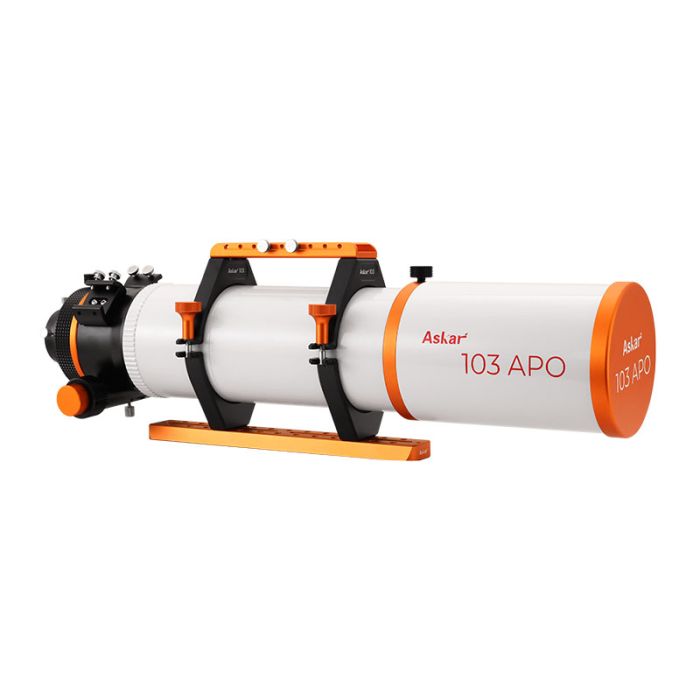

Askar 103APO Review: Versatile Mid-Aperture APO for Astrophotography
For intermediate to advanced astrophotographers hunting for a mid-aperture apochromatic refractor that balances optical quality, modularity, and price, the Askar 103APO presents an intriguing proposition. Positioned around $1000, this triplet APO offers a set of reducers and optical refinements that promise versatility in imaging a variety of celestial targets. But does it deliver the consistent optical performance and use-case flexibility it advertises? In this review, we dissect the Askar 103APO’s strengths and compromises to help you decide if it fits your astrophotography ambitions.
Quick Verdict
The Askar 103APO is a solid mid-aperture triplet apochromatic refractor that shines in versatility and modularity, especially for deep-sky and planetary imaging at an accessible price point. Its included 1.0x flattener and 0.8x and 0.6x focal reducers enable a broad range of focal lengths, making it adaptable for various sensor sizes and target types. However, potential chromatic aberration and moderate weight may deter users sensitive to optical purity or those needing ultra-portable setups. Overall, it’s best suited for intermediate astrophotographers who want a flexible, feature-rich APO without stepping into the premium price tier.
What This Product Does Well
The Askar 103APO’s standout feature is its triplet air-spaced lens design. This configuration employs ED glass elements to minimize chromatic aberration and deliver high-contrast, sharp star images across a full-frame sensor. The scope’s native focal length of 700mm at f/6.8 strikes a practical balance—long enough to resolve planetary details yet wide enough for many deep-sky objects.
One of its biggest assets is the included set of reducers: a 1.0x flattener, a 0.8x reducer, and a 0.6x reducer. This trio allows users to tailor the focal length from 700mm down to 420mm, significantly widening the field of view for larger targets or faster imaging sessions. The removable body extension, required for the 0.6x reducer and binoviewer use, enhances modularity, making this telescope adaptable to multiple imaging configurations without purchasing extra optical trains.
- Optical quality: The triplet APO lens delivers well-corrected, crisp stars across the field, suitable for full-frame sensors.
- Reducer versatility: Multiple reducers expand focal length options, improving framing flexibility for deep-sky and planetary targets.
- Moderate aperture: At 103mm, the aperture balances light-gathering power and manageable size, fitting well on mid-range mounts.
- Build and features: Air-spaced triplet design with ED glass, binoviewer ready, and optional guidescope pre-order add practical imaging capabilities.
- Price point: At roughly $1000, it offers good value for intermediate astrophotographers seeking APO quality without premium costs.
The Compromises Buyers Need to Understand
Despite its strengths, the Askar 103APO comes with tradeoffs that may impact user satisfaction depending on priorities. Firstly, while the triplet design controls chromatic aberration better than doublets, some users have reported noticeable chromatic fringing, particularly on bright stars and planetary targets. This optical impurity might require additional post-processing or filter use for demanding imagers.
Secondly, the telescope’s weight—around 10.47 pounds—while manageable, is on the heavier side for a 103mm refractor. This weight necessitates a sturdy mid-range mount, which can increase the overall system cost and reduce portability for field use or travel. Beginners or those seeking ultra-light setups may find this less convenient.
Finally, the modular design, while flexible, adds complexity. Using the 0.6x reducer requires removing the body extension, and binoviewer compatibility demands additional accessories and adjustments. This means the scope is not a simple plug-and-play unit; users must invest time in learning the system and configuring it optimally for each session.
- Chromatic aberration: Some units exhibit fringing that challenges purists and planetary imagers.
- Weight and mount requirements: Heavier than many similar-aperture refractors, demanding stable mounts.
- Complexity of modular use: Reducers and binoviewer compatibility add setup steps, not ideal for quick setups.
- Less light gathering than larger APOs: Aperture limits faint deep-sky target brightness compared to bigger scopes.
Real-World Use Cases and Beginner Experience
In practical astrophotography sessions, the Askar 103APO excels when imaging a range of targets due to its adjustable focal length. The 700mm native focal length is well-suited for planetary and lunar imaging, delivering sharp images with good resolution. For deep-sky imaging, the 0.8x and 0.6x reducers open up wider fields, allowing framing of larger nebulae and galaxies with less sensor cropping.
However, new users or those less experienced in complex optical setups may find the learning curve steep. The need to swap optical elements, adjust spacing for reducers, and calibrate guide scopes or binoviewers requires familiarity with astrophotography workflows. While the included optics and modularity offer creative freedom, the system is not optimized for quick backyard viewing or casual imaging sessions.
Moreover, the scope’s weight and size mean it’s best paired with a mount capable of supporting at least 15-20 pounds to ensure stable tracking and guiding. This setup delivers the precision needed for long-exposure deep-sky captures, but it’s less practical for grab-and-go or travel astrophotography where portability is critical.
Who Should Buy the Askar 103APO
This telescope is a compelling choice for intermediate and advanced astrophotographers who want a versatile APO refractor capable of adapting to various imaging goals without stepping into the higher cost of larger apertures. If you value:
- Strong optical quality with a true triplet air-spaced design
- Flexibility to switch between native focal length and multiple reducers for deep-sky and planetary imaging
- A mid-sized aperture that balances detail resolution and manageable mount requirements
- Modular design ready for binoviewers and guiding accessories
- Good value for a premium APO refractor around $1000
Then the Askar 103APO will likely serve your astrophotography ambitions well, especially if you are comfortable with the setup complexity and can accommodate its weight on a stable mount.
Who Should Not Buy the Askar 103APO
Potential buyers should consider alternatives if:
- You prioritize ultra-portability or travel-friendly scopes—this refractor’s weight and size are less convenient for frequent transport.
- You are highly sensitive to chromatic aberration or demand near-perfect color correction on bright objects—some units exhibit visible fringing that may frustrate you.
- You are a beginner seeking a simple, easy-to-use telescope for casual visual or imaging use—this scope’s modularity and setup demands a steeper learning curve.
- Your main targets require larger apertures for faint deep-sky objects—there are scopes with bigger light gathering available at higher price points.
In these cases, smaller refractors like the Askar 60F or Sky-Watcher 72ED, or larger APOs with tighter optical control, might be more suitable.
Final Recommendation
The Askar 103APO occupies a strategic niche for astrophotographers who want a mid-aperture, triplet apochromatic refractor that delivers good optical quality with flexible focal length options. Its inclusion of multiple reducers and a removable body extension for binoviewer compatibility shows thoughtful design aimed at versatility. At around $1000, it offers strong value for users who can handle the moderate weight and complexity.
However, the reported chromatic aberration issues mean it’s not the flawless APO some might hope for, and the system demands a compatible mount and some technical engagement. If you’re an intermediate or advanced user focused on deep-sky and planetary imaging and willing to invest the time mastering the setup, the Askar 103APO will reward you with a capable and adaptable instrument. Conversely, if you want an ultra-portable, chromatic aberration-free, or beginner-friendly refractor, you should look elsewhere.
In summary: the Askar 103APO is a versatile, moderately priced APO refractor with strong optical fundamentals and modularity, best suited for astrophotographers who prioritize imaging adaptability and are comfortable with a hands-on approach to setup and calibration.