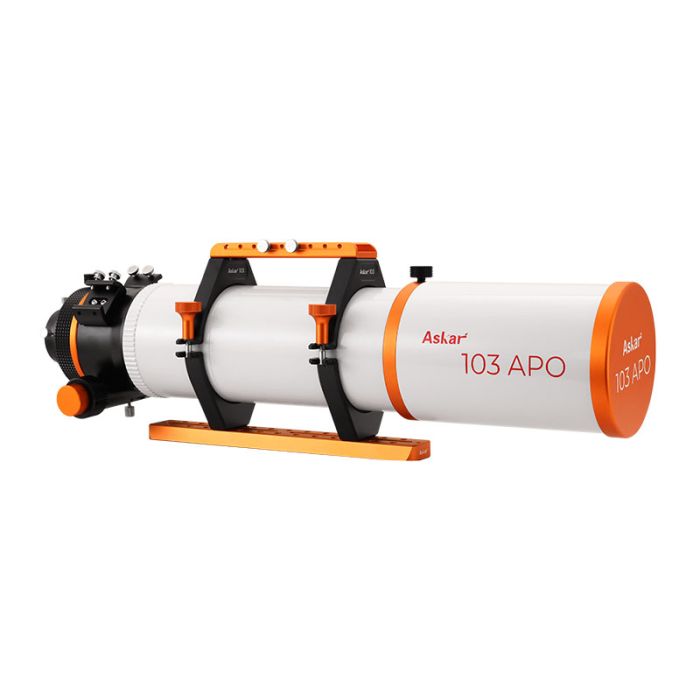

Buying Guide: How to Choose Between Askar 103APO and 120APO
Choosing the right apochromatic refractor telescope can be a pivotal step for astrophotographers aiming to balance optical quality, aperture, and versatility. Among Askar’s offerings, the 103APO and 120APO models often emerge as top contenders for users seeking mid to larger aperture APO refractors. This guide helps you navigate the key tradeoffs—aperture size, light gathering, optical performance, reducer compatibility, and portability—to decide which model aligns best with your astrophotography goals and budget.
What Buyers Should Decide Before Choosing the Askar 103APO or 120APO
Before settling on either the Askar 103APO or 120APO, clarify your primary astrophotography objectives and practical constraints. Ask yourself:
- What celestial targets interest me most? Are you focused on deep-sky objects like galaxies and nebulae, or do you prefer planetary imaging that demands higher resolution?
- What camera sensor size do I plan to use? Full-frame versus APS-C or smaller sensors affect the effective field of view and compatibility with reducers.
- How important is portability and ease of setup? Consider whether you need a lightweight system for travel or a stable, heavier setup for backyard use.
- What is my budget and mount capacity? Larger apertures often require sturdier mounts and higher investment.
These questions frame the bigger picture so you can weigh the differences between the two models in terms of performance and practical application.
Key Decision Factors When Comparing the Askar 103APO and 120APO
Aperture and Light Gathering
The 120APO’s 120mm aperture gathers approximately 44% more light than the 103APO’s 103mm. This increased light gathering translates to better signal-to-noise ratio and improved ability to capture fainter objects or finer details in shorter exposures. If your astrophotography targets include dim deep-sky objects or you want higher resolution on planets, the 120APO offers a clear advantage.
However, the 103APO’s 103mm aperture still delivers solid performance for a wide range of targets, particularly if you prioritize a more compact setup or are working within a tighter budget. Its native focal length of 700mm (f/6.8) balances detail and field of view effectively.
Optical Quality and Spot Diagram Impact
Spot diagram quality affects image sharpness and star pinpoint accuracy across the field. The 120APO generally exhibits tighter spot diagrams than the 103APO, which improves image clarity, especially at the edges of the frame. This is particularly beneficial for full-frame sensor users aiming for edge-to-edge sharpness.
By contrast, the 103APO, while offering good optical quality, has some reports of chromatic aberration and slightly less tight spot diagrams. This tradeoff may be acceptable for users prioritizing cost and versatility over the absolute best optical correction.
Focal Length and Field of View Considerations
The 103APO’s 700mm focal length at f/6.8 provides a moderate field of view suitable for many deep-sky objects without requiring extensive focal reducers. The included reducers—1.0x flattener, 0.8x reducer, and 0.6x reducer—allow you to adjust focal length down to 420mm, expanding versatility for wide-field imaging.
The 120APO’s longer native focal length (around 840mm) offers higher resolution but narrows the field of view, potentially making it less flexible for large targets unless using reducers optimized for APS-C sensors. This can limit wide-field astrophotography unless you are comfortable cropping or using smaller sensors.
Reducer Compatibility and Versatility
Both scopes support multiple reducers, but the 103APO’s modular design with a removable body extension facilitates easier switching between reducers and visual accessories like binoviewers. This flexibility appeals to users who want a multi-purpose instrument for both imaging and visual observation.
The 120APO also offers reducer options but may have tighter compatibility constraints, especially with full-frame sensors, due to optical design limits. If you plan to use a variety of reducers and imaging setups, the 103APO’s versatility might be more practical.
Mount and Portability Tradeoffs
The 103APO weighs about 10.47 pounds, making it manageable for mid-range mounts and easier to transport for field use. Its size strikes a balance between performance and portability, suiting users who travel or want a scope that doesn’t overly tax their setup.
The 120APO is heavier and larger, requiring a more robust mount and making transport more cumbersome. This scope fits better in a dedicated observatory or stable backyard setup where portability is less critical.
Where the Askar 103APO Fits Well
The 103APO excels as a versatile APO refractor for intermediate astrophotographers who want a balance of aperture, optical quality, and reducer flexibility without stepping into the higher price and weight class of larger APOs. Its native 700mm focal length and included reducers accommodate a broad range of imaging scenarios—from deep-sky targets to wide-field shots—making it a practical choice for users who value adaptability.
This scope’s moderate weight and compatibility with mid-range mounts also make it suitable for users who occasionally transport their equipment for field sessions or public outreach. The option for an included guidescope with pre-order adds value for imaging setups requiring autoguiding.
- Moderate aperture for good deep-sky and planetary imaging
- Flexible focal length options via multiple reducers
- Manageable weight for portability and mid-range mounts
- Modular design supports visual and imaging versatility
- Price around $1000 offers strong value for the specifications
Where the Askar 103APO Is the Wrong Fit
If your primary goal is to maximize light gathering and achieve the highest possible resolution for small, faint targets, the 103APO’s smaller aperture and reported chromatic aberration might hold you back. Advanced astrophotographers seeking top-tier spot diagram performance and tighter optical correction will find the 120APO better suited.
Additionally, if you prioritize extreme portability—such as for frequent travel or mount capacity constraints—the 103APO, while more portable than the 120APO, may still feel heavy compared to smaller refractors like the Askar 60F or Sky-Watcher 72ED. Beginners who want minimal setup complexity and the easiest user experience might find this scope less forgiving.
- Not ideal for users needing maximum aperture and light gathering
- Potential chromatic aberration may affect critical imaging
- Heavier and less compact than beginner-friendly small refractors
- Requires mid-range mount capable of handling its weight
What Kind of Buyer Should Choose the Askar 103APO
The 103APO is best suited for intermediate astrophotographers who:
- Want a mid-aperture APO refractor balancing cost and performance
- Value versatility in imaging focal lengths via included reducers
- Plan to image a variety of targets, from wide-field to planetary
- Need a manageable weight telescope compatible with mid-range mounts
- Are comfortable handling moderate setup complexity for better optical control
- Prefer modularity that supports visual use with accessories like binoviewers
Conversely, advanced users demanding the best optical precision or beginners seeking the simplest experience might want to consider alternative models or the larger 120APO.
Final Buying Advice
Deciding between the Askar 103APO and 120APO hinges on your astrophotography priorities and practical constraints. If your budget and mount capacity allow, and your imaging targets demand higher light gathering and sharper optics, the 120APO’s larger aperture and superior spot diagram quality make it a compelling choice—especially for advanced users focused on smaller or fainter objects.
However, if you seek a versatile, moderately priced APO refractor that provides solid optical performance with flexible focal length options and manageable weight, the 103APO delivers strong value. Its included reducers and modular design support a wide range of imaging styles and visual observing, making it a practical option for intermediate astrophotographers aiming for a balance of capability and convenience.
In summary, lean toward the 103APO if you want a flexible, mid-aperture APO that fits well with mid-range mounts and a moderate budget, and you prioritize versatile imaging options. Opt for the 120APO if your priority is maximizing light gathering and optical performance for demanding astrophotography projects and you have the mount and budget to support it.