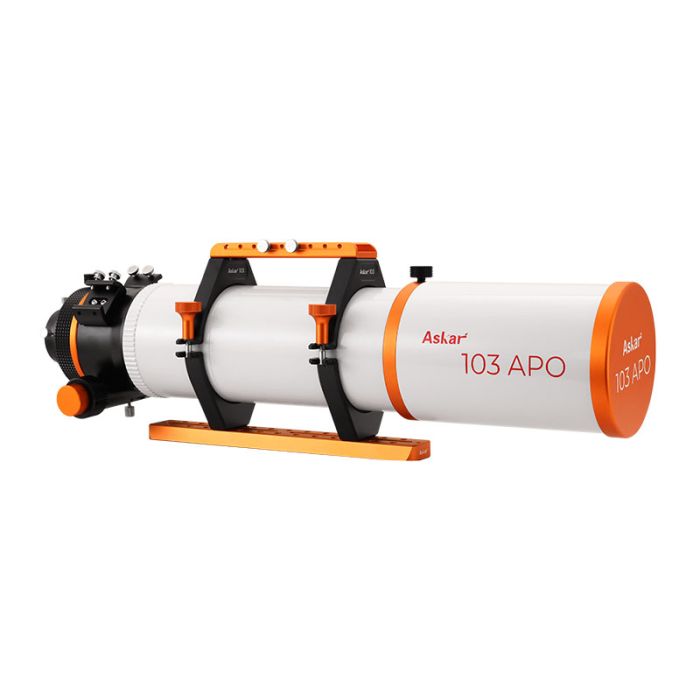

Askar 103APO vs ZWO FF: Optical Performance and Brand Comparison
Astrophotographers looking for a reliable apochromatic refractor often encounter two closely linked options: the Askar 103APO and the ZWO FF, which is essentially a rebranded Askar PHQ series scope. Both models promise high-quality optics suitable for imaging deep sky and planetary targets, yet subtle differences in optical performance, chromatic aberration behavior, and brand ecosystem can influence the final choice. This comparison helps you navigate these nuances, focusing on real-world use and buyer priorities.
Quick Verdict
While the Askar 103APO and ZWO FF share a common optical heritage, the 103APO offers a slightly larger aperture and a modular accessory system that provides flexibility for various imaging needs. The ZWO FF, under the ZWO brand, appeals to users who prioritize brand reputation and support but inherits similar chromatic aberration tendencies as the Askar PHQ. Buyers seeking a mid-aperture APO with versatile reducers and a manageable weight may lean toward the Askar 103APO. In contrast, those valuing the ZWO ecosystem and brand familiarity without expecting significant optical differentiation might prefer the ZWO FF.
Key Differences at a Glance
- Optical Design: Both use triplet apochromatic designs; 103APO has a 103mm aperture versus ZWO FF’s PHQ-based optics (slightly smaller or similar aperture).
- Chromatic Aberration: Both models report some level of chromatic aberration; 103APO users note it more prominently, while ZWO FF shares similar optical traits.
- Brand and Support: Askar offers a niche, modular approach with optional reducers and body extensions; ZWO FF benefits from broader brand recognition and ecosystem integration.
- Price: The 103APO typically retails around $1000, while ZWO FF pricing aligns similarly but may vary due to branding.
- Accessories: 103APO includes multiple reducers and optional guidescope pre-orders; ZWO FF usually comes with standard accessories aligned with PHQ models.
- Portability: 103APO weighs about 10.5 lbs, suitable for mid-range mounts; ZWO FF has comparable size and weight.
Price and Value
The Askar 103APO generally lists for around $1000, positioning it as a mid-tier APO refractor that balances aperture size and optical quality with a competitive price. Its modular design, including optional reducers and a removable body extension, adds value for astrophotographers who want customization without purchasing multiple scopes or add-ons separately.
The ZWO FF, being a rebranded Askar PHQ scope, falls into a similar price range but is often perceived as carrying a premium due to the ZWO brand’s growing reputation in astrophotography accessories and cameras. This can translate into added perceived value for buyers who prioritize brand ecosystem and support, although the underlying optics and accessories remain largely unchanged from the PHQ series origin.
In terms of pure value, the Askar 103APO offers more flexibility out of the box with its accessory options. Buyers focused on maximizing optical adaptability for different imaging scenarios may find better return on investment with the 103APO. Conversely, those who want a straightforward package with trusted brand backing might accept a slight premium for the ZWO FF.
Performance and Practical Use
Optically, both the Askar 103APO and ZWO FF employ triplet air-spaced apochromatic designs featuring ED glass elements, aimed at minimizing chromatic aberration and delivering sharp, high-contrast star images across full-frame sensors. The 103APO’s 103mm aperture and 700mm focal length (f/6.8) provide a balanced field of view suitable for a range of targets, from planetary details to deep-sky objects.
However, users report that the 103APO can exhibit noticeable chromatic aberration in some units, especially when imaging bright stars or planets, which may require additional post-processing or filtering to mitigate. The ZWO FF, sharing optical lineage with the Askar PHQ, shows similar chromatic aberration tendencies, indicating that neither scope fully eliminates this issue at their aperture and cost level.
Practically, the 103APO’s included reducers (1.0x flattener, 0.8x and 0.6x reducers) allow users to tailor focal length and field of view for various sensors and targets, enhancing versatility. The ZWO FF tends to come with fewer modular options, focusing on a standard imaging configuration. Thus, the 103APO gives astrophotographers more control to optimize their setup for specific use cases.
- Askar 103APO: Better suited for users who want to experiment with focal length and field adjustments, balancing planetary and wide-field deep-sky imaging.
- ZWO FF: Best for those who prefer a simpler, ready-to-go optical package without the need for additional reducers or modularity.
Ease of Setup / Ease of Use
Both scopes require a moderate level of setup experience typical for mid-aperture APO refractors. The Askar 103APO’s modular design adds some complexity, particularly when changing reducers or attaching the optional guidescope. This can be a benefit for users comfortable with customizing their gear, but a potential hurdle for those seeking plug-and-play simplicity.
The ZWO FF, by contrast, offers a more streamlined setup with fewer optional parts to manage, which can reduce initial setup time and complexity. ZWO’s established user community and support resources may further ease the learning curve, especially for users already invested in ZWO’s ecosystem of cameras and accessories.
In both cases, the weight (~10.5 lbs for the 103APO) demands a stable and capable mount, which adds to setup considerations. Neither scope targets beginner users looking for ultra-lightweight or ultra-simple solutions.
Accessories / Feature Completeness
The Askar 103APO stands out with its comprehensive accessory lineup. It includes a 1.0x flattener for full-frame correction and two focal reducers (0.8x and 0.6x) to widen the field of view. Additionally, buyers can pre-order an optional guidescope, enhancing autoguiding capabilities for longer exposure astrophotography. The removable body extension supports binoviewer use, increasing its versatility for visual observers.
The ZWO FF generally ships with essential accessories but lacks the same level of modular reducers and optional extras bundled or supported directly. Since it is a rebrand of the Askar PHQ, the accessory offerings mirror those of the PHQ line, which is more limited in reducer options and modularity. Buyers who prioritize a fully equipped system out of the box may find the 103APO more accommodating.
- Askar 103APO: Multiple reducers, optional guidescope, removable extension for binoviewer compatibility.
- ZWO FF: Standard accessories consistent with Askar PHQ, fewer modular options.
Which Buyer Should Choose Which Option?
Choose the Askar 103APO if you:
- Want a mid-aperture APO with flexible focal length options via multiple reducers.
- Value modularity and potential for visual use with binoviewers.
- Are comfortable managing a slightly more complex setup and accessory system.
- Seek good value with a scope that can adapt to various astrophotography targets.
- Can tolerate some chromatic aberration with plans to mitigate in processing.
Choose the ZWO FF if you:
- Prefer a streamlined, ready-to-use APO refractor with fewer accessory management needs.
- Are invested in or prefer the ZWO brand, valuing its customer support and ecosystem.
- Want optical performance comparable to Askar PHQ but under ZWO branding.
- Are less concerned with modular reducers or binoviewer compatibility.
- Accept similar chromatic aberration characteristics as the 103APO without additional mitigation options.
Conclusion
The Askar 103APO and ZWO FF represent two sides of a narrowly defined APO refractor segment, tied together by shared optical design roots yet differentiated by brand positioning and accessory strategy. The 103APO’s strength lies in its modularity, accessory completeness, and aperture size, making it an attractive choice for intermediate to advanced astrophotographers who want to tailor their imaging setup. Its chromatic aberration, while present, is a known tradeoff for the price and aperture.
On the other hand, the ZWO FF caters to users who prioritize brand ecosystem integration and a simpler, less customizable package. Its optical performance closely matches that of the Askar PHQ base model, including similar chromatic aberration levels, but benefits from ZWO’s customer support infrastructure and recognition in the astrophotography community.
Ultimately, the decision depends on your specific priorities: if you want a flexible, accessory-rich APO with a slightly larger aperture and don’t mind managing setup complexity, the Askar 103APO is the better fit. If streamlined use under a strong brand umbrella with proven optics is more important, the ZWO FF is a sensible alternative. Both deliver capable optical performance for serious astrophotography, with tradeoffs in chromatic aberration and system modularity to weigh carefully before purchase.