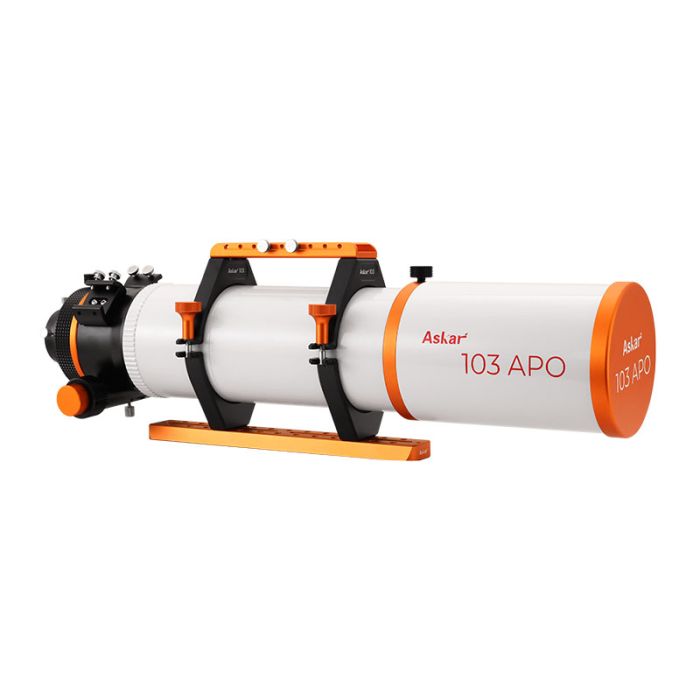

Top Alternatives to Askar 103APO: Small and Beginner-Friendly Refractors Compared
If you’re considering the Askar 103APO for your astrophotography or visual observation setup, you’re likely drawn by its combination of aperture, optical quality, and accessory versatility. However, this mid-aperture triplet apochromatic refractor may not suit every user’s needs, especially if you prioritize portability, simplicity, or cost-effectiveness. This article explores why buyers look at the Askar 103APO, when it might not be the best fit, and which smaller, beginner-friendly refractors offer compelling alternatives based on your specific use case and preferences.
Why Buyers Consider the Askar 103APO
The Askar 103APO is a thoughtfully designed telescope aimed mainly at intermediate astrophotographers who want a capable yet reasonably priced apochromatic refractor. Priced around $1000, it sits at a sweet spot offering a 103mm aperture with ED glass and a triplet lens design that helps reduce chromatic aberration and deliver crisp, high-contrast images across full-frame sensors.
Its versatility is a major draw. The inclusion of multiple reducers—a 1.0x flattener, 0.8x reducer, and 0.6x reducer—allows users to tailor the focal length from 700mm down to 420mm. This flexibility supports a range of imaging styles, from wider field deep-sky shots to more detailed planetary captures. Additionally, the removable body extension and optional guidescope enhance modularity for evolving astrophotography setups.
Users also appreciate its manageable weight (~10.5 lbs) which, while requiring a sturdy mount, remains transportable enough for field use. The telescope’s balance of aperture, optical design, and accessory compatibility makes it attractive for those who want a reliable APO refractor that can grow with their skills and photographic ambitions.
When the Askar 103APO is the Wrong Fit
Despite its strengths, the Askar 103APO is not ideal for all buyers. Beginners who prioritize ease of setup and minimal complexity may find it somewhat demanding. The optical system, while robust, has been reported to show noticeable chromatic aberration in some units, which can be frustrating without experience in troubleshooting or post-processing.
Portability is another consideration. At over 10 pounds, plus the weight of a suitable mount, the 103APO is less convenient for users who want a grab-and-go solution or plan frequent travel. Its size and mounting requirements make it less practical for casual backyard observers or those with limited storage space.
Budget-conscious buyers might also hesitate, as its price point sits above many entry-level refractors that offer simpler handling and lighter weight, albeit with smaller apertures and reduced imaging capability. Lastly, astrophotographers targeting very faint deep-sky objects or requiring the highest resolution may outgrow the 103APO’s aperture and look towards larger scopes instead.
Better Alternatives for Different Scenarios
1. Beginners Seeking Simplicity and Portability: Askar 60F
The Askar 60F is a prime alternative for newcomers or those with limited mount capacity. Its smaller aperture and lightweight design make it significantly easier to handle and transport. This refractor excels in wide-field imaging of large celestial objects such as star clusters and expansive nebulae, where a broad field of view is more important than high magnification.
- Ease of Use: Compact and light, it requires less robust mounts and simpler setup.
- Cost Efficiency: Lower price point makes it an accessible entry into astrophotography.
- Tradeoffs: The smaller aperture limits light gathering, reducing performance on faint or small targets.
For beginners, the forgiving guiding requirements and wide fields of the 60F reduce frustration and accelerate learning, making it a good stepping stone before moving to more complex APO refractors like the 103APO.
2. Intermediate Users Wanting a Balance of Quality and Portability: Sky-Watcher 72ED
The Sky-Watcher 72ED occupies a middle ground for those who want better optical quality than entry-level scopes but still value portability and ease of use. Its 72mm ED doublet design provides good chromatic correction and a wider field of view due to a shorter focal length compared to the 103APO.
- Optical Quality: ED glass delivers sharp, contrasty images suitable for wide-field astrophotography.
- Weight and Size: Lighter and more compact, it pairs well with a variety of mounts, including portable options.
- Tradeoffs: Smaller aperture limits faint object detection and resolution compared to the 103APO.
Users who want quality optics without the bulk or setup complexity of larger APOs often find the 72ED a well-rounded choice for backyard use and travel, especially for wide-field targets.
3. Advanced Users Needing More Aperture and Imaging Versatility: Askar 120APO (Brief Mention)
While not the focus here, it is worth noting that users looking for greater light gathering than the 103APO might consider the Askar 120APO. It offers about 44% more light collection and tighter spot diagrams but at the cost of increased weight and higher mount requirements. This scope suits those with more experience and dedicated equipment who want to push deep-sky imaging further.
Best Choice by Buyer Type
Beginners and Casual Observers
The Askar 60F stands out as the best fit. Its lightweight and straightforward design minimize barriers to entry. It allows new users to explore astrophotography without investing in heavy mounts or complex setups. The wide field view also encourages capturing large celestial scenes, which can be more rewarding and easier to process for beginners.
Intermediate Astrophotographers Seeking Portability
The Sky-Watcher 72ED is ideal here. It offers a compelling mix of optical quality and manageable size. Those who want to balance imaging performance with ease of transport and setup will appreciate its lighter weight and good chromatic correction. It fits well for users who photograph wide fields or want a secondary, travel-friendly scope.
Users Prioritizing Imaging Capability and Flexibility
For those who have mid-range mounts and want a versatile APO refractor with multiple reducers and modular accessories, the Askar 103APO remains a strong contender. Its larger aperture and included optical accessories provide flexibility for a wide range of astrophotography targets from planets to deep sky, though at the cost of increased setup complexity and weight.
Final Recommendation
The Askar 103APO is a well-rounded refractor that caters primarily to intermediate astrophotographers seeking a balance of aperture, optical quality, and modularity around the $1000 price point. However, if your priorities lean towards beginner-friendly ease, portability, or budget constraints, smaller refractors like the Askar 60F and Sky-Watcher 72ED offer excellent alternatives tailored to those needs.
Choose the Askar 60F if you want a lightweight, simple, and affordable entry point with wide-field imaging appeal. Opt for the Sky-Watcher 72ED if you desire higher optical quality while still keeping your setup portable and beginner-friendly. Reserve the Askar 103APO for users ready to handle a more substantial instrument that offers greater imaging flexibility and aperture power, provided you have the mount capacity and experience to optimize its potential.
Ultimately, your best choice depends on your experience level, astrophotography goals, and practical considerations like portability and budget. Aligning your purchase with these factors will ensure a rewarding astronomical experience tailored to your unique needs.