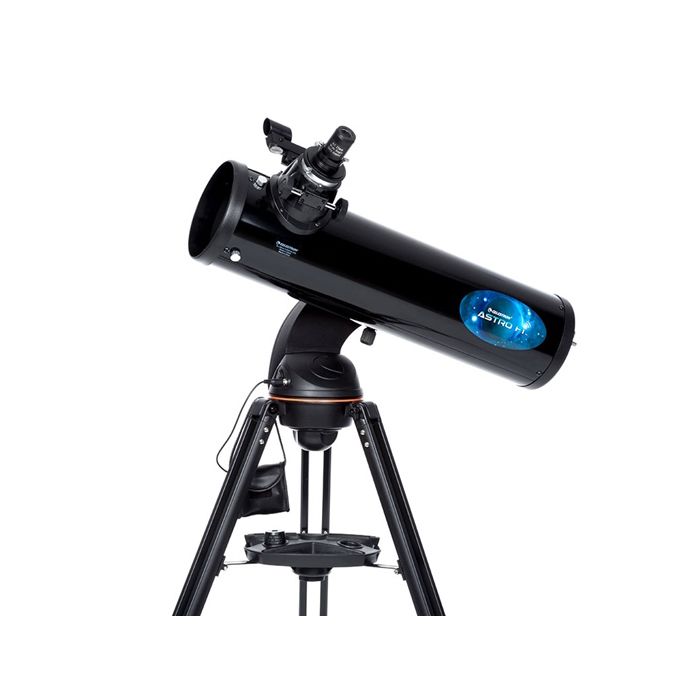

Celestron Astro Fi 130 Review: Smart WiFi Newtonian for Beginners
For beginner and intermediate astronomy enthusiasts eyeing a mid-range, feature-rich telescope, the Celestron Astro Fi 130 promises a compelling blend of smart technology and solid optics. This review dives deep into how well it balances performance, ease of use, and value—and who will truly benefit from adding this WiFi-enabled Newtonian to their stargazing toolkit.
Quick Verdict
The Celestron Astro Fi 130 is a thoughtfully designed beginner-friendly telescope that leverages smartphone app control to simplify celestial navigation. Its 130mm aperture delivers respectable views of planets, the Moon, and bright deep-sky objects, while the included motorized GoTo system removes much of the frustration usually associated with manual star-hopping. However, this convenience comes with tradeoffs in portability and aperture size compared to some alternatives, making it ideal for backyard astronomers valuing guided ease over ultimate optical power or travel-friendly compactness.
What This Product Does Well
The Astro Fi 130 shines most clearly in its smart control and beginner-centric approach. Celestron’s SkyPortal app replaces traditional hand controllers with a wireless interface that pairs with your smartphone or tablet, creating an intuitive and modern observing experience. This system allows users to simply point their device at the sky, select an object from a rich database, and watch the telescope automatically slew to it. For newcomers, this drastically lowers the entry barrier to astronomy, eliminating the learning curve of star charts and manual alignment.
Optically, the 130mm Newtonian reflector offers a solid balance between light gathering and resolution for its price class. It’s well-suited to observing lunar craters with clarity, revealing Jupiter’s cloud bands and the Cassini Division in Saturn’s rings. The included 10mm and 25mm Kellner eyepieces provide versatile magnification options right out of the box, enabling both wide-field and more detailed planetary views.
- Smartphone app control: Seamless wireless operation and object database integration.
- Good aperture for price: 130mm aperture captures bright planets and many nebulae effectively.
- Motorized GoTo system: Automated tracking and slewing improve observing efficiency.
- Included accessories: Two Kellner eyepieces cover basic magnification needs.
- Compact tube design: Easier to store and setup compared to bulkier scopes.
The setup experience is straightforward, thanks to Celestron’s SkyAlign technology which simplifies initial calibration by letting users align on any three bright objects. This reduces the intimidation factor for beginners eager to start observing rather than wrestling with complex setup procedures.
The Compromises Buyers Need to Understand
While the Astro Fi 130 offers modern convenience and solid optics, it’s not without its limitations. The 130mm aperture, while respectable, is smaller than what some competitors in the same price range offer—such as the Sky-Watcher Star Discovery 150P with its 150mm mirror. This means that deep-sky objects like faint nebulae and galaxies won’t appear as bright or detailed as with larger aperture scopes.
Portability is another consideration. Although the tube itself is compact, the included motorized mount and tripod add bulk and weight. It’s not a grab-and-go travel scope for backpacking or quick urban observing sessions in tight spaces. Users prioritizing ultra-lightweight or ultra-compact designs may find the Astro Fi 130 cumbersome compared to smaller Maksutov-Cassegrain or tabletop Dobsonian alternatives.
Another tradeoff lies in the control interface. The requirement to use a smartphone or tablet for operation means users without compatible devices—or those who prefer tactile hand controllers—might find the system limiting. Unlike traditional GoTo scopes with dedicated handsets, this setup depends fully on the mobile app’s stability and device battery life.
- Aperture size: Smaller than some rivals, limiting deep-sky brightness and detail.
- Portability: Bulkier than ultra-compact scopes due to mount and tripod.
- Smartphone dependency: No physical hand controller; requires app and device.
- Limited accessory selection: Basic eyepieces included; upgrading may be needed for advanced use.
Real-World Use Cases and Beginner Experience
In practical backyard astronomy sessions, the Astro Fi 130’s strengths come to the forefront. Beginners find the app interface empowering—no longer needing to memorize star charts or manually align the telescope with finicky knobs. For example, locating Jupiter and its moons becomes a simple tap on the app, with the scope automatically centering the planet in the eyepiece. Observing the lunar surface in detail is similarly rewarding, as the 130mm aperture gathers enough light for crisp crater edges and maria shading.
However, beginners should be aware that the app-based control can introduce some learning curves of its own, especially if the smartphone’s GPS or compass sensors are inaccurate. Initial alignment may require a few attempts to get right, and users need to ensure their device stays charged throughout the session. The telescope’s weight and tripod setup also mean it’s not ideal for spontaneous viewing sessions where quick setup and takedown are priorities.
For intermediate observers, the Astro Fi 130 serves as a reliable step-up telescope, offering enough aperture and motorized tracking to explore more objects and improve star-hopping skills with guided assistance. Its 650mm focal length balances planetary and some deep-sky viewing, though experienced users might soon seek higher-quality eyepieces or filters to enhance image contrast and sharpness.
Who Should Buy It
The Astro Fi 130 is a strong fit for a distinct buyer profile:
- Beginners eager for guided astronomy: Those who want to jump straight into observing without wrestling with manual star alignment will appreciate the smartphone-controlled GoTo system.
- Home and backyard observers: Users with stable observation spots who don’t mind the moderate setup effort and tripod footprint.
- Value-conscious buyers: Those seeking a mid-range telescope with modern features and decent aperture at a reasonable price point (around $168) will find good balance here.
- Smartphone users: Buyers comfortable using mobile apps and looking for an integrated WiFi experience will benefit from the Astro Fi’s design.
This telescope is also suitable for parents or educators wanting to introduce kids to astronomy with a system that removes technical barriers and keeps engagement high through interactive app features.
Who Should Not Buy It
Despite its advantages, the Astro Fi 130 may not be the best choice for everyone:
- Travel-first buyers: If you need a telescope that’s highly portable and easy to carry on hikes or urban stargazing, the Astro Fi’s tripod and mount bulk may be prohibitive.
- Users prioritizing maximum aperture: Those who want the brightest and most detailed views of faint deep-sky objects should consider larger aperture scopes or manual Dobsonians instead.
- Observers without smartphones or those who prefer tactile controls: The complete reliance on app control may frustrate users who want traditional handsets or manual operation.
- Astrophotographers or advanced hobbyists: The Astro Fi 130’s mount and optics are not optimized for long-exposure imaging or advanced astrophotography setups.
Additionally, users in environments with poor GPS or magnetic interference might find the app alignment less reliable, potentially requiring alternative manual alignment methods.
Final Recommendation
The Celestron Astro Fi 130 stands out as a compelling entry to mid-level telescope for those prioritizing ease of use through smartphone integration and a respectable 130mm aperture. Its modern GoTo system and wireless control make it a particularly attractive option for beginners overwhelmed by traditional telescopes while still delivering satisfying views of the Moon, planets, and brighter deep-sky objects. The included accessories and SkyAlign technology streamline setup and observing, making this a genuinely accessible path into amateur astronomy.
That said, buyers must weigh its compromises carefully. The dependency on smartphone control, moderate portability, and aperture limits mean this scope suits best those settled in backyard observing or educational settings rather than travelers or serious deep-sky visualists. For those who value a no-fuss, guided stargazing experience with solid optical performance and a modern interface, the Astro Fi 130 offers excellent value near its $168 price point.
Ultimately, if your goal is to start exploring the cosmos with minimal technical hassle and enjoy crisp planetary and lunar views without jumping to expensive, larger scopes, the Celestron Astro Fi 130 is a smart, well-rounded choice. However, if you crave the brightest deep-sky performance or a truly travel-friendly rig, exploring larger manual Dobsonians or ultra-compact Maksutovs might be more rewarding in the long run.
More Shopping Guide Articles
- Buying Guide: How to Choose Between Celestron Astro Fi 130 and Sky-Watcher Star Discovery 150P
- Celestron Astro Fi 130 vs NexStar 130/650: Modern WiFi Control or Classic Handset?
- Celestron Astro Fi 130 vs Sky-Watcher Virtuoso GTi 150P: Aperture and Mount Style Showdown
- Top Alternatives to Celestron Astro Fi 130: Maksutov-Cassegrain and Dobsonian Options