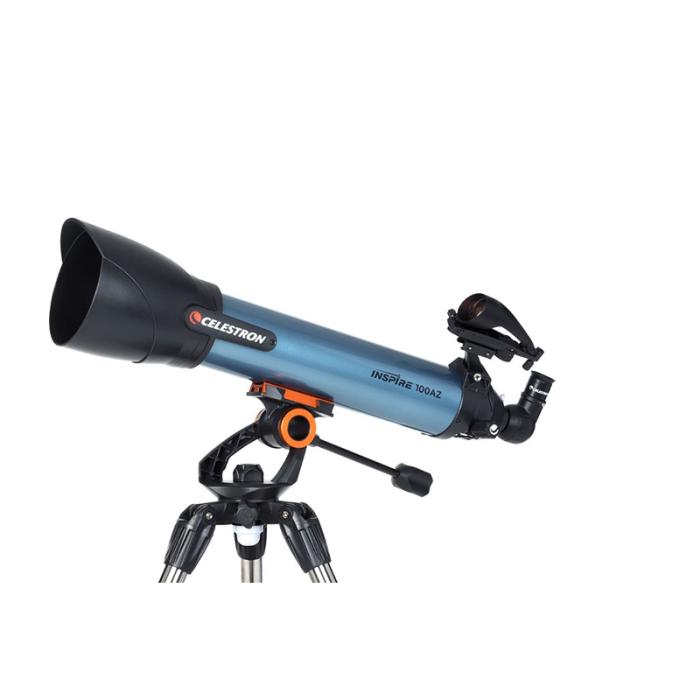

Celestron Inspire 100AZ Review: Ideal Beginner Telescope for Casual Stargazing
If you’re stepping into astronomy and want a straightforward, affordable telescope to explore the Moon and bright planets, the Celestron Inspire 100AZ promises a blend of ease and decent optical performance. But can this mid-range achromatic refractor truly satisfy newcomers, or are its limitations a dealbreaker? This review dives into the practical strengths and tradeoffs of the Inspire 100AZ, helping you decide if it fits your stargazing goals.
Quick Verdict
The Celestron Inspire 100AZ is a solid entry-level refractor telescope designed for beginners seeking an accessible, visually pleasing introduction to casual astronomy. Its lightweight tripod mount and simple setup make it approachable, while the optics deliver satisfying views of the Moon and bright planets. However, its limited 100mm aperture and achromatic lens design mean chromatic aberration and modest planetary detail are unavoidable. For backyard beginners on a budget wanting a grab-and-go scope focused on wide-field and lunar observing, it’s a reasonable choice. But those wanting sharper planetary views, deep-sky capability, or greater mount stability should consider alternatives with larger apertures or more specialized optics.
What This Product Does Well
The Inspire 100AZ shines in delivering beginner-friendly astronomy without overwhelming complexity. Its achromatic refractor design keeps maintenance low—no mirrors to collimate—and the included tripod mount is decent for steady viewing on flat surfaces. Setup is straightforward, making it a good pick for those new to telescopes who want to spend more time observing than fiddling with gear.
- Portability: Weighing in as a moderately portable refractor, it’s light enough to carry to your backyard or a local park. The tripod folds up compactly, striking a balance between stability and convenience.
- Optical Performance: With a 100mm aperture, the scope gathers enough light to show crisp lunar landscapes and bright planetary disks such as Jupiter’s cloud bands or Saturn’s rings under good conditions.
- Included Accessories: The package comes with a basic eyepiece suitable for initial viewing and an altazimuth mount that allows intuitive up/down and left/right movement, which beginners find easier than equatorial mounts.
- Price and Value: At around $105, it offers an affordable entry point with enough features to keep casual users engaged without pushing for expensive upgrades immediately.
In essence, the Inspire 100AZ delivers a low-barrier introduction to astronomy with respectable optical clarity for its class and a package that doesn’t intimidate first-time owners.
The Compromises Buyers Need to Understand
While the Inspire 100AZ offers beginner-friendly ease and decent optics, it inevitably involves compromises that affect its versatility and long-term satisfaction.
First, the achromatic refractor design, while simple and cost-effective, suffers from chromatic aberration. This is visible as color fringing around bright objects like planets and the Moon, reducing image sharpness and contrast compared to apochromatic refractors or reflectors. For users expecting crisp, high-contrast planetary details, this can be a notable drawback.
Second, the 100mm aperture, though enough for lunar and bright planet viewing, limits the telescope’s light-gathering capacity. This restricts its usefulness for deep-sky objects such as nebulae and galaxies, which require larger apertures for meaningful observation. Moreover, compared to compact Dobsonian reflectors with apertures of 114mm or more, the Inspire 100AZ delivers less resolving power and dimmer images.
The mount, while adequate for casual use, is another compromise. The altazimuth tripod is lightweight but less stable than the Dobsonian bases found on some competitors. This can lead to vibration and difficulty maintaining steady views at higher magnifications.
Finally, portability, though better than many larger telescopes, is not ideal for travel-first buyers. The Inspire 100AZ is moderately portable but bulkier than ultra-compact scopes, and it requires some storage space and careful handling.
Real-World Use Cases and Beginner Experience
In practice, the Inspire 100AZ excels as a grab-and-go backyard scope for beginners who want quick access to basic lunar and planetary viewing. Its ease of setup and intuitive altazimuth mount means users rarely struggle with alignment or operation on clear evenings. The included basic eyepiece is serviceable for low to medium magnifications, revealing crater details on the Moon and the major moons of Jupiter.
Beginners will appreciate the tactile simplicity, but should be prepared for the following:
- Chromatic Aberration: Bright planetary edges appear with purple or green color fringes, especially at higher magnifications. This is inherent to achromatic lenses and not a sign of poor quality.
- Limited Deep-Sky Views: Fainter star clusters and nebulae will appear dim or unresolved, so users primarily interested in deep-sky should look elsewhere.
- Mount Stability: Slight vibrations may occur when adjusting the scope or in windy conditions, which can be frustrating at times but manageable with patience.
For beginners, this telescope serves as a practical stepping stone. It’s a good match for casual observing sessions focused on the Moon’s surface and planets like Venus, Mars, Jupiter, and Saturn during favorable oppositions. However, users looking to explore beyond brighter objects may find themselves outgrowing it quickly.
Who Should Buy It
The Celestron Inspire 100AZ is well-suited for:
- Absolute Beginners: Those new to astronomy who want an affordable, easy-to-use telescope that requires minimal setup and maintenance.
- Casual Stargazers: Users primarily interested in lunar observation and bright planetary viewing without the need for advanced features or high-end optics.
- Value-Focused Buyers: People seeking a balanced entry-level telescope at a reasonable price, offering decent optics and a stable-enough mount for backyard use.
- Home and Backyard Users: Those who want a grab-and-play telescope to keep at home for spontaneous evening stargazing.
This telescope fits users who prioritize simplicity, moderate portability, and an enjoyable introduction to the night sky over the highest possible image quality or deep-sky capability.
Who Should Not Buy It
Potential buyers should consider other options if they:
- Want Sharper Planetary Views: Those seeking crisp, high-contrast views of planets with minimal chromatic aberration will be better served by longer focal length Maksutov-Cassegrain designs or apochromatic refractors.
- Are Deep-Sky Enthusiasts: If your goal is to explore faint nebulae, galaxies, and star clusters, larger aperture Dobsonian reflectors offer more light gathering and better value for such targets.
- Require Superior Mount Stability: Users who want rock-solid mounts for astrophotography or steady high-power viewing might find the Inspire 100AZ’s tripod less stable and limiting.
- Need Ultra-Portability or Travel-Friendly Scopes: For those prioritizing compact size and easy transport, this model is bulkier than some pocket-sized or smartphone-compatible scopes.
In summary, if you are looking for a lifetime telescope with advanced features or niche capabilities, the Inspire 100AZ will feel limited and may lead to upgrading sooner than expected.
Final Recommendation
The Celestron Inspire 100AZ offers a compelling entry point into amateur astronomy for beginners who want a no-fuss, affordable refractor capable of enjoyable lunar and planetary views. Its combination of moderate aperture, simple altazimuth mount, and lightweight design strikes a practical balance for casual backyard observers. However, its achromatic optics and limited aperture mean chromatic aberration and restricted deep-sky performance are tradeoffs buyers must accept.
If your primary interest is exploring the Moon and bright planets on clear evenings without complexity, the Inspire 100AZ delivers good value and ease of use at around $105. But if you anticipate wanting sharper planetary detail, more aperture for faint objects, or a sturdier mount, it’s worth considering a compact Dobsonian like the Orion StarBlast 4.5 or a Maksutov-Cassegrain such as the Skymax 102, despite their higher prices or larger size.
Ultimately, the Inspire 100AZ is best viewed as a stepping stone telescope—an accessible, enjoyable tool to spark your interest in astronomy and build foundational experience. For beginners prioritizing simplicity, affordability, and decent optical performance for casual stargazing, it remains a solid choice. Just be mindful of its limitations and plan accordingly for your future astronomy adventures.
More Shopping Guide Articles
- Buying Guide: How to Choose the Best Beginner Telescope Including the Inspire 100AZ
- Celestron Inspire 100AZ vs Orion StarBlast 4.5: Which Beginner Telescope Wins?
- Celestron Inspire 100AZ vs Skymax 102: Best Compact Telescope for Planetary Detail?
- Top Beginner Telescopes Compared: Celestron Inspire 100AZ and Small Dobsonian Options