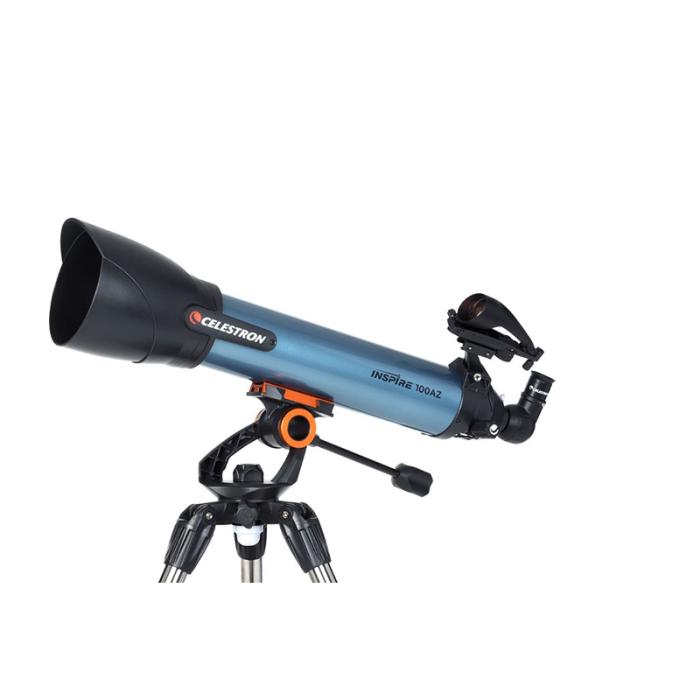

Celestron Inspire 100AZ vs Orion StarBlast 4.5: Which Beginner Telescope Wins?
Choosing your first telescope means balancing factors like aperture, portability, mount stability, and budget. The Celestron Inspire 100AZ and the Orion StarBlast 4.5 both target beginners but take different approaches — one is a compact refractor on a tripod, the other a small Dobsonian reflector. This head-to-head comparison focuses on practical tradeoffs, helping you decide which fits your stargazing style and priorities better.
Quick Verdict
The Celestron Inspire 100AZ is a lightweight, easy-to-transport refractor that suits beginners looking for simple setup and wide-field views of the Moon and bright planets. Meanwhile, the Orion StarBlast 4.5 offers larger aperture and a stable Dobsonian mount, delivering brighter, more detailed views of planets and some deep-sky objects — at the cost of added bulk and slightly more complex handling. Your choice boils down to whether you prioritize portability and ease of use or aperture and mount stability for more rewarding observing sessions.
Key Differences at a Glance
- Aperture: StarBlast 4.5’s 114mm reflector gathers more light than Inspire 100AZ’s 100mm refractor, improving resolution and brightness, especially for deep-sky targets.
- Portability: Inspire 100AZ is lighter and more compact with a tripod mount, easier for quick backyard setups or transport to a dark site.
- Mount Stability: StarBlast’s Dobsonian base provides superior stability and smoother tracking for beginners compared to Inspire’s standard tripod.
- Price: Both are affordably priced for beginners, but Inspire 100AZ typically costs slightly less, reflecting its simpler optics and mount.
- Use Case: Inspire 100AZ favors casual lunar and bright planetary observation with wide fields; StarBlast 4.5 excels for deeper planetary details and some brighter deep-sky objects.
Price and Value
The Celestron Inspire 100AZ is priced around $105, making it one of the more budget-friendly entry-level telescopes. This affordability includes a basic eyepiece and a tripod mount, providing a ready-to-go setup for casual backyard viewing. Its price point appeals to buyers seeking a straightforward, grab-and-go solution without extensive extras or high-end optics.
In contrast, the Orion StarBlast 4.5 typically retails for a modest premium over the Inspire 100AZ, reflecting its larger aperture and sturdier Dobsonian mount. For beginners focused on maximizing aperture and image brightness, this extra investment often translates into more satisfying views and greater long-term value. While the StarBlast is less lightweight, its build quality and optics justify the incremental cost for users prioritizing performance.
Bottom line on value: If your budget is tight and you want a decent beginner scope for casual use, the Inspire 100AZ offers solid bang for the buck. If you can stretch your budget slightly and want more aperture and a stable mount, the StarBlast 4.5 delivers greater optical return per dollar spent.
Performance and Practical Use
Aperture is the most critical factor in telescope performance, as it governs light-gathering ability and resolving power. The Orion StarBlast 4.5 sports a 114mm Newtonian reflector aperture, noticeably larger than the Inspire 100AZ’s 100mm achromatic refractor lens. This difference means the StarBlast will deliver brighter, sharper images, particularly evident when observing planets like Jupiter and Saturn or brighter deep-sky objects such as star clusters and nebulae.
The Inspire 100AZ’s refractor design favors wide-field views and is well-suited for lunar observation and bright planets. However, its achromatic lens tends to produce some chromatic aberration (color fringing) around bright objects, reducing sharpness and contrast on fine planetary detail. The StarBlast’s reflector optics avoid chromatic aberration, yielding cleaner, more contrast-rich images.
Practically, the Inspire 100AZ excels in casual, broad-sky scanning and moon watching, with a shorter focal length offering larger fields of view. The StarBlast 4.5, with a longer effective focal length, narrows the field but increases image scale, making it better for spotting detail.
- Inspire 100AZ: Best for quick, easy lunar and planetary views; some chromatic blur limits crispness.
- StarBlast 4.5: Brighter, more detailed planetary and some deep-sky views; better for users wanting to explore beyond the Moon.
Ease of Setup / Ease of Use
Both telescopes are designed with beginners in mind, but their mounts influence setup and handling experience significantly. The Celestron Inspire 100AZ uses an altazimuth tripod mount, which is intuitive to operate and light enough for quick transport and setup. Beginners will appreciate the simple point-and-look style, with minimal assembly required.
However, the tripod’s stability is average — vibrations can be more noticeable, especially at higher magnifications. This can make focusing a bit trickier for novices. The optional finder scope upgrade helps with target acquisition but is not included by default.
The Orion StarBlast 4.5 features a Dobsonian base, which generally offers superior stability compared to tripods. It allows smooth manual movements in altitude and azimuth, making it easier to track objects once located. The Dobsonian is typically more stable on uneven ground and less prone to shaking, which benefits beginners who want steady images without complex electronics.
On the downside, the StarBlast is bulkier and less convenient for spontaneous transport or quick backyard setups. It also requires a bit more space for storage and assembly, though it remains simple enough for beginners without requiring tools.
Accessories / Feature Completeness
The Celestron Inspire 100AZ package includes a basic eyepiece and a tripod mount but lacks a finder scope by default, which limits ease of aiming at celestial targets. While the tripod is foldable and includes adjustable height, the optics and accessories are minimal, reflecting its entry-level price. Additional eyepieces or a finder scope may be needed for a fuller experience.
The Orion StarBlast 4.5 generally comes with two eyepieces offering different magnifications and a stable Dobsonian base, giving beginners more flexibility in viewing options out of the box. Its wider aperture also means the included eyepieces perform better in delivering bright images. The StarBlast’s simple design means fewer accessories are necessary to get started, though higher-quality eyepieces can be added later for improved detail.
- Inspire 100AZ: Basic eyepiece included; optional finder scope upgrade recommended; tripod mount included.
- StarBlast 4.5: Two eyepieces included; stable Dobsonian mount; minimal accessories but sufficient for immediate use.
Which Buyer Should Choose Which Option?
Celestron Inspire 100AZ is well-suited for beginners who:
- Prioritize portability and lightweight design for casual backyard or park stargazing.
- Want an affordable, simple telescope with quick setup and minimal fuss.
- Focus primarily on lunar observation and bright planets with wide-field views.
- Are willing to accept some chromatic aberration and slightly less stable mount in exchange for ease of transport.
Orion StarBlast 4.5 fits buyers who:
- Value larger aperture and better image brightness for planetary and brighter deep-sky targets.
- Prefer a stable, user-friendly Dobsonian mount that reduces vibrations and improves tracking ease.
- Are okay with sacrificing some portability and compactness for improved performance.
- Want a beginner scope that can grow with their interest, offering more rewarding views from the start.
In short, if you want a lightweight, grab-and-go telescope primarily for moon and bright planet viewing, the Inspire 100AZ is a fine choice. If you desire brighter, more detailed views with a mount that supports steady observing and don’t mind a bit more bulk, the StarBlast 4.5 is likely the better match.
Conclusion
When choosing between the Celestron Inspire 100AZ and the Orion StarBlast 4.5, the decision hinges on your priorities as a beginner astronomer. The Inspire 100AZ stands out for its portability, ease of setup, and affordability, making it a convenient introduction to casual lunar and planetary viewing. Its achromatic refractor design delivers pleasing wide-field images but is limited by smaller aperture and chromatic aberration.
The Orion StarBlast 4.5, by contrast, offers a meaningful step up in aperture and optical performance with its 114mm reflector, producing brighter, more detailed views of planets and some deep-sky objects. Its Dobsonian mount provides enhanced stability and smoother manual tracking, an advantage for beginners ready to invest a bit more time and effort into observing. The tradeoff is greater size and weight, requiring more storage space and less grab-and-go convenience.
Ultimately, for users seeking a lightweight, straightforward telescope for casual viewing or travel, the Inspire 100AZ provides a practical, cost-effective solution. For those eager to explore beyond the basics with improved image quality and mount stability, the StarBlast 4.5 justifies its additional bulk and cost with superior performance. Evaluate your observing goals, storage and transport options, and budget to pick the telescope that aligns best with your stargazing ambitions.
More Shopping Guide Articles
- Celestron Inspire 100AZ Review: Ideal Beginner Telescope for Casual Stargazing
- Buying Guide: How to Choose the Best Beginner Telescope Including the Inspire 100AZ
- Celestron Inspire 100AZ vs Skymax 102: Best Compact Telescope for Planetary Detail?
- Top Beginner Telescopes Compared: Celestron Inspire 100AZ and Small Dobsonian Options