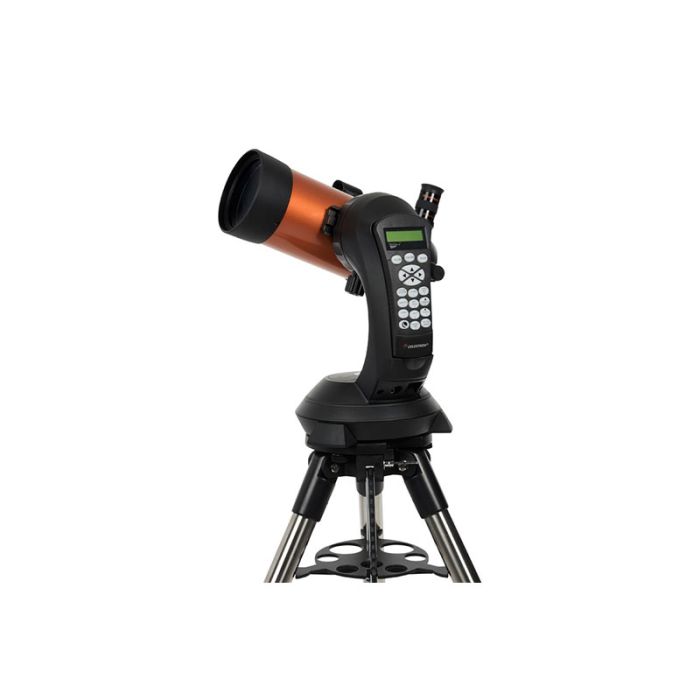

Celestron NexStar 4SE vs Apertura AD8 Dobsonian: Portability vs Aperture for Beginners
Choosing your first telescope can be daunting, especially when faced with two popular but fundamentally different options: the compact, computerized Celestron NexStar 4SE and the larger, manual Apertura AD8 Dobsonian. Both appeal to beginners but cater to distinct priorities and observing styles. This head-to-head comparison breaks down the key differences across price, performance, usability, and portability to help you decide whether a tech-assisted, portable scope or a larger aperture manual Dobsonian better fits your stargazing ambitions.
Quick Verdict
The Celestron NexStar 4SE excels for beginners who want a lightweight, portable telescope with computerized GoTo functionality that simplifies finding planets and the Moon. Its 4-inch aperture provides crisp views of bright objects and basic astrophotography capabilities but limits deep-sky performance. Conversely, the Apertura AD8 Dobsonian offers twice the aperture at 8 inches, delivering significantly brighter and more detailed views of deep-sky objects. Its simple, robust manual mount is reliable and low-maintenance but sacrifices portability and automated tracking. Choose the 4SE if you prioritize ease of use with technology and portability; opt for the AD8 if your focus is on aperture-driven deep-sky observing and value a sturdy, straightforward manual setup.
Key Differences at a Glance
- Aperture: 4-inch Maksutov-Cassegrain (NexStar 4SE) vs 8-inch Dobsonian reflector (AD8)
- Mount Type: Computerized GoTo alt-azimuth (NexStar 4SE) vs manual Dobsonian rocker box (AD8)
- Portability: Compact and lightweight (NexStar 4SE) vs bulky and heavier (AD8)
- Ease of Use: Automated object locating but with some setup complexity (NexStar 4SE) vs simple manual operation with star hopping (AD8)
- Price Range: ~$200-$600 (NexStar 4SE) vs generally around $400-$500 (AD8)
- Best Suited For: Planetary, lunar viewing, and casual astrophotography (NexStar 4SE) vs deep-sky visual observing and beginners wanting robust aperture (AD8)
Price and Value
From a budget standpoint, both telescopes are positioned attractively for beginners, but their value proposition hinges on what you prioritize. The Celestron NexStar 4SE typically retails around $200-$600, with the WooCommerce listing showing a price as low as $203.70, making it accessible for those seeking a computerized telescope without an overwhelming upfront investment. You pay a premium for the GoTo mount and compact Maksutov-Cassegrain optics, which provide sharp, high-contrast views but limit aperture size.
The Apertura AD8 Dobsonian generally costs around $400-$500, offering a larger 8-inch aperture at a similar or even lower price point depending on the seller. This gives exceptional value for aperture size, which is the most critical factor affecting image brightness and detail. The AD8’s simple manual mount avoids the cost and complexity of computerized components, delivering more aperture per dollar spent.
Tradeoff: The 4SE’s value lies in its technology and portability, which come at a price premium relative to aperture. The AD8 offers better aperture value but lacks automation, so you trade convenience for raw performance and cost efficiency.
Performance and Practical Use
Aperture is king when it comes to telescope performance. The Apertura AD8 boasts an 8-inch (203mm) primary mirror, doubling the diameter of the NexStar 4SE’s 4-inch Maksutov-Cassegrain optics. This means it gathers roughly four times more light, dramatically improving views of faint deep-sky objects like galaxies, nebulae, and star clusters. The AD8 also provides a wider true field of view, making star hopping and scanning the night sky more enjoyable and rewarding.
In contrast, the NexStar 4SE with its 4-inch aperture and long focal length (f/13) excels at delivering high-contrast, detailed views of bright planetary and lunar features. Its Maksutov-Cassegrain design produces crisp images with minimal chromatic aberration, ideal for observing the Moon’s craters, Jupiter’s cloud bands, or Saturn’s rings. However, its smaller aperture limits the visibility of faint deep-sky objects, which will appear dimmer and less detailed.
Computerized GoTo vs Manual Operation: The 4SE’s computerized mount automatically locates and tracks over 40,000 celestial objects, reducing the learning curve and time spent star hopping. This makes it convenient for beginners wanting quick access to popular targets without memorizing the night sky. However, the mount can be fragile and requires initial alignment, and it may occasionally need maintenance or repairs.
The AD8’s manual Dobsonian mount is simple, stable, and virtually maintenance-free. It offers smooth motion for intuitive pointing but requires users to learn star hopping or use a red-dot finder to locate objects. This manual approach encourages learning the night sky but may frustrate those seeking an automated experience.
Summary: Choose the AD8 if you want the best visual performance for deep-sky observing and are comfortable with manual navigation. Opt for the 4SE if you prefer automated object locating and primarily enjoy planetary and lunar viewing.
Ease of Setup / Ease of Use
Setup and ease of use differ significantly between these two telescopes, reflecting their design philosophies.
The Celestron NexStar 4SE is a compact, lightweight scope weighing around 9 pounds, making it easy to transport and set up in minutes. However, initial setup requires powering the computerized mount, aligning it with known stars, and navigating a hand controller interface. While the GoTo system simplifies finding objects after alignment, the process can be intimidating for absolute beginners and may involve troubleshooting if alignment fails. The computerized mount also depends on batteries or an external power source, adding a layer of logistical consideration.
In contrast, the Apertura AD8 Dobsonian features a straightforward, robust rocker box mount with no electronics. Assembly involves attaching the optical tube to the base, which is quick but results in a larger, heavier unit. No alignment or power is needed, and operation is purely manual—point and look. Beginners who enjoy learning the night sky and hands-on control may find this approachable. However, those expecting automated tracking will find the manual star hopping less convenient and potentially slow when locating faint objects.
- 4SE Pros: Fast physical setup, automated tracking after alignment, lightweight
- 4SE Cons: Alignment complexity, fragile mount, power dependence
- AD8 Pros: Plug-and-play simplicity, robust mount, no power needed
- AD8 Cons: Bulkier, heavier, manual object locating requires effort
Accessories / Feature Completeness
The Celestron NexStar 4SE typically comes as a package with the telescope optical tube, computerized GoTo mount, hand controller, and a basic eyepiece. Its computerized database of over 40,000 celestial objects is a standout feature, enabling beginners to explore vast portions of the sky with minimal star knowledge. The Maksutov-Cassegrain optics also suit basic astrophotography with proper accessories, although the mount is not optimized for long exposures.
The Apertura AD8 Dobsonian package includes the 8-inch optical tube, Dobsonian mount, and usually one or two eyepieces. It lacks any computerized features or tracking but compensates with excellent optical performance for the price. The simple mount design is highly stable, ideal for steady views, and the scope’s larger aperture allows more flexibility with eyepieces and focal reducers for varied observing. However, astrophotography is limited due to the manual mount and lack of tracking.
Tradeoffs in features: The 4SE’s computerized mount and compact design provide convenience and tech-friendly features but at the cost of mount fragility and limited aperture. The AD8’s simplicity and aperture dominate optical performance and reliability but require manual operation and offer fewer bundled accessories related to computerized observing.
Which Buyer Should Choose Which Option?
Choose the Celestron NexStar 4SE if you:
- Value portability and want a lightweight telescope easy to carry and store.
- Prefer computerized GoTo functionality to quickly find and track planets, the Moon, and bright objects.
- Are interested primarily in lunar and planetary observation with some casual astrophotography.
- Are comfortable with some setup complexity and managing electronic components.
- Enjoy occasional backyard observing sessions and want a compact instrument that travels well.
Choose the Apertura AD8 Dobsonian if you:
- Prioritize aperture size and deep-sky viewing, wanting brighter and more detailed views of galaxies and nebulae.
- Prefer a simple, robust, and reliable manual mount without electronics or alignment steps.
- Are comfortable learning star hopping and manual navigation of the night sky.
- Value maximum optical performance and mount stability at a competitive price.
- Plan to use the telescope mostly from a fixed location like a backyard, where portability is less critical.
Both telescopes serve beginners but cater to different observing philosophies: automated convenience versus aperture-driven manual experience. Your choice should reflect your observing goals, willingness to learn manual operation, and how much you value portability over raw light-gathering power.
Conclusion
Deciding between the Celestron NexStar
More Shopping Guide Articles
- Celestron NexStar 4SE Review: Portable Computerized Telescope for Beginners
- Buying Guide: How to Choose the Best Computerized Telescope Including the NexStar 4SE
- Celestron NexStar 4SE vs Sky-Watcher 8-inch Dobsonian: Computerized Convenience vs Aperture Power
- Top Alternatives to the Celestron NexStar 4SE: Best Beginner Computerized and Manual Telescopes