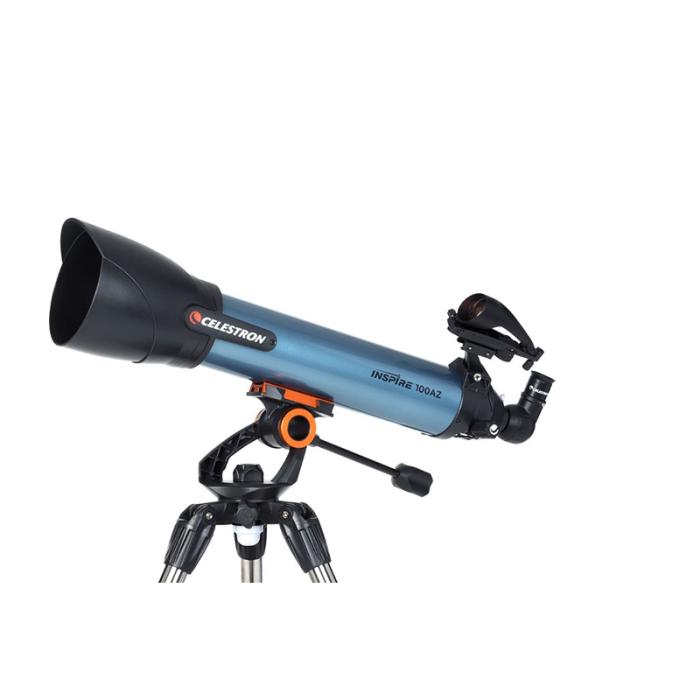

Buying Guide: How to Choose the Best Beginner Telescope Including the Inspire 100AZ
Starting out in astronomy can be exciting but also overwhelming, especially when choosing your first telescope. The wide range of options—from refractors to Dobsonians—comes with different strengths and tradeoffs. This guide helps beginners understand the key factors to consider and explains where a popular beginner model like the Celestron Inspire 100AZ fits in the landscape of entry-level telescopes. By focusing on practical buying logic, you’ll be equipped to pick a telescope that matches your interests, budget, and usage style.
What Buyers Should Decide Before Choosing a Telescope
Before zeroing in on any model, including the Inspire 100AZ, it’s important to clarify your goals and constraints. Ask yourself:
- What do I want to observe? The Moon and bright planets require different features than deep-sky objects like galaxies or nebulae.
- Where and how will I use the telescope? Will it mostly stay in your backyard, or do you want something portable for travel or park stargazing?
- How much time and effort am I willing to invest in setup and maintenance? Some designs are simpler to use but sacrifice optical power; others need more assembly or alignment.
- What is my budget? While price often correlates with aperture and quality, the best value depends on matching features to your needs.
Clarifying these points early saves frustration. For example, if you want easy, casual viewing of the Moon and nearby planets from a backyard, a refractor like the Inspire 100AZ may be ideal. But if you want to explore faint deep-sky objects or need razor-sharp planetary detail, larger Dobsonians or specialized designs might be better, albeit with different tradeoffs.
Key Decision Factors When Choosing a Beginner Telescope
1. Aperture and Optical Performance
Aperture—the diameter of the telescope’s main lens or mirror—directly impacts how much light the telescope gathers and how much detail it can resolve. Beginners often get drawn to bigger apertures for brighter, clearer views. However, larger apertures come with increased weight, size, and cost.
The Inspire 100AZ features a 100mm (approximately 4-inch) achromatic refractor lens. This size strikes a balance, offering decent brightness and resolution for lunar and planetary viewing without the bulk of larger telescopes. But compared to compact Dobsonians with 114mm or more aperture, or Maksutov-Cassegrain scopes with longer focal lengths, it won’t reveal as much fine planetary detail or deep-sky objects.
2. Mount Type and Ease of Use
Mount stability and ease of aiming are crucial for beginners. The Inspire 100AZ comes with a simple altazimuth tripod mount. This design is intuitive—move it up/down and left/right to find objects—but can be less stable and precise than Dobsonian mounts, which sit on a flat base and allow smooth manual tracking.
Ease of setup matters too. The Inspire 100AZ’s tripod mount is lightweight and requires minimal assembly, making it quick to start observing. More complex setups with equatorial mounts or larger Dobsonians may offer better tracking but can intimidate new users.
3. Portability and Storage
Portability is a medium-priority factor but strongly influences user satisfaction. A telescope that’s too heavy or bulky risks staying unused. The Inspire 100AZ is tripod-mounted and moderately portable—light enough to carry to a local park or backyard but not as compact or travel-friendly as smaller refractors or Maksutov designs.
Comparatively, Dobsonians with larger apertures offer better views but tend to be heavier and require more storage space. Buyers who prioritize grab-and-go convenience might prefer the Inspire 100AZ or similar short-tube refractors.
4. Price and Overall Value
For many beginners, price is a decisive factor. The Inspire 100AZ is positioned in the mid-range beginner category, generally priced around $105. It offers a solid value with decent optics, included tripod, and basic accessories like an eyepiece. However, the tradeoff is limited aperture and chromatic aberration—color fringing that can affect image sharpness, especially on bright objects.
Higher-priced alternatives, such as 6″ or 8″ Dobsonians, provide larger aperture and better views but require more investment and less portability. Cheaper options may cut corners on mount stability or optical quality, resulting in frustrating experiences. The key is matching price to expected use and patience with learning curves.
5. Use Case Fit and Observing Goals
Consider what you want to see and where:
- Wide-field and lunar observing: Short-tube refractors like the Inspire 100AZ excel here, providing bright, easy-to-find views of the Moon and star clusters.
- Planetary detail: Longer focal length scopes (e.g., Maksutov-Cassegrains like Skymax 102) offer sharper, higher-contrast planetary images but tend to be pricier and less wide-field.
- Deep-sky objects: Larger aperture Dobsonians gather more light, revealing faint galaxies and nebulae but are bulkier and require more setup.
Matching scope type to your observing priorities avoids disappointment. The Inspire 100AZ is best for casual lunar and bright planet viewing, not for high-contrast planetary imaging or faint deep-sky exploration.
Where the Celestron Inspire 100AZ Fits Well
The Inspire 100AZ is a strong contender for beginners who want an accessible, grab-and-go telescope that offers pleasing views of the Moon and bright planets like Jupiter and Saturn. Its achromatic refractor design delivers crisp, wide-field images that are easy to locate thanks to the intuitive altazimuth mount and included tripod.
Its moderate 100mm aperture provides enough light gathering for satisfying casual backyard astronomy without overwhelming new users with complex setup or heavy equipment. The included basic eyepiece allows immediate use out of the box, making it a practical starter telescope.
- Ideal for users prioritizing portability within a moderate-size frame.
- Good value around $105 for beginners focusing on lunar and planetary observation.
- Simple setup and operation with minimal maintenance.
- Works well for wide-field star cluster and constellation viewing.
Where the Inspire 100AZ Is the Wrong Fit
While the Inspire 100AZ is beginner-friendly, it is not the best choice for buyers with specific or demanding astronomical goals. Its achromatic refractor optics introduce chromatic aberration—visible as color fringes around bright objects—reducing sharpness on planets.
The 100mm aperture limits light gathering compared to Dobsonians of 6″ and 8″, which reveal fainter deep-sky objects and finer planetary detail. Also, the included tripod mount, while convenient, lacks the stability and smooth tracking of Dobsonian bases, potentially frustrating users aiming for longer observation sessions or astrophotography.
- Not ideal for users focused on detailed planetary or deep-sky observation.
- Less stable mount compared to Dobsonian alternatives.
- Moderate portability but bulkier than ultra-compact travel scopes.
- Users seeking premium optics or advanced features will find limitations.
What Kind of Buyer Should Choose the Inspire 100AZ
The Inspire 100AZ suits beginners who want a straightforward, no-fuss telescope for casual backyard astronomy. If your primary interests are viewing the Moon, bright planets, and star clusters with minimal setup and a moderate budget, this model fits well.
It’s also a good choice for buyers who value portability within a manageable size and prefer a lightweight tripod mount over bulkier Dobsonian designs. Those who want to get started quickly without extensive assembly or alignment will appreciate the Inspire 100AZ’s simplicity.
Conversely, if you anticipate wanting to explore faint deep-sky targets, desire sharper planetary images, or require a more stable mount for longer sessions, you might consider other options like a small Dobsonian or a Maksutov-Cassegrain telescope.
Final Buying Advice
Choosing your first telescope involves balancing price, portability, ease of use, and performance against your observing goals. The Celestron Inspire 100AZ offers a practical entry point with solid value for beginners interested in lunar and bright planetary viewing. Its achromatic refractor optics and altazimuth mount keep things simple and approachable, making it a reliable grab-and-go telescope for casual stargazing.
However, be mindful of its tradeoffs: moderate aperture limits faint object visibility, and chromatic aberration can soften planetary details. If your priorities include detailed planetary observation or deep-sky exploration, or if you want a more stable mount, consider investing in a larger Dobsonian or a compact Maksutov-Cassegrain instead—though these come with increased size, weight, and cost.
In summary, if you want an affordable, easy-to-use telescope that delivers rewarding views of the Moon and bright planets without complicated setup or heavy gear, the Inspire 100AZ is a sound choice. For beginners focusing on convenience and entry-level performance, it strikes a balanced middle ground. Always align your choice with your observing interests, willingness to manage setup, and portability needs to ensure long-term satisfaction with your new telescope.
More Shopping Guide Articles
- Celestron Inspire 100AZ Review: Ideal Beginner Telescope for Casual Stargazing
- Celestron Inspire 100AZ vs Orion StarBlast 4.5: Which Beginner Telescope Wins?
- Celestron Inspire 100AZ vs Skymax 102: Best Compact Telescope for Planetary Detail?
- Top Beginner Telescopes Compared: Celestron Inspire 100AZ and Small Dobsonian Options