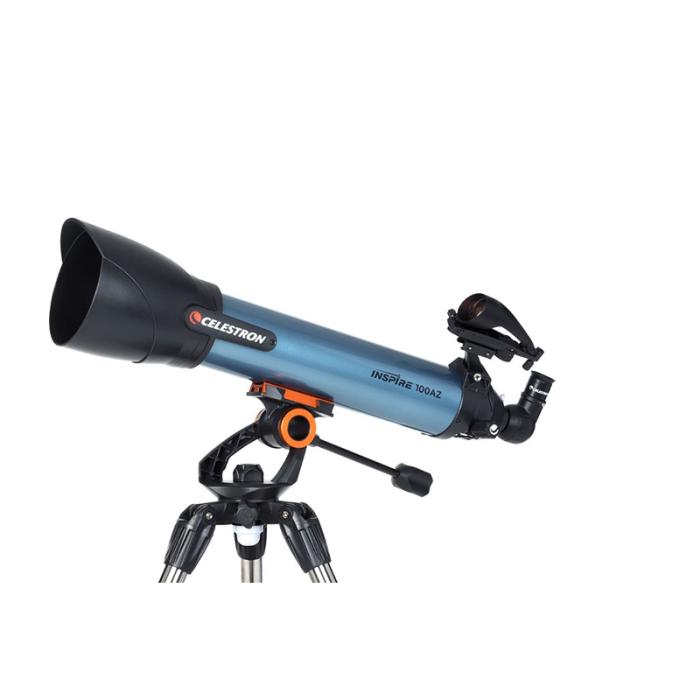

Celestron Inspire 100AZ vs Skymax 102: Best Compact Telescope for Planetary Detail?
Choosing a compact telescope optimized for planetary observation involves balancing optical design, focal length, portability, and price. The Celestron Inspire 100AZ and Skymax 102 are both popular options targeting users who want to explore the Moon and planets without hauling bulky gear. Yet, they represent two distinct optical philosophies: the Inspire 100AZ is an achromatic refractor offering wide-field views and beginner-friendly handling, while the Skymax 102 is a Maksutov-Cassegrain with a longer focal length designed to enhance planetary detail. This comparison dives into how these differences translate into real-world performance and which buyers each scope suits best.
Quick verdict
The Celestron Inspire 100AZ delivers accessible, affordable lunar and bright planet viewing with a lightweight, easy-to-use design ideal for beginners and casual observers. However, its achromatic refractor optics introduce some chromatic aberration and limit fine planetary detail.
In contrast, the Skymax 102 offers sharper, higher-contrast views of planets thanks to its longer focal length and Maksutov-Cassegrain design, reducing color fringing and boosting resolution on small planetary features. This comes at a higher price and narrower field of view, with a slightly steeper learning curve for setup and use.
Ultimately, choose the Inspire 100AZ if you prioritize simplicity, portability, and wide-field views on a modest budget. Opt for the Skymax 102 if your focus is on detailed planetary observation and you’re willing to invest more for optical refinement and longer focal reach.
Key differences at a glance
- Optical design: Inspire 100AZ uses an achromatic refractor lens prone to chromatic aberration; Skymax 102 employs a Maksutov-Cassegrain mirror-lens hybrid reducing color fringing.
- Focal length & ratio: Inspire 100AZ has a shorter focal length (~660mm) and lower focal ratio (~f/6.6) for wider fields; Skymax 102 boasts a longer focal length (~1300mm) and higher focal ratio (~f/12.7) for enhanced planetary detail.
- Price: Inspire 100AZ is budget-friendly (around $105); Skymax 102 typically costs significantly more, reflecting its advanced optics.
- Portability and ease of use: Inspire 100AZ is lighter with simple tripod mount; Skymax 102 is compact but heavier and may require more careful alignment.
- Field of view: Inspire 100AZ provides wider views suitable for lunar landscapes and star clusters; Skymax 102 offers a narrower field optimized for planets.
Price and value
The Celestron Inspire 100AZ is positioned as an affordable entry-level refractor telescope, with a retail price around $104.99. This price includes a basic tripod mount and a standard eyepiece, providing a ready-to-use package for beginners. Its value lies in offering a balanced introduction to astronomy with minimal upfront cost and straightforward setup. For buyers on a tight budget or newcomers seeking a no-frills telescope that performs well on the Moon and bright planets, it represents a sensible investment.
By comparison, the Skymax 102 commands a noticeably higher price, often two to three times that of the Inspire 100AZ. This premium reflects its more complex Maksutov-Cassegrain optical design, which requires precision manufacturing and delivers improved optical quality for planetary targets. While the higher cost may be a barrier for casual users, intermediate observers and those prioritizing planetary detail tend to find the investment worthwhile.
In value terms, the Inspire 100AZ excels in accessibility and user-friendly features at a modest price, making it a practical starting point. The Skymax 102, while pricier, offers a specialized performance boost that justifies the expense for users focused on planetary observation rather than casual stargazing.
Performance and practical use
Here the optical design differences become most apparent. The Inspire 100AZ’s achromatic refractor lens system gathers 100mm of aperture and produces bright images with relatively wide fields of view (~1° or more depending on eyepiece). However, the achromatic lens cannot fully correct chromatic aberration, leading to noticeable color fringing—especially around bright objects like the Moon and Jupiter. This limits the crispness and contrast of planetary details. Its shorter focal length (~660mm) means lower magnifications with standard eyepieces, favoring broad lunar landscapes and bright planet spotting rather than fine detail.
In contrast, the Skymax 102’s Maksutov-Cassegrain design uses a spherical corrector lens and a primary mirror to achieve a longer effective focal length (~1300mm) and a higher focal ratio (~f/12.7). This optical configuration significantly reduces chromatic aberration, delivering sharper, higher-contrast planetary images. The longer focal length also allows higher magnifications with less optical compromise, making features like Jupiter’s cloud bands, Saturn’s rings, and lunar craters more discernible. The tradeoff is a narrower field of view, which is less suited for wide-field observing or extended objects.
Both telescopes have similar 100mm-class apertures, so their light-gathering capabilities are roughly comparable, but the Skymax’s optical quality and focal length give it a clear edge for planetary detail. The Inspire 100AZ is better suited for users who value ease and breadth of viewing over fine planetary resolution.
Ease of setup / ease of use
The Inspire 100AZ is designed with beginners in mind, featuring a simple altazimuth tripod mount that is intuitive to position and adjust. Its lightweight tube and basic tripod make it easy to transport and assemble in minutes, with minimal alignment required. The included basic eyepiece and optional finder scope simplify initial targeting. This low setup friction appeals to casual users or families wanting quick access to the night sky without steep learning curves.
The Skymax 102, while still a compact and portable telescope, involves more precise collimation and alignment due to its Maksutov-Cassegrain design. Its mount options vary, but many come with equatorial or altazimuth mounts that may require a bit more familiarity or patience to set up correctly. The narrower field of view means users need more careful aiming to keep targets in view at higher magnifications. For beginners comfortable with a modest learning curve or intermediate users seeking specialized planetary views, this setup complexity is manageable but not as instantly accessible as the Inspire 100AZ.
Accessories / feature completeness
The Inspire 100AZ package typically includes a basic 20mm eyepiece, a 45-degree erect image diagonal (improving comfort during observation), and a simple altazimuth tripod. A finder scope is often optional rather than standard, which some users may want to add to improve target acquisition. This setup covers fundamental needs for casual lunar and planet viewing but lacks advanced accessories or multiple eyepieces for varied magnification.
The Skymax 102 generally comes equipped with at least one eyepiece optimized for high magnification (often 25mm or 10mm), and a sturdy mount—sometimes equatorial—to facilitate tracking. It may also include a finder scope and a built-in Barlow lens or diagonal, depending on the package. These features reflect its focus on detailed planetary observation. However, the accessories can add to the overall cost and complexity. Buyers seeking a ready-to-go telescope with advanced planetary accessories will appreciate this completeness, while casual users might find it more than necessary.
Which buyer should choose which option
Celestron Inspire 100AZ is best for:
- Beginners prioritizing simplicity and quick setup for casual lunar and bright planet viewing
- Users who want a lightweight, moderately portable telescope for backyard or park use
- Buyers seeking an affordable option with decent wide-field views
- Those who prefer a straightforward altazimuth mount and minimal maintenance
The Inspire 100AZ’s tradeoffs include some chromatic aberration and limited fine planetary detail, so it suits those content with broader views rather than high-contrast, sharp planetary features.
Skymax 102 is best for:
- Intermediate observers focused on detailed lunar and planetary observation
- Users willing to invest more for improved optical quality and reduced chromatic aberration
- Buyers who value longer focal length and higher magnification capability
- Observers comfortable with a slightly more complex setup and narrower field of view
- Those wanting a compact but optically advanced Maksutov-Cassegrain design for sharper views
The Skymax 102’s compromises include higher cost, a narrower field of view, and less beginner-friendly alignment. It’s less suited for wide-field casual observing or users needing the easiest possible setup.
Conclusion
When deciding between the Celestron Inspire 100AZ and the Skymax 102, your choice largely hinges on your observing priorities and experience level. The Inspire 100AZ is a straightforward, budget-conscious refractor that delivers enjoyable views of the Moon and bright planets with minimal setup hassle. It is especially appealing for beginners or casual users who want a portable, no-fuss telescope for weekend backyard sessions or family stargazing.
In contrast, the Skymax 102 excels in delivering sharper, more detailed planetary images thanks to its longer focal length and Maksutov-Cassegrain design. This makes it a preferred choice for intermediate astronomers focused on planetary detail, willing to accept a higher price and a narrower field of view. Its compact form factor and improved optics make it a standout for users who want to delve deeper into lunar and planetary features without moving to large, complex telescopes.
In summary, select the Inspire 100AZ if ease of use, portability, and affordability are your top priorities and you’re content with general lunar and bright planet views. Choose the Skymax 102 if you seek enhanced planetary performance and are ready to invest in a specialized, higher-performance compact telescope. Both are capable instruments, but their optical designs and user experiences cater to distinct buyer needs and observing goals.</
More Shopping Guide Articles
- Celestron Inspire 100AZ Review: Ideal Beginner Telescope for Casual Stargazing
- Buying Guide: How to Choose the Best Beginner Telescope Including the Inspire 100AZ
- Celestron Inspire 100AZ vs Orion StarBlast 4.5: Which Beginner Telescope Wins?
- Top Beginner Telescopes Compared: Celestron Inspire 100AZ and Small Dobsonian Options