
Top Beginner Telescopes Compared: Celestron Inspire 100AZ and Small Dobsonian Options
Choosing your first telescope can feel like navigating a constellation of options. For beginners stepping into backyard astronomy, the balance between aperture, portability, price, and ease of use defines the experience. This comparison focuses on the Celestron Inspire 100AZ—a mid-range achromatic refractor—and its main competitors in the compact Dobsonian category, specifically small 6-inch and 8-inch Dobsonian reflectors. By understanding how these telescopes fit different priorities and use cases, you can narrow your choice to what really matters for your stargazing goals.
Where the Celestron Inspire 100AZ Fits in the Beginner Telescope Market
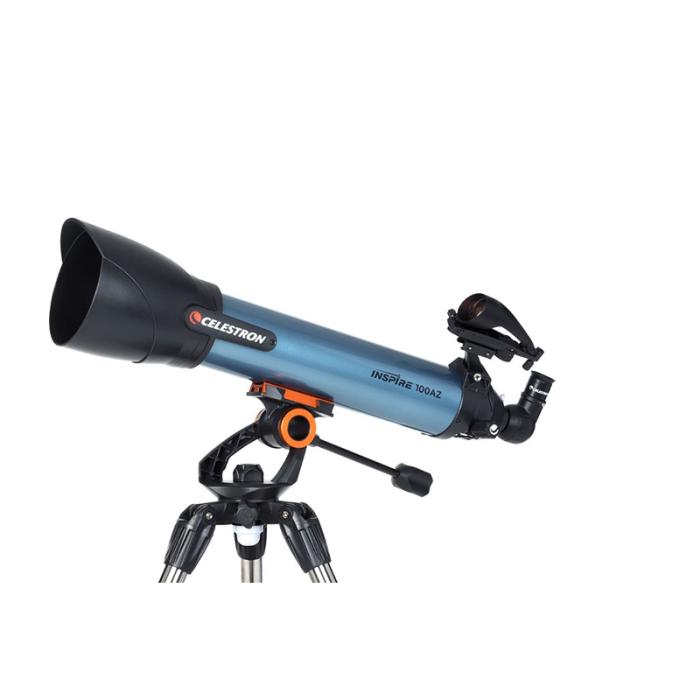
The Inspire 100AZ is positioned as a lightweight, beginner-friendly refractor telescope. Its 100mm aperture and achromatic lens design provide bright, wide-field views that are particularly suited to casual observing of the Moon and bright planets like Jupiter and Saturn. Unlike larger Dobsonians, this model emphasizes ease of setup and portability, featuring a tripod mount that folds down for transport. This makes it appealing for users who want a grab-and-go instrument without the need for complicated assembly or bulky storage.
However, the Inspire 100AZ’s smaller aperture and achromatic optics bring tradeoffs. While it offers decent lunar and planetary views, it is less capable for deep-sky objects or high-contrast planetary detail compared to reflectors with larger apertures or specialized optical designs. Its mount is serviceable but not as rock-solid as Dobsonian altazimuth mounts, which can affect viewing stability at higher magnifications.
Price-wise, the Inspire 100AZ sits in a mid-range bracket, retailing around $105. It includes a basic eyepiece and a tripod mount, with optional finder scope upgrades available. This package targets beginners who prioritize simplicity and portability over maximum optical power.
Comparing Key Buying Factors: Aperture, Price, Portability, and Mount Stability
Aperture and Optical Performance
Aperture size is critical because it governs how much light the telescope gathers and, consequently, how detailed and bright objects appear. The Inspire 100AZ’s 100mm aperture is respectable for a refractor but smaller than the Dobsonian competitors:
- Small Dobsonian 6 inch: About 150mm aperture, roughly 50% larger light gathering than the Inspire 100AZ.
- Small Dobsonian 8 inch: Approximately 200mm aperture, doubling the light gathering compared to the Inspire 100AZ.
Dobsonians, being Newtonian reflectors, typically provide sharper planetary and deeper-sky views at these apertures. The Dobsonian 6-inch is a solid middle ground, offering increased resolution and brightness without overwhelming bulk. The 8-inch model is a step up for serious beginners seeking more detail on faint objects but at the cost of portability and higher price.
In contrast, the Inspire 100AZ’s achromatic refractor design results in some color fringing around bright objects, impacting crispness in planetary details. The refractor’s shorter focal length offers wider fields of view, which can be enjoyable but limits high-magnification performance.
Price and Value Considerations
The Inspire 100AZ’s price near $105 positions it as an accessible entry point. While Dobsonians offer more aperture, their prices generally start higher, especially the 8-inch models, which can cost several hundred dollars. For buyers on a strict budget who want a quick setup and portability, the Inspire 100AZ can provide satisfying views without a major investment.
However, when considering aperture per dollar, Dobsonians typically deliver more bang for the buck, especially for users aiming to explore deep-sky objects or detailed planetary observations over time. The increased aperture and stable mount of Dobsonians justify their higher price for buyers focused on performance rather than portability.
Portability and Ease of Use
Portability is often a deciding factor for beginners who want to take their telescope to parks, camping, or just move it easily in and out of storage. The Inspire 100AZ excels here with its tripod mount and lightweight construction, making it one of the easiest beginner telescopes to transport and set up.
The small Dobsonians, while compact for their aperture, are bulkier and heavier. The 6-inch Dobsonian is manageable with some effort, but the 8-inch model requires more space and is less suited for casual grab-and-go observing. Additionally, Dobsonians need some assembly and alignment, which adds initial setup time compared to the Inspire’s plug-and-play design.
Mount Stability
Dobsonian mounts are known for their simplicity and stability. The rocker box design provides a solid base that reduces vibrations and allows smooth manual tracking of celestial objects. This stability is especially beneficial at higher magnifications where even small shakes can degrade the viewing experience.
The Inspire 100AZ’s altazimuth tripod mount is functional but less robust. It can introduce shakiness when handling or adjusting the telescope, particularly when using higher magnification eyepieces. For casual, wide-field observing at lower magnifications, this is less of an issue, but it may frustrate users targeting detailed planetary views.
Best Fit Scenarios for Each Telescope
Celestron Inspire 100AZ
- Casual beginners wanting a lightweight, easy-to-use telescope for quick setup and spontaneous backyard sessions.
- Observers who prioritize portability for occasional use at parks or while traveling short distances.
- Users interested primarily in wide-field views of the Moon and bright planets without fussing over complex setup.
- Budget-conscious buyers seeking an affordable entry into astronomy with a decent starter kit.
Small Dobsonian 6 inch
- Beginners ready to invest in a telescope that offers a noticeable jump in brightness and detail.
- Users with space and willingness to handle a bulkier instrument for better planetary and deep-sky views.
- Observers who value mount stability and smooth manual tracking for longer, more immersive viewing sessions.
- Those aiming to explore a wider range of celestial objects beyond the Moon and brightest planets.
Small Dobsonian 8 inch
- Serious beginners or hobbyists willing to commit to a larger, heavier telescope for superior performance.
- Observers focused on deep-sky object viewing, including faint galaxies and nebulae, benefiting from increased aperture.
- Users who have storage space and transportation means for a substantial instrument.
- Buyers seeking long-term value by investing in a telescope likely to remain satisfying as skills grow.
Less Ideal Scenarios for the Inspire 100AZ and Dobsonians
The Inspire 100AZ is less suited for users who want sharp planetary detail or plan to explore deep-sky objects extensively. Its smaller aperture and refractor optics limit these capabilities. Additionally, those who require a highly stable mount for higher magnifications may find the tripod less satisfying.
On the other hand, the small Dobsonian models are less ideal for buyers prioritizing portability or quick setup. Their bulk and weight make them less convenient for travel or spontaneous observing sessions. The 8-inch Dobsonian especially demands more storage and effort to transport, which may be impractical for some casual users.
Buyers on very tight budgets might find the Dobsonians’ higher starting prices a barrier, despite their better aperture-to-price ratio. Also, users looking specifically for wide-field views might prefer the refractor’s optical style over the narrower fields typical of Dobsonians.
Final Shortlist Recommendation
For beginners evaluating these options, the choice boils down to what matters most in your stargazing experience:
- Choose the Celestron Inspire 100AZ if: You want a straightforward, portable telescope that’s quick to set up and easy to transport. It’s well-suited for casual lunar and bright planet viewing in your backyard or local park, with a budget-friendly price point.
- Choose the Small Dobsonian 6 inch if: You’re ready to prioritize improved aperture and stable mounting over portability, aiming for better views of planets and some deep-sky objects. It’s a solid step up that remains beginner-friendly but requires more space and setup effort.
- Choose the Small Dobsonian 8 inch if: You seek the best optical performance and are willing to handle the size, weight, and higher cost. This model is suited for serious beginners or hobbyists who want to explore a wide range of celestial targets with excellent image brightness and detail.
In summary, the Inspire 100AZ offers an inviting entry into astronomy with minimal barriers, while the Dobsonians provide progressively more capability at the expense of portability and convenience. Understanding your observing priorities and lifestyle will guide you to the telescope that fits your first steps under the stars.
More Shopping Guide Articles
- Celestron Inspire 100AZ Review: Ideal Beginner Telescope for Casual Stargazing
- Buying Guide: How to Choose the Best Beginner Telescope Including the Inspire 100AZ
- Celestron Inspire 100AZ vs Orion StarBlast 4.5: Which Beginner Telescope Wins?
- Celestron Inspire 100AZ vs Skymax 102: Best Compact Telescope for Planetary Detail?