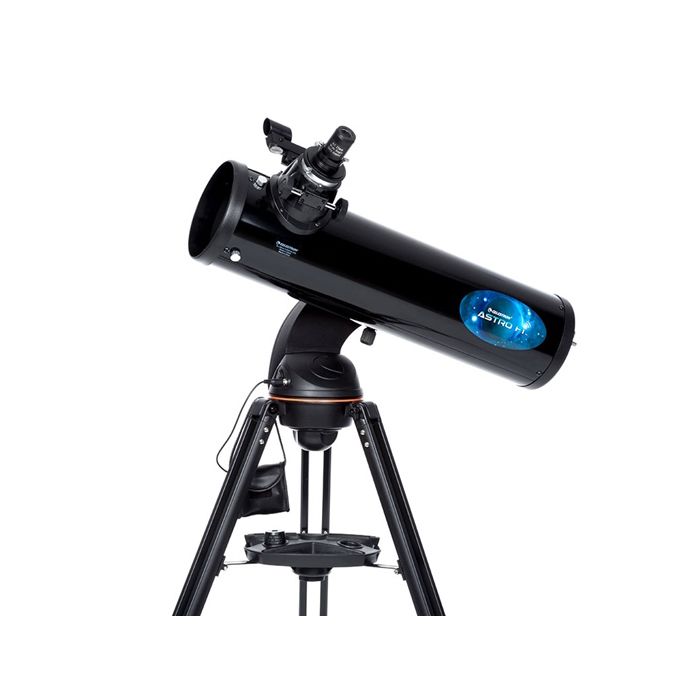

Top Alternatives to Celestron Astro Fi 130: Maksutov-Cassegrain and Dobsonian Options
When considering the Celestron Astro Fi 130, many buyers appreciate its blend of a 130mm Newtonian aperture with modern WiFi-enabled smartphone control. However, this mid-range telescope is just one choice among several distinct optical designs and operational styles that cater to different astronomy interests and priorities. This roundup explores key alternatives—especially 127mm Maksutov-Cassegrain telescopes and 8-inch Dobsonian models—highlighting how they compare on essential buying factors like aperture, portability, automation, and observing focus. Understanding these differences will help you select the best telescope style for your specific needs, whether you prioritize planetary detail, ease of use, or deep-sky viewing.
Where the Celestron Astro Fi 130 Fits in the Telescope Market
The Astro Fi 130 occupies a sweet spot for beginners and intermediate users seeking a compact, easy-to-use telescope with automated GoTo capabilities. Its 130mm aperture Newtonian reflector offers solid all-around performance for lunar, planetary, and brighter deep-sky objects. The key draw is the smartphone app-based control system, which replaces traditional hand controllers with Celestron’s SkyPortal app, simplifying alignment and object location.
Priced around $168, the Astro Fi 130 balances value and convenience, making it appealing for backyard astronomers who want guided stargazing without a steep learning curve. Its compact tube design improves portability compared to larger scopes while retaining enough aperture for meaningful planetary and some deep-sky observation. However, this positioning also means compromises on aperture size and deeper sky performance relative to larger manual telescopes or some GoTo competitors.
In essence, the Astro Fi 130 targets users looking for:
- A mid-range price with good optical performance
- Modern, smartphone-based GoTo control
- Portability suitable for casual home use
- Balanced capability for planetary, lunar, and bright deep-sky observing
Yet it is less suited for those prioritizing larger apertures, purely manual operation, or ultra-compact travel setups.
Comparing Key Buying Factors: Maksutov-Cassegrain and Dobsonian Alternatives
Optical Design and Aperture
The Astro Fi 130’s Newtonian design delivers a 130mm aperture with a focal length suited for general-purpose viewing. Alternatives in this price and size range include 127mm Maksutov-Cassegrain telescopes and 8-inch (approximately 203mm) Dobsonians.
127mm Maksutov-Cassegrain scopes are prized for their long focal lengths and closed-tube design, which enhances image contrast and reduces maintenance. This design excels at high-contrast lunar and planetary views, making it a favorite for observers in light-polluted areas focusing on the Moon, Jupiter, and Saturn. However, Maksutov tubes tend to be heavier and longer relative to aperture, and their smaller 127mm aperture limits deep-sky performance compared to Dobsonians or larger Newtonians.
8-inch Dobsonians offer substantially larger apertures (around 203mm) at similar price points to the Astro Fi 130. This means dramatically better light-gathering ability and resolution, which improves views of faint deep-sky objects and planetary detail. The Dobsonian design’s simple alt-azimuth mount is robust and stable but completely manual, requiring star-hopping or external aids for locating targets. These scopes tend to be bulkier and less portable but deliver superior raw optical performance for the price.
Automation vs Manual Operation
The Astro Fi 130 features motorized tracking and GoTo capability controlled via a smartphone app. This setup drastically reduces the time and effort needed to find celestial objects, making it ideal for beginners or those who prefer a guided experience.
By contrast, 127mm Maksutov-Cassegrains often come as manual or limited GoTo models. Their longer focal lengths and narrower fields of view mean manual star-hopping can be challenging, but they reward patient users with crisp planetary images. Some Maksutovs include basic electronic tracking, but full GoTo is less common than in Newtonian models.
8-inch Dobsonians are predominantly manual with no built-in tracking or GoTo. While this demands more skill and patience, it also offers a more direct and tactile connection to the night sky. Users who enjoy learning celestial navigation and don’t mind the extra setup work will find this rewarding. For those wanting automation, there are motorized Dobsonian variants, but these typically cost more.
Portability and Setup
Portability is a crucial factor for many buyers. The Astro Fi 130’s compact Newtonian tube and tripod mount make it relatively easy to transport and set up for backyard use or occasional travel. Its lightweight design facilitates quick assembly and breakdown, with minimal alignment steps thanks to app-assisted SkyAlign technology.
Maksutov-Cassegrains are more compact in length but often heavier due to their closed-tube optics. They usually require a sturdier mount, which adds to overall weight and setup complexity. Their small size favors users needing a scope to carry short distances or store in tight spaces, though they are less convenient for frequent transport.
8-inch Dobsonians, while simple in design, can be bulky and heavy. The large primary mirror and stable base mean they’re best suited for home use or car-to-observing site transport, rather than hand-carrying. Setup is straightforward mechanically—just place the scope on a flat surface—but alignment and target finding are manual tasks that can slow down observing sessions.
Price and Value
Price-wise, the Astro Fi 130 offers a compelling package with aperture, GoTo automation, and smartphone control bundled around $168. This makes it accessible for newcomers wanting a modern experience.
127mm Maksutov-Cassegrains often come at a similar or slightly higher price point, but buyers should weigh the tradeoff between smaller aperture and optical quality optimized for planetary viewing. 8-inch Dobsonians deliver more aperture for roughly the same cost but lack automation, meaning the value depends heavily on how much manual observing you’re willing to embrace.
Best Fit Scenarios for These Telescope Alternatives
127mm Maksutov-Cassegrain Telescopes
- Ideal for: Observers living in urban or light-polluted environments who want sharp, high-contrast views of the Moon and planets.
- Perfect for: Users valuing compact size and contrast over aperture, and those who prefer a manual or semi-automated experience.
- Great for: Travelers needing a relatively portable scope with high optical quality for planetary detail.
This design is less suited for deep-sky enthusiasts or those wanting automated target acquisition.
8-inch Manual Dobsonians
- Ideal for: Buyers who prioritize maximum aperture and light gathering for deep-sky objects on a budget.
- Best for: Enthusiasts comfortable with manual operation and star-hopping, or those willing to invest time learning the night sky.
- Perfect for: Home astronomers with storage space who want the best visual performance per dollar, and who don’t require GoTo automation.
This option is less appropriate for those seeking portability, automated locating, or quick setup.
Celestron Astro Fi 130 (For Context)
- Best for: Beginners wanting a smart, easy-to-use GoTo telescope with decent aperture for planetary, lunar, and bright deep-sky objects.
- Ideal for: Backyard observers who appreciate WiFi smartphone control and moderate portability.
- Good for: Those who want a balanced package without the complexity of manual scopes or the bulk of larger aperture models.
Less Ideal Use Cases for Maksutov-Cassegrain and Dobsonian Alternatives
127mm Maksutov-Cassegrain
While excellent for planetary detail, Maksutov-Cassegrains are less suited to wide-field deep-sky viewing due to their longer focal lengths and smaller apertures. Their manual or limited automation options may frustrate users seeking quick, guided object location. Moreover, their weight and tube length can challenge portability for frequent travel.
8-inch Manual Dobsonians
Manual Dobsonians demand proficiency in celestial navigation, which can be daunting for beginners. Their size and weight reduce ease of transport and storage, making them unsuitable for users who need a lightweight scope or want to carry the telescope long distances. Lack of motorized tracking means long exposure astrophotography is impractical without additional equipment, and quick target acquisition is not possible.
In contrast, users expecting a “plug and play” experience may find manual Dobsonians frustrating, especially without prior experience.
Additional Considerations
Neither Maksutov-Cassegrain nor manual Dobsonians typically match the seamless smartphone integration and app-based control that the Astro Fi 130 offers. Buyers prioritizing modern digital convenience or remote operation may thus find these alternatives less appealing despite their optical strengths.
Final Shortlist Recommendation for Astro Fi 130 Shoppers
Choosing between the Astro Fi 130 and its alternatives boils down to your observing preferences, willingness to learn manual operation, and priorities on portability versus aperture.
- If you want automated, guided observing with moderate aperture and modern smartphone control: The Celestron Astro Fi 130 remains a strong choice for casual backyard astronomy and beginners.
- If planetary and lunar observing under light pollution is your focus and you prefer a compact, high-contrast scope: Consider a 127mm Maksutov-Cassegrain. Expect a manual or semi-automated experience with excellent image quality for planets but less versatility for deep-sky.
- If maximum aperture and raw visual performance for deep-sky objects at a similar price are your priority, and you’re comfortable with manual operation: An 8-inch Dobsonian (
More Shopping Guide Articles
- Celestron Astro Fi 130 Review: Smart WiFi Newtonian for Beginners
- Buying Guide: How to Choose Between Celestron Astro Fi 130 and Sky-Watcher Star Discovery 150P
- Celestron Astro Fi 130 vs NexStar 130/650: Modern WiFi Control or Classic Handset?
- Celestron Astro Fi 130 vs Sky-Watcher Virtuoso GTi 150P: Aperture and Mount Style Showdown