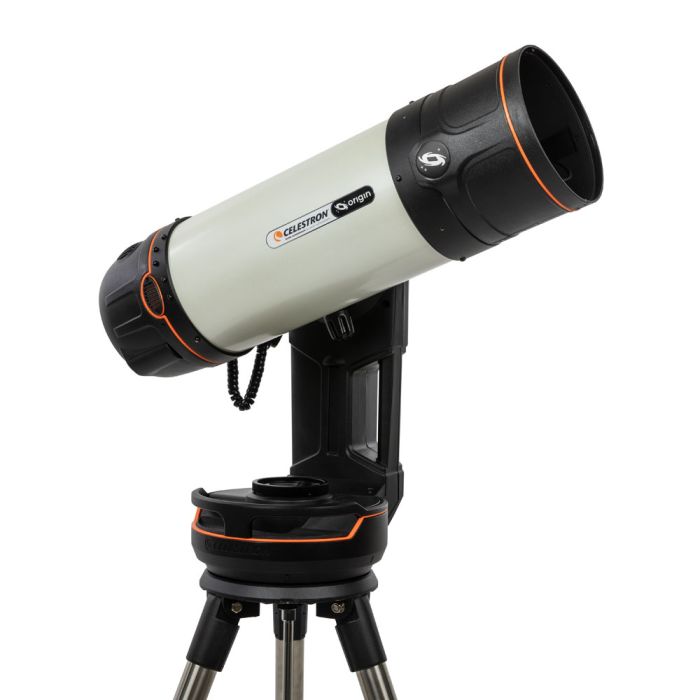

Celestron Origin vs ZWO Seestar S50: Premium Smart Telescopes Compared
For advanced amateur astronomers focused on detailed astrophotography, selecting a premium smart telescope hinges on key factors like aperture size, image clarity, and build quality. The Celestron Origin Intelligent Home Observatory and the ZWO Seestar S50 both target this high-end segment but take distinct approaches in optics, mount design, and user experience. This comparison dives into how each fares on the critical decision points to help you decide which smart telescope better fits your astrophotography ambitions and observing environment.
Quick Verdict
The Celestron Origin excels with its 6-inch RASA optical tube, delivering superior deep-space imaging and a robust, vibration-resistant mount ideal for stable, long-exposure astrophotography at a fixed home site. Its all-in-one design simplifies setup for users prioritizing image quality above portability.
In contrast, the ZWO Seestar S50 offers a competitive aperture and versatile imaging capabilities with a focus on planetary and deep-sky targets, all at a more accessible price point. However, it compromises some mount stability and build heft, making it better suited for users who value modularity and are comfortable managing stability in variable conditions.
Key Differences at a Glance
- Aperture & Optics: Celestron Origin features a 6-inch Rowe-Ackermann Schmidt Astrograph (RASA) optimized for deep-space clarity; ZWO Seestar S50 has a slightly smaller aperture with a design balancing planetary and deep-sky imaging.
- Image Quality: Origin delivers superior deep-space detail with less distortion; Seestar S50 offers good planetary imaging but can be less sharp in extended deep-sky exposures.
- Build & Mount: Origin’s tripod and base emphasize vibration reduction and wind resistance; Seestar S50’s mount is lighter but less stable under gusty conditions.
- Price: Origin commands a premium price reflecting its specialized optics and build; Seestar S50 is more affordable, offering strong value for the features.
- Software & Usability: Both provide automated alignment and imaging, but Origin’s integrated software is tailored for simplicity and deep-sky optimization, while Seestar S50 offers flexibility with modular components.
Price and Value
The Celestron Origin is positioned at the higher end of the smart telescope market, with a price near $800. This reflects its specialized 6-inch RASA optical tube and a sturdy mount designed to minimize vibrations, which is crucial for long-exposure deep-space astrophotography. For buyers prioritizing image fidelity and stability in a home observatory setting, the price premium can be justified by the quality of results and the convenience of an integrated system.
The ZWO Seestar S50 offers a more budget-conscious option without a drastic sacrifice in aperture or imaging capability. While its optics and mount do not match the Origin’s in absolute build robustness, it provides a balanced feature set suitable for users seeking good planetary and deep-sky performance at a lower entry cost. The modular design also means potential savings or upgrades, appealing to users who like customizing their setup over time.
In summary, Origin’s cost is an investment in stability and deep-sky specialization, whereas Seestar S50 offers better upfront value with tradeoffs in build and some imaging finesse.
Performance and Practical Use
Performance-wise, the Celestron Origin’s 6-inch RASA optical tube excels in deep-space imaging. Its fast focal ratio and optimized optics produce sharp, low-distortion images of galaxies, nebulae, and star clusters, enabling longer exposure astrophotography with excellent color and detail. Users report that this telescope’s system is finely tuned for capturing faint celestial objects, making it a go-to for deep-sky enthusiasts.
Conversely, the ZWO Seestar S50, while also capable of deep-sky imaging, shines more in planetary and lunar photography thanks to its design balance and sensor options. Its aperture, slightly smaller or comparable but paired with different optical configurations, tends to deliver crisp planetary images but may require more user intervention to achieve stable exposures for faint deep-sky targets. The Seestar’s mount and software support a variety of sensor sizes and imaging styles, offering flexibility for users who want to explore multiple astrophotography disciplines.
- Celestron Origin: Best for deep-sky imaging requiring stable, long-exposure astrophotography.
- ZWO Seestar S50: Suited for users wanting versatile planetary and deep-sky imaging with modular hardware.
Ease of Setup / Ease of Use
Both telescopes aim to minimize the complexity traditionally associated with astrophotography. The Celestron Origin integrates its optical tube, mount, and software into a cohesive unit that streamlines setup and alignment. Users benefit from automated star alignment and a guided imaging workflow, which reduces the learning curve for intermediate users. However, the heavier mount and tripod mean the setup is best suited to a semi-permanent home observatory rather than frequent transport.
The ZWO Seestar S50 features a lighter, more modular mount that can be easier to move or adjust, but this comes at the cost of some stability. The software is user-friendly but may require more manual calibration or adjustment to optimize imaging results, especially in less ideal environmental conditions. This makes the Seestar S50 a better fit for users who are comfortable with some hands-on configuration and want the flexibility to adapt their setup.
- Celestron Origin: Plug-and-play feel with integrated automation; less portable but low setup friction.
- ZWO Seestar S50: Moderately easy setup; more manual control and flexibility but requires more user input.
Accessories / Feature Completeness
The Celestron Origin comes as a comprehensive package, featuring the 6-inch RASA optical tube, a dew heater to combat moisture buildup, and the ability to download RAW images directly for post-processing. Its all-in-one design reduces the need for additional accessories, making it a streamlined solution for astrophotographers who want a ready-to-go system optimized for deep-sky imaging.
In contrast, the ZWO Seestar S50 offers a more modular approach. While it includes essential components for astrophotography, users may need to purchase or upgrade accessories like specific cameras, filters, or dew control systems separately to tailor the telescope to their exact needs. This flexibility is appealing for users who prefer to build their setup gradually or experiment with different astrophotography styles.
Overall, Origin’s completeness suits those wanting a turnkey experience, while Seestar S50’s modularity supports customization and incremental investment.
Which Buyer Should Choose Which Option?
If your primary goal is deep-sky astrophotography from a stable home observatory, and you value an integrated system that minimizes setup complexity while maximizing image clarity, the Celestron Origin Intelligent Home Observatory is the superior choice. Its larger aperture and specialized optics provide richer detail for faint celestial objects, and its solid mount ensures stability during long exposures. This telescope suits intermediate amateurs who want a focused, high-quality deep-sky imaging tool without the need for frequent transport.
Alternatively, if you prioritize a balance between planetary and deep-sky imaging, desire a more affordable entry into premium smart telescopes, and are comfortable managing a lighter mount with some tradeoffs in wind stability, the ZWO Seestar S50 is well worth considering. It appeals to users who want flexibility, modular upgrades, and the option to explore diverse astrophotography targets. This makes it suitable for those with variable observing sites or who plan to evolve their setup over time.
- Choose Celestron Origin if you:
- Focus mainly on deep-space imaging.
- Prefer integrated, stable hardware with less setup hassle.
- Have a dedicated home observatory space.
- Are willing to invest in premium optics and mount quality.
- Choose ZWO Seestar S50 if you:
- Want strong planetary and decent deep-sky performance in one package.
- Prefer a lighter, modular system with upgrade potential.
- Need a more budget-friendly premium smart telescope.
- Are comfortable with some manual setup adjustments and less mount stability.
Conclusion
Between the Celestron Origin Intelligent Home Observatory and the ZWO Seestar S50, the decision ultimately rests on your astrophotography priorities and observing environment. The Origin’s 6-inch RASA optics and robust mount deliver superior deep-sky imaging with minimal fuss, making it a compelling choice for users who want a dedicated, stable, and integrated home observatory experience. Its higher price reflects this specialization and build quality.
Meanwhile, the Seestar S50 provides a versatile alternative that balances planetary and deep-sky imaging with a more approachable price and flexible, modular design. Its lighter mount is easier to transport but may require more care to maintain image stability outdoors.
For buyers focused on maximizing image clarity and stable long-exposure deep-sky astrophotography in a fixed location, the Celestron Origin stands out as the premium pick. For those seeking a capable, adaptable smart telescope that offers solid value and multi-purpose imaging potential, the ZWO Seestar S50 is a strong contender.
More Shopping Guide Articles
- Celestron Origin Smart Telescope Review: Deep-Space Imaging Excellence
- Buying Guide: Choosing the Right Smart Telescope for Home Astrophotography
- Celestron Origin vs ZWO Seestar S30: Which Smart Telescope Fits Your Budget?
- Top Smart Telescopes for Home Astrophotography: Celestron Origin and Alternatives