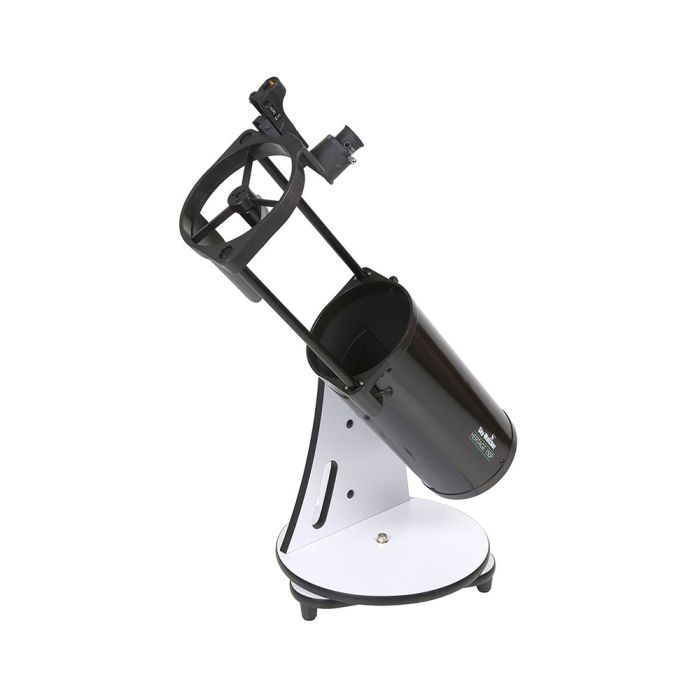

Heritage 150 vs Heritage 130P: Which Portable Dobsonian Fits Your Needs?
Choosing the right portable Dobsonian telescope is crucial for budget-conscious beginners seeking clear views of the night sky without cumbersome setups or excessive weight. The Sky-Watcher Heritage 150 and Heritage 130P are two collapsible tabletop Dobsonians from the same line, designed to balance aperture, portability, and price. This focused comparison breaks down the key differences and practical tradeoffs between these models to help you confidently decide which fits your stargazing style and priorities.
Quick Verdict
The Heritage 150 offers a significant boost in aperture with its 6-inch mirror, delivering brighter, more detailed views of deep-sky objects and planets, at the cost of added weight and bulk. The Heritage 130P, meanwhile, prioritizes portability and ease of transport with a lighter 5-inch aperture, sacrificing some light-gathering power but gaining convenience for users with limited storage or frequent travel needs. Your ideal choice depends on whether you value enhanced viewing capability or maximum portability within a compact tabletop Dobsonian format.
Key Differences at a Glance
- Aperture: Heritage 150 has a 6-inch aperture; Heritage 130P has 5 inches.
- Portability: Heritage 130P is lighter and smaller, easier to carry and store.
- Weight: Heritage 150 is heavier, which can impact transport and setup.
- Price: Heritage 130P generally costs less, reflecting its smaller aperture.
- Light Gathering: Heritage 150 collects roughly 44% more light than the 130P.
- Setup and Use: Both share the collapsible tube and helical focuser but differ subtly in handling due to size.
Price and Value
Price is a decisive factor for beginner buyers balancing budget constraints with performance needs. The Heritage 150 typically retails around $93 or slightly more depending on retailer offers, making it a very affordable 6-inch Dobsonian. The Heritage 130P is positioned slightly lower in price, reflecting its smaller 5-inch aperture and lighter build.
From a value standpoint, the Heritage 150 delivers more aperture for a modest price increase, translating into improved light gathering and clearer, more detailed views of faint objects. The Heritage 130P, while less powerful optically, remains a strong value for those prioritizing portability and a lower entry price.
- Heritage 150: Higher upfront cost but better aperture-to-price ratio.
- Heritage 130P: Best for tight budgets or buyers needing a smaller, lighter scope.
Ultimately, the Heritage 150 offers superior value if your budget allows, especially for users targeting deep-sky observation. The 130P shines in value where transport and storage are more critical.
Performance and Practical Use
Aperture size drives optical performance, and here the Heritage 150’s 6-inch mirror has a clear edge over the Heritage 130P’s 5-inch. This difference is not just nominal; the 150’s mirror collects about 44% more light, enabling brighter, sharper views of nebulae, galaxies, star clusters, and planetary details. The limiting magnitude of the Heritage 150 reaches about 13.4, allowing a broader range of Messier objects to come into view under dark skies.
That said, the Heritage 130P remains a capable performer for its class. Its 5-inch aperture still reveals many deep-sky objects, planets, and lunar detail, making it suitable for casual backyard astronomy and introductory exploration. However, it will struggle more in light-polluted environments or when aiming for the faintest objects.
- Heritage 150: Better suited for users focused on deep-sky observing and planetary detail, benefiting from its larger aperture.
- Heritage 130P: More tailored to casual stargazers who prioritize ease of handling over maximum light gathering.
Both scopes support smartphone astrophotography with their helical focusers, but the 150’s larger aperture can yield more detailed images given suitable conditions and steady mounting.
Ease of Setup / Ease of Use
Both Heritage models share a collapsible tube design that reduces their transport length roughly by half, enhancing portability compared to traditional fixed-tube Dobsonians. This feature also simplifies storage, allowing the telescope to fit into smaller spaces.
Setup is straightforward for both: place the scope on a stable tabletop or stool, unfold the collapsible tube, and attach the eyepiece. The intuitive Dobsonian mount facilitates smooth manual tracking of celestial objects without electronics, ideal for beginners.
However, size and weight differences impact user experience. The Heritage 130P’s smaller, lighter frame makes it easier to carry and less fatiguing to handle during setup. The Heritage 150, while still portable, is noticeably heavier and bulkier, which can challenge users with limited upper body strength or those frequently transporting the scope.
- Heritage 150: Setup is simple but may require more effort due to weight; collapsible design aids storage.
- Heritage 130P: Easier to manage and quicker to deploy, best for on-the-go users or beginners wanting minimal hassle.
Both models use a helical focuser that allows precise focusing but can feel less smooth under heavier eyepiece or smartphone attachments. This factor is similar across both scopes and worth considering if fine focus control is a priority.
Accessories / Feature Completeness
Included accessories for both the Heritage 150 and 130P tend to be basic but adequate for beginners. Typically, you receive the telescope with a standard eyepiece, the collapsible tube assembly, and the Dobsonian base. The helical focuser is a shared feature, enabling fine adjustments critical for sharp views and smartphone astrophotography.
Neither model usually includes a finder scope or advanced accessories out of the box, meaning buyers might want to budget for add-ons such as additional eyepieces or smartphone adapters.
- Shared features: Collapsible tube, Dobsonian mount, helical focuser, basic eyepiece(s).
- Missing items: Finder scope and advanced accessories must often be purchased separately.
The Heritage 150’s slightly larger tube diameter can accommodate a wider range of aftermarket accessories, including larger eyepieces or adapters, although this also requires careful handling to avoid focuser strain. The Heritage 130P’s smaller size limits accessory options somewhat but keeps the setup lightweight.
Which Buyer Should Choose Which Option?
Choose the Heritage 150 if you:
- Want the brightest, most detailed views possible within a portable tabletop Dobsonian.
- Are primarily observing from backyard or camping sites where weight is manageable.
- Plan to explore deep-sky objects and planets with richer detail.
- Don’t mind a bit more weight and bulk for improved optical performance.
- Are interested in smartphone astrophotography with better light gathering.
The Heritage 150 fits users who prioritize viewing capability over ultra-light portability, providing excellent value for its aperture size.
Choose the Heritage 130P if you:
- Need a lightweight, compact telescope easy to carry and store.
- Are a beginner wanting a straightforward, low-hassle setup focused on casual stargazing.
- Have limited storage space or plan to travel frequently with the scope.
- Are comfortable with slightly reduced light gathering in exchange for portability.
- Prefer a lower initial investment and simpler handling.
The Heritage 130P suits buyers who value convenience and portability most, making it ideal for beginners or those with mobility or space constraints.
Conclusion
Both the Heritage 150 and Heritage 130P are compelling choices within the Sky-Watcher collapsible tabletop Dobsonian lineup, each targeting slightly different user needs through aperture and portability tradeoffs. The Heritage 150’s 6-inch aperture substantially enhances light gathering, opening up more detailed views of deep-sky objects and planets, making it ideal for users who prioritize performance and home use where transport weight is less critical.
Conversely, the Heritage 130P’s 5-inch aperture and lighter design offer a more portable, beginner-friendly experience at a slightly lower price point. It excels for users who need a compact telescope for frequent travel, limited storage, or simple casual observation without the extra weight of a larger mirror.
Ultimately, your choice hinges on how you weigh aperture against portability: if you want the best possible views within a portable tabletop Dobsonian and can manage the extra heft, the Heritage 150 is the stronger pick. If compactness, ease of handling, and budget come first, the Heritage 130P is a sensible and well-rounded alternative. Both deliver solid value and usability for beginner astronomers eager to explore the night sky.