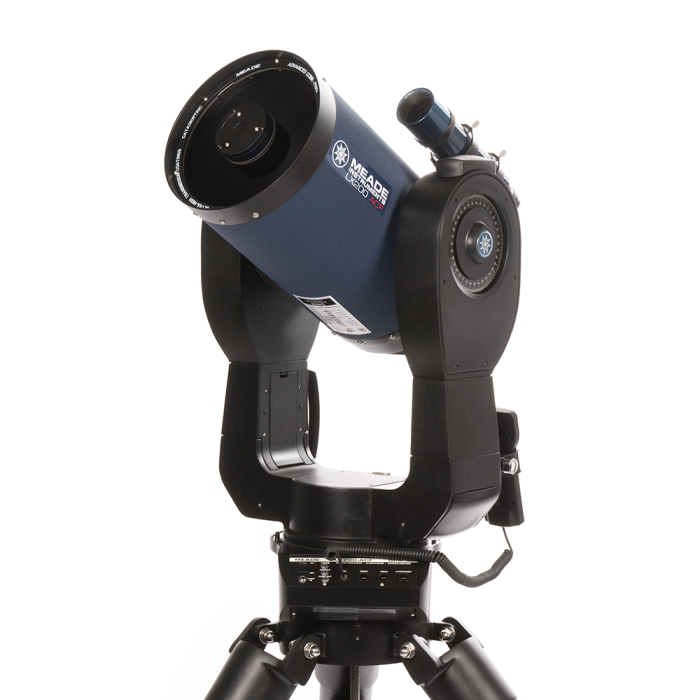

Meade LX200 8″ vs Sky-Watcher Skymax 8″ Maksutov-Cassegrain: Optical Design and Portability Showdown
Choosing between the Meade LX200 8″ Schmidt-Cassegrain Telescope and the Sky-Watcher Skymax 8″ Maksutov-Cassegrain telescope involves more than just comparing aperture sizes. Both offer 8-inch optics but differ fundamentally in design, portability, and astrophotography suitability. For intermediate users focused primarily on planetary observation and weighing portability, understanding these distinctions is critical to making a choice that fits your observing style, setup environment, and imaging ambitions.
Quick Verdict
The Meade LX200 8″ stands out with its versatile Advanced Coma-Free optics and computerized dual fork mount, making it a strong contender for users wanting a stable platform for detailed planetary and lunar viewing plus entry-level astrophotography. However, it is heavier and less portable, demanding more setup effort.
In contrast, the Sky-Watcher Skymax 8″ Maksutov-Cassegrain offers superior contrast and sharpness for planetary targets thanks to its Maksutov design and a more compact optical tube. While the overall kit weight remains substantial, its optical tube is easier to transport. It’s best suited for observers prioritizing planetary image quality and moderate portability over astrophotography versatility.
Key Differences at a Glance
- Optical Design: Meade LX200 uses Schmidt-Cassegrain ACF optics optimized for a wider range of viewing; Sky-Watcher Skymax relies on Maksutov-Cassegrain for high-contrast planetary views.
- Portability: Meade LX200 is bulkier and heavier overall; Skymax has a compact optical tube but still requires a solid mount, making the kit moderately portable.
- Planetary Viewing: Skymax delivers crisper, higher-contrast planetary images; LX200 offers good planetary views with more versatility for other objects.
- Astrophotography: LX200 supports entry-level astrophotography with mount stability and GoTo capabilities; Skymax is less suited for imaging beyond visual observation.
- Setup and Use: LX200’s computerized dual fork mount provides precise tracking but involves more setup; Skymax is simpler optically but typically paired with separate mounts requiring manual or basic motorized tracking.
- Accessories: LX200 often comes with eyepieces, filters, tripod, and hard case, enhancing out-of-the-box completeness; Skymax kits vary and may require additional purchases for full functionality.
Price and Value
When it comes to cost, the Meade LX200 8″ is primarily available on the used market, ranging roughly from $400 to $1,200 depending on condition and included accessories. This pricing reflects its status as a discontinued model but offers value for those willing to invest time into maintenance or upgrades.
The Sky-Watcher Skymax 8″ typically retails new at a price point that can be competitive with or slightly lower than comparable SCT kits, depending on the mount included. Buyers should factor in potential additional costs if a mount or accessories are not bundled.
From a value perspective, the LX200’s more complete package—with included tripod, filters, and GoTo mount—often justifies its price for users wanting a ready-to-go setup with advanced tracking. The Skymax, while offering a high-quality optical tube at a good price, may require extra investment for mounts or astrophotography accessories, which can add to the total cost.
Performance and Practical Use
The optical differences between the Schmidt-Cassegrain and Maksutov-Cassegrain designs manifest clearly in real-world performance. The Meade LX200’s Advanced Coma-Free optics deliver sharp images with well-controlled aberrations across a wider field, making it versatile for planetary, lunar, and some deep-sky targets. Its dual fork arm mount with computerized GoTo tracking enables precise object acquisition and steady views, enhancing long observing sessions or beginner astrophotography.
Conversely, the Sky-Watcher Skymax 8″ Maksutov-Cassegrain shines brightest on high-contrast, high-resolution planetary observation. Its design inherently reduces chromatic aberration and provides exceptional edge-to-edge sharpness in a compact tube. However, it has a narrower field of view and less flexibility for deep-sky objects. The typical mounts paired with Skymax may lack the precise computerized tracking of the LX200, which can limit astrophotography or extended visual tracking.
- Meade LX200 8″: Better suited for multi-purpose observing and beginner astrophotography due to stable mount and ACF optics.
- Sky-Watcher Skymax 8″: Excels at crisp planetary imagery; practical for observers prioritizing portability and pure visual use.
Ease of Setup / Ease of Use
The Meade LX200 8″ includes a dual fork arm computerized mount with GoTo functionality, which requires an initial alignment but offers automated tracking and object locating once set. This setup demands more time and familiarity but rewards users with hands-off tracking and easier navigation of the night sky. The included tripod and accessories further support a relatively straightforward setup for users comfortable with computerized mounts.
The Sky-Watcher Skymax 8″ Maksutov-Cassegrain optical tube is more compact and physically easier to handle, but it often ships without a fully integrated mount. Users typically need to pair it with a separate equatorial or alt-azimuth mount, which may lack computerized GoTo systems or require manual tracking. This can increase setup complexity or reduce ease of use for observers expecting plug-and-play operation.
- Meade LX200 8″: More initial setup time due to computerized mount but easier long-term tracking and object acquisition.
- Sky-Watcher Skymax 8″: Physically easier to move but potentially more complex or manual setup depending on mount choice.
Accessories / Feature Completeness
The Meade LX200 8″ typically arrives with a robust accessory set, including eyepieces, a tripod, a hard carrying case, and sometimes a color filter system. Its integrated computerized mount enhances the package, enabling immediate use with minimal additional purchases. This completeness benefits buyers wanting a comprehensive kit for visual astronomy and introductory astrophotography.
In contrast, the Sky-Watcher Skymax 8″ often focuses on delivering a high-quality optical tube with fewer bundled extras. Mounts and eyepieces may be sold separately or bundled variably by retailers. While the optical tube’s compactness is a feature, the absence of a fully integrated mount and accessories can lead to extra costs and setup effort to build a complete system.
- Meade LX200 8″: Comprehensive kit supports visual and astrophotography use out of the box.
- Sky-Watcher Skymax 8″: Requires additional purchases for full operational setup; optical tube quality is the highlight.
Which Buyer Should Choose Which Option?
Choose the Meade LX200 8″ if you:
- Want a more versatile telescope for planetary, lunar, and some deep-sky observations.
- Value a complete package with integrated computerized mount for easier object tracking.
- Are interested in beginner to intermediate astrophotography with a stable platform.
- Don’t mind the extra weight and setup time in exchange for tracking precision.
Choose the Sky-Watcher Skymax 8″ if you:
- Prioritize high-contrast, sharp planetary and lunar views above all else.
- Need a telescope with a compact optical tube for easier transport and storage.
- Are comfortable assembling a system with a separate mount or prefer manual tracking.
- Focus mainly on visual astronomy rather than astrophotography.
Both telescopes demand some commitment to setup and handling weight but serve different user profiles: Meade LX200 8″ leans toward users seeking a ready-to-use, versatile system with computerized support, while Skymax 8″ suits those who want a high-quality compact tube optimized for planetary visual use and don’t require integrated tracking.
Conclusion
In this Meade LX200 8″ versus Sky-Watcher Skymax 8″ Maksutov-Cassegrain comparison, your choice hinges on your priorities between optical design benefits, portability, and use case. The LX200’s Schmidt-Cassegrain ACF optics paired with a computerized dual fork mount provide a capable and adaptable platform that excels in varied observing conditions and beginner astrophotography. Its heavier weight and more involved setup are tradeoffs for this versatility and feature set.
Meanwhile, the Skymax’s Maksutov-Cassegrain design delivers superior contrast and sharpness for planetary observing in a physically smaller optical tube, an advantage if portability and crisp planetary views are paramount. However, the lack of a fully integrated mount and fewer bundled accessories mean more effort and expense to create a complete system, and it is less suited to astrophotography pursuits.
Ultimately, intermediate users focused on planetary viewing and willing to invest in a stable computerized setup will find the Meade LX200 8″ rewarding. Those who value compactness and optical contrast for dedicated visual planetary work, and who accept additional setup steps, should consider the Sky-Watcher Skymax 8″. Evaluating your observing goals, setup environment, and tolerance for setup complexity will guide you to the best fit between these two 8-inch telescopes.