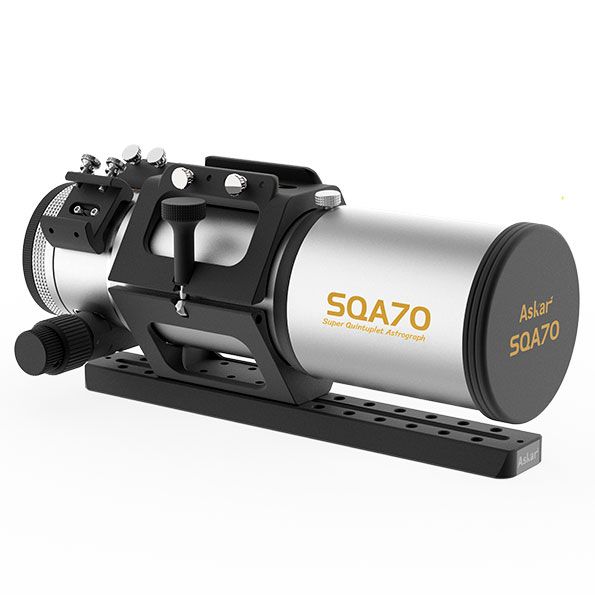

Askar SQA70 Review: High-Performance Astrophotography Refractor
If you’re an intermediate or advanced astrophotographer hunting for a compact refractor that delivers crisp, flat-field images with excellent optical performance, the Askar SQA70 quintuplet refractor deserves a close look. This telescope promises to combine precision optics with a robust build tailored for serious imaging setups. But as with any specialized tool, it comes with tradeoffs that can influence whether it’s the right fit for your astrophotography ambitions.
Quick Verdict
The Askar SQA70 is a standout in the realm of portable, high-quality astrophotography refractors. Its quintuplet optical design provides sharp, coma-free stars across a flat field, making it ideal for deep sky imaging with full-frame sensors. The built-in dew shield, compatibility with electronic focusers (EAF), filter wheels, and off-axis guiders (OAG) reflect a thoughtful integration of advanced astrophotography accessories. However, you should be prepared for a moderately higher price point and consider its weight and mounting demands before committing. Overall, it’s an excellent choice for astrophotographers ready to invest in optical precision and versatile imaging features without venturing into larger, bulkier scopes.
What the Askar SQA70 Does Well
At the core of the Askar SQA70’s appeal is its quintuplet optical design—a five-element lens system engineered to deliver superior correction of chromatic aberration and field curvature. This means stars remain sharp and pinpoint from the center of the frame right out to the corners, an essential quality for imaging wide-field deep sky objects. The flat-field correction minimizes the need for expensive field flatteners or reducers, simplifying your optical train.
Its 70 mm aperture combined with a 336 mm focal length yields a versatile focal ratio (~f/4.8) that balances wide-field views with enough focal length to capture intricate nebulae and star clusters. The scope’s optical performance rivals that of other high-end refractors like the ZWO FF65 APO, offering comparable star sharpness and color correction, though with subtle differences that may appeal to different users.
- Optical excellence: Crisp, coma-free images across the full frame.
- Flat-field design: Minimizes edge distortion, perfect for full-frame astrophotography.
- Accessory compatibility: Built to integrate with EAF focusers, filter wheels (EFW mini), and off-axis guiders, streamlining advanced imaging workflows.
- Robust build: CNC-machined components, a dual-speed focuser, and a 360° rotator enhance precision and durability.
- Portability: Compact and relatively lightweight compared to larger APO refractors, making it suitable for field use.
The inclusion of a built-in dew shield is a practical touch, helping to reduce moisture buildup during extended imaging sessions without requiring additional accessories.
The Compromises Buyers Need to Understand
While the Askar SQA70 packs impressive features, it demands consideration on several fronts. First, its price—around $319 as listed—positions it above entry-level or budget refractors, potentially limiting its appeal to hobbyists who prioritize cost over incremental optical gains. Compared to budget models like the Sky-Watcher 72ED or Astro-Tech AT-60 ED, the SQA70 delivers superior performance but requires a larger initial investment.
Portability is a relative strength but also a limitation. Although the SQA70 is lighter and more compact than some larger APOs, it still requires a mount capable of supporting its weight and dimensions. Users with ultra-lightweight or travel-first setups might find it less convenient. Additionally, while the flat-field design reduces the need for extra correctors, some astrophotographers may still want to invest in a field flattener or focal reducer for specific imaging goals, adding to overall system complexity and cost.
- Mount requirements: Demands a stable, higher-capacity mount, which adds to total setup cost and transport considerations.
- Accessory costs: Optimal performance may require purchasing compatible EAF focusers, filter wheels, and OAGs separately.
- Setup complexity: Advanced features add versatility but can increase the learning curve for users not already familiar with astrophotography rigs.
- Portability tradeoff: More portable than some competitors but not ideal for ultra-light travel setups.
These factors mean the Askar SQA70 is best suited for users who already have—or plan to invest in—a capable mount and accessory ecosystem, and who value optical quality over absolute portability or simplicity.
Real-World Use Cases and Beginner Experience
For intermediate to advanced astrophotographers, the Askar SQA70 shines in deep sky imaging scenarios. Its 336 mm focal length is well-suited for capturing expansive objects like the Andromeda Galaxy, the Pleiades cluster, and large nebulae such as the Heart Nebula. The flat-field optics ensure that stars remain sharp across the entire sensor, which is critical when working with full-frame cameras.
The integration with electronic automatic focusers (EAF) and filter wheels (EFW mini) allows for precise focus control and rapid filter changes during imaging sessions—features that significantly enhance workflow efficiency for serious imagers. The off-axis guider (OAG) compatibility enables accurate autoguiding without differential flexure, improving tracking during long exposures.
Beginners, however, may find the Askar SQA70 less accessible. The advanced optical design and accessory integration imply a steeper learning curve. Setting up and balancing the refractor on a suitable equatorial mount, calibrating the EAF, and managing filter wheels and guiding systems require prior experience or willingness to invest time in mastering these components. In contrast, simpler refractors like the Askar 71F Flat-Field or Sky-Watcher 72ED provide easier entry points for newcomers.
Additionally, the dual-speed focuser and 360° rotator require careful handling to optimize framing and focus, which can be challenging without some astrophotography background.
Who Should Buy the Askar SQA70
The Askar SQA70 is an excellent investment for:
- Intermediate to advanced astrophotographers who want a high-quality refractor optimized for flat-field wide-field imaging with full-frame sensors.
- Users with existing or planned advanced astrophotography setups, including electronic focusers, filter wheels, and off-axis guiders, who want a telescope built to integrate smoothly with these accessories.
- Those prioritizing optical precision over absolute portability, seeking a compact but optically superior alternative to larger APO refractors.
- Astrophotographers focused on deep sky imaging, especially wide-field targets like nebulae and star clusters that benefit from the SQA70’s coma-free, flat field.
In particular, the Askar SQA70 suits users who appreciate robust mechanical design and the convenience of built-in features such as dew shield and rotator, which enhance the imaging experience.
Who Should Not Buy the Askar SQA70
This telescope is less suitable for:
- Beginners or casual observers who prefer simpler, more affordable scopes with lower setup complexity and fewer accessory dependencies.
- Travel-first astrophotographers who need ultra-light, compact scopes optimized for quick deployment and minimal weight, as the SQA70’s size and weight may be cumbersome.
- Budget-conscious users who prioritize price over incremental gains in optical quality and are better served by entry-level refractors like the Sky-Watcher 72ED or Astro-Tech AT-60 ED.
- Those with small or low-capacity mounts that may struggle to support the SQA70 securely, leading to tracking and stability issues.
In these cases, opting for a more basic or lighter refractor can reduce frustration and expense without severely compromising entry-level astrophotography goals.
Final Recommendation
The Askar SQA70 quintuplet refractor represents a refined balance of optical excellence, mechanical precision, and astrophotography-ready features in a portable package. For intermediate and advanced imagers who demand crisp, coma-free stars across a wide field and value seamless integration with electronic focusers, filter wheels, and off-axis guiders, it delivers impressive results that justify its premium positioning.
That said, this telescope is not without compromises. Its higher price relative to budget refractors, the need for a capable mount, and the additional costs of accessories mean it’s best suited for users with clear astrophotography ambitions and some experience with complex setups. Beginners or those prioritizing lightweight portability and ease of use will likely find better value and less hassle elsewhere.
In summary, if your astrophotography projects demand top-notch flat-field optics and you’re prepared to invest in the necessary supporting gear, the Askar SQA70 is a compelling choice that can elevate your imaging quality. For users seeking a turnkey, lightweight, or budget solution, other refractors in the market may better meet those priorities.