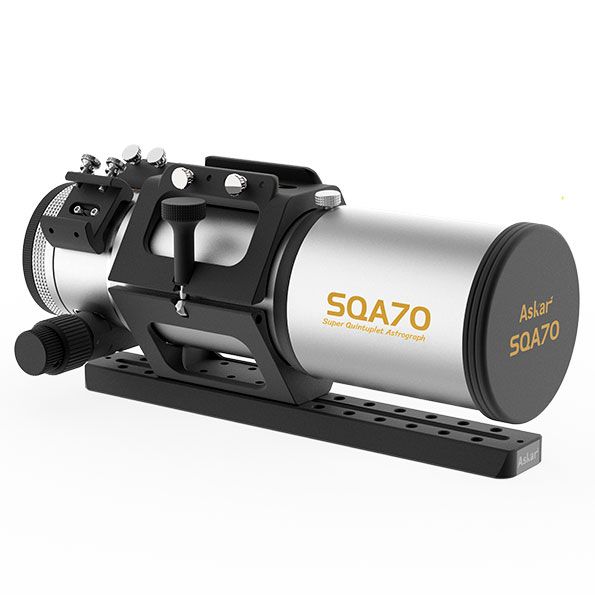

Buying Guide for Askar SQA70: What Astrophotographers Need to Know
If you are an intermediate astrophotographer looking to upgrade your imaging setup, choosing the right refractor telescope is crucial. The Askar SQA70 Quintuplet Refractor offers a compelling package with its flat-field, coma-free design and solid build quality. However, investing in this telescope means balancing factors like mount compatibility, accessory needs, portability, and budget to ensure it fits your specific astrophotography goals. This guide will help you navigate those considerations without dwelling on generic praises, focusing instead on practical buying logic tailored to the Askar SQA70.
1. What Buyers Should Decide Before Choosing the Askar SQA70
Before deciding on the Askar SQA70, it’s important to clarify your astrophotography objectives and how this telescope aligns with them. Ask yourself:
- What subjects do I want to image? The SQA70’s 70 mm aperture and 336 mm focal length make it well-suited for wide-field deep sky objects like nebulae and star clusters, but less optimal for planetary or lunar close-ups.
- What is my current mount capability? The SQA70 has a moderate weight and size; you’ll need a stable equatorial mount with sufficient payload capacity—typically 10+ lbs—to handle the scope plus accessories.
- How portable do I need my setup to be? While more compact than some larger APOs, the SQA70 is not ultra-lightweight. Consider whether you prioritize ease of transport or maximum optical performance.
- What accessories am I prepared to add? Although the SQA70’s quintuplet optics provide a flat field, users often pair it with field flatteners or reducers for full-frame cameras and benefit from compatible focusers and off-axis guiders for precise imaging.
- What is my budget threshold? Priced around $319, it sits above entry-level refractors but below premium models. Factor in the cost of mounts and accessories when evaluating overall investment.
By answering these questions upfront, you can better assess whether the Askar SQA70 fits your astrophotography ambitions and setup constraints.
2. Key Decision Factors When Considering the Askar SQA70
Several critical factors influence how well the Askar SQA70 will serve your astrophotography needs. Understanding the tradeoffs here is essential:
Optical Performance and Use Case Fit
The SQA70’s quintuplet design offers excellent correction for chromatic aberration and field curvature, delivering sharp, pinpoint stars across the field. This makes it ideal for deep sky imaging of nebulae, open clusters, and wide-field galaxy shots. However, while it excels at these, its 70 mm aperture limits resolution and light gathering compared to larger scopes, so it’s not the best choice for detailed planetary imaging.
Mount Compatibility and Weight Considerations
Weighing more than ultra-compact refractors, the SQA70 demands a robust mount with good payload capacity and stable tracking. Small, lightweight mounts like the Sky-Watcher Star Adventurer GTi may struggle with this scope’s weight and length, leading to vibration and tracking difficulties. Investing in a mid-sized equatorial mount or a sturdy alt-azimuth with astrophotography capabilities is advisable.
Accessory Integration
The telescope supports modern astrophotography accessories including electronic automatic focusers (EAF), filter wheels (EFW mini), and off-axis guiders (OAG). While the flat field reduces the need for additional flatteners, users with full-frame cameras often add focal reducers or field flatteners to optimize edge-to-edge sharpness. This means additional costs and setup complexity but results in higher image quality.
Portability and Setup Practicalities
The SQA70’s relatively compact size and built-in dew shield aid portability compared to larger APO refractors, making it a reasonable choice for field use. Still, it’s not the lightest option and requires careful transport and setup. Users who prioritize rapid deployment or frequent travel might find it less convenient than smaller alternatives.
Price and Overall Value
At around $319, the Askar SQA70 positions itself above budget models but below premium refractors with wider apertures or specialized glass. This price point reflects its advanced optical design and build quality, but buyers should be aware that the total cost rises when factoring in mounts and accessories needed for astrophotography.
3. Where the Askar SQA70 Fits Well
The Askar SQA70 shines in several astrophotography scenarios, especially for intermediate users aiming for high-quality wide-field imaging:
- Deep Sky Imaging: Its flat field and excellent aberration control make it well-suited for capturing nebulae, star clusters, and galaxies with minimal distortion.
- Use with Advanced Cameras and Focusers: Compatibility with electronic focusers and filter wheels allows precise control needed for long exposure astrophotography.
- Guiding with Off-Axis Guider: The scope’s design supports integration with off-axis guiders, enhancing tracking accuracy crucial for deep sky imaging.
- Intermediate to Advanced Users: Those comfortable with assembling a modular setup and investing in complementary accessories will find the SQA70 rewarding.
- Backyard and Field Use: Its manageable size and built-in dew shield make it practical for both home observatories and portable setups.
In summary, the SQA70 fits buyers who want a balance of optical quality and portability for serious astrophotography projects without stepping into large, heavy instrument territory.
4. Where the Askar SQA70 Is the Wrong Fit
Despite its strengths, the Askar SQA70 is not the best choice for all buyers or use cases. Consider avoiding it if:
- Budget Is Tight: While competitively priced, the combined costs of mount, accessories, and the scope itself may exceed beginner budgets.
- Ultra-Lightweight Portability Is a Priority: If you often travel to remote locations or need a grab-and-go solution, lighter scopes like smaller doublets might be easier to handle.
- Primarily Planetary Imaging: The 70 mm aperture and focal length favor wide-field targets; planetary enthusiasts may prefer longer focal lengths or larger apertures.
- Mount Capacity Is Limited: Small mounts with less than 10 lbs capacity will struggle to provide stable tracking and vibration control.
- Beginners Seeking Plug-and-Play Ease: The modular accessory setup and mount considerations require some experience and setup time, which could overwhelm novices.
These factors underline the importance of matching your current equipment, skill level, and astrophotography goals before committing to the SQA70.
5. What Kind of Buyer Should Choose the Askar SQA70
The ideal buyer for the Askar SQA70 is someone who:
- Is at least an intermediate astrophotographer comfortable with assembling a focused imaging rig.
- Wants a high-quality, flat-field refractor optimized for deep sky imaging with modern astrophotography accessories.
- Owns or plans to invest in a mid-sized equatorial mount capable of stable tracking and sufficient payload support.
- Values a balance between portability and optical performance, willing to carry a moderately sized setup for better image quality.
- Is prepared to budget not just for the telescope but also for complementary accessories like field flatteners, EAF focusers, and off-axis guiders.
Conversely, those new to astrophotography, on very tight budgets, or requiring ultra-portable, lightweight gear will likely find better fit options elsewhere.
6. Final Buying Advice
The Askar SQA70 offers a thoughtfully designed, high-performance refractor that meets the needs of many intermediate astrophotographers aiming for quality wide-field imaging. Its quintuplet optics deliver sharp, coma-free stars across the field, and its compatibility with advanced accessories supports long-exposure deep sky astrophotography.
However, buyers should weigh several tradeoffs. The scope’s moderate weight and length require a stable, capable mount, and its price is higher than entry-level refractors, especially when factoring in essential accessories. Portability is good but not outstanding, so frequent travel or ultra-light setups may be better served by smaller models.
Before purchasing, assess your current equipment, imaging targets, and willingness to manage a modular setup. The Askar SQA70 is not a plug-and-play beginner scope but rewards users who invest in the right mount and accessories with excellent image quality and versatility. Its price point reflects this balance between performance and portability.
Ultimately, if your astrophotography goals center on deep sky wide-field imaging, and you have or plan to acquire a solid mount with room in your budget for complementary gear, the Askar SQA70 is a practical, well-engineered option to consider.