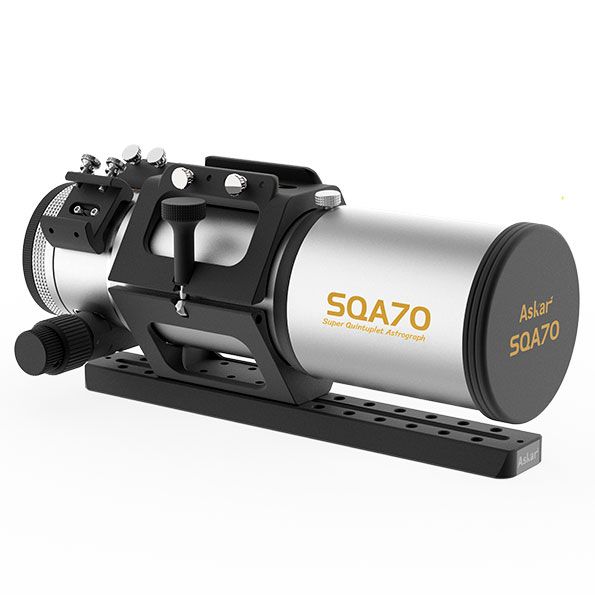

Askar SQA70 vs ZWO FF65 APO: Which Refractor Excels in Astrophotography?
Choosing the right flat-field refractor for astrophotography is crucial for capturing sharp, vibrant celestial images. The Askar SQA70 and ZWO FF65 APO often come up in head-to-head comparisons due to their premium optics, compact designs, and suitability for deep sky imaging. This article dives into their key differences, focusing on optical quality, color correction, star sharpness, and price—offering actionable insights for astrophotographers deciding between these two capable instruments.
Quick Verdict
Both the Askar SQA70 and ZWO FF65 APO deliver high-quality astrophotography performance with tight stars and flat fields, but their subtle differences in color correction, star image tightness, and accessory compatibility set them apart. The ZWO FF65 APO edges out slightly in color fidelity and star sharpness, making it a top choice for users prioritizing the absolute best optical purity. Meanwhile, the Askar SQA70 offers excellent optical quality combined with greater versatility and integrated features that appeal to intermediate and advanced astrophotographers seeking a balanced, portable setup with solid accessory support at a competitive price point.
Key Differences at a Glance
- Color Correction: ZWO FF65 APO provides slightly better chromatic aberration control, yielding purer star colors.
- Star Sharpness: ZWO FF65 APO is noted for tighter, pinpoint stars especially at the field edges.
- Price: Both are premium refractors, but pricing varies with ZWO FF65 APO often positioned at a higher cost.
- Portability & Design: Askar SQA70 is marginally more portable with a built-in dew shield and robust CNC-machined focuser.
- Accessory Compatibility: Askar SQA70 supports off-axis guiders (OAG), electronic focusers (EAF), and filter wheels (EFW mini) natively, facilitating more integrated setups.
Price and Value
The Askar SQA70 is typically priced around $319, positioning it as a mid-range astrophotography refractor that balances quality and cost. It offers a quintuplet optical design aimed at reducing chromatic aberration and field curvature, which justifies its price for users seeking a flat-field instrument without entering the highest price brackets.
The ZWO FF65 APO, while similar in aperture and optical intent, often commands a higher price due to its very tight star images and a reputation for superior color correction. Buyers should anticipate a premium expense for this incremental optical refinement.
From a value perspective, the Askar SQA70 delivers strong performance with integrated features supporting astrophotography workflows, potentially lowering the additional cost of accessories. The ZWO FF65 APO may require purchasing complementary items separately, increasing the total investment.
- Askar SQA70: Better base value with many astrophotography-ready features included.
- ZWO FF65 APO: Premium price justified by slight optical advantages but may incur extra costs for complete setups.
Performance and Practical Use
In practical astrophotography, optical quality is paramount. Both refractors deliver sharp, coma-free images across a flat field, suitable for full-frame cameras and advanced imaging sensors. The Askar SQA70’s quintuplet lens design effectively suppresses chromatic aberration and field curvature, enabling wide-field deep sky imaging with crisp stars from center to edge.
The ZWO FF65 APO, however, is recognized by users for its slightly superior color correction, which translates to more natural star colors and minimal purple fringing around bright stars. Its star images also tend to be marginally tighter, an important factor for high-resolution imaging where star roundness and pinpoint sharpness matter.
That said, the differences in star tightness and color correction are subtle and may only be discernible under ideal conditions or with high-end imaging setups. For many practical applications, the Askar SQA70 provides performance close enough to the ZWO FF65 APO to satisfy most intermediate to advanced astrophotographers.
- Askar SQA70: Excellent for deep sky imaging with a wide field, very good star sharpness, and low aberrations.
- ZWO FF65 APO: Slightly better for users requiring ultimate color fidelity and star pinpointing, especially in high-magnification or high-resolution imaging.
Ease of Setup and Ease of Use
The Askar SQA70 is designed with astrophotographers in mind, featuring a built-in dew shield and a high-quality dual-speed focuser that allows fine adjustments essential for astrophotography. Its compatibility with electronic automatic focusers (EAF) and off-axis guiders (OAG) further streamlines setup and imaging workflows.
In contrast, the ZWO FF65 APO’s compact design is straightforward but may require additional accessory purchases to match the integrated convenience of the Askar SQA70. This can introduce complexity in configuring the imaging train and focusing system.
Both telescopes demand a stable equatorial mount capable of handling their weight and payload, but the Askar’s slightly larger size and additional accessories might necessitate a more robust mount. The ZWO FF65 APO’s smaller form factor can be an advantage for users with limited mount capacity or those who prefer a lighter rig.
- Askar SQA70: More features out-of-the-box for astrophotography, but slightly more involved setup due to accessory integration.
- ZWO FF65 APO: Simpler optical tube but may require piecing together accessories; easier for minimalists or users with existing gear.
Accessories and Feature Completeness
One of the Askar SQA70’s strengths lies in its comprehensive feature set tailored to astrophotography. It includes a built-in dew shield, and is explicitly designed to work seamlessly with electronic focusers like the EAF, filter wheels such as the EFW mini, and off-axis guiders. This makes assembling a full astrophotography rig more straightforward and reduces the risk of incompatibility.
The ZWO FF65 APO, while optically refined, is more of a bare optical tube requiring users to source or verify compatibility of focusers, guiders, and filter wheels separately. This can be a disadvantage for buyers seeking an integrated solution but offers flexibility for those who already own compatible accessories or prefer custom setups.
- Askar SQA70: Comprehensive accessory compatibility included in design, ideal for building a complete imaging system.
- ZWO FF65 APO: More modular approach, demanding additional purchases and setup but allowing customization.
Which Buyer Should Choose Which Option?
Choose the Askar SQA70 if you:
- Are an intermediate or advanced astrophotographer seeking a well-rounded, portable refractor with integrated features that simplify astrophotography setups.
- Value a flat-field design that minimizes the need for additional flatteners and want native compatibility with electronic focusers, filter wheels, and off-axis guiders.
- Prefer a slightly larger aperture (70 mm) offering a balance between light-gathering power and portability.
- Want strong optical performance without pushing to the highest price tier, with good value for the included features.
Choose the ZWO FF65 APO if you:
- Prioritize the absolute best color correction and star sharpness for high-end imaging where subtle chromatic aberrations and star roundness are critical.
- Have existing astrophotography accessories and prefer a compact, lightweight optical tube to minimize load on mounts.
- Are willing to invest more upfront and potentially purchase accessories separately to achieve the optimal imaging train.
- Require a refractor optimized for the tightest star images in demanding imaging conditions, such as with high-resolution CCD or CMOS sensors.
Conclusion
The Askar SQA70 and ZWO FF65 APO represent two closely matched high-quality refractors suited for serious astrophotography, but with distinct emphases. The ZWO FF65 APO’s marginally superior color correction and star tightness make it attractive for astrophotographers who demand the utmost optical purity and are prepared for a modular setup approach. Meanwhile, the Askar SQA70 offers a balanced package with integrated astrophotography-ready features, slightly larger aperture, and a competitive price point that appeals to intermediate and advanced users aiming for a versatile, flat-field refractor without excessive complexity.
For buyers focused on streamlined astrophotography workflows, accessory compatibility, and portability with excellent optical results, the Askar SQA70 is a compelling choice. Those prioritizing the finest optical performance in color fidelity and star pinpointing, and comfortable managing a customized accessory lineup, will find the ZWO FF65 APO more aligned with their needs.
Ultimately, the decision hinges on your astrophotography goals, budget, and preference for integrated convenience versus optical refinement. Both telescopes stand out in their class, so carefully weighing these tradeoffs will guide you to the refractor that best fits your imaging ambitions.