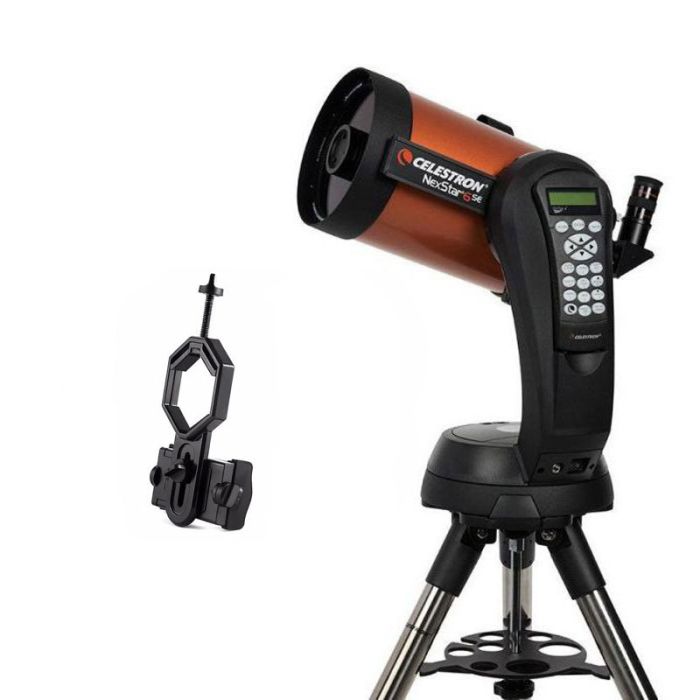

Celestron NexStar 6SE Review: Best Mid-Range Computerized Telescope for Beginners
If you’re stepping into astronomy and want a telescope that balances automated ease, solid optics, and a manageable price, the Celestron NexStar 6SE is a compelling choice. This mid-range computerized Schmidt-Cassegrain telescope offers an approachable entry point for beginners who want to explore the night sky without wrestling with complicated setups or manual star-hopping. But like any telescope, it comes with tradeoffs that you should understand before making the leap.
Quick Verdict
The Celestron NexStar 6SE delivers a strong value proposition for beginners and intermediate users who prioritize automated object tracking and planetary or lunar observation. Its combination of a 6-inch aperture, XLT optical coatings, and an intuitive GoTo mount system makes it one of the best computerized telescopes under $650. However, its moderate portability and alt-azimuth mount limit deep-sky imaging potential and ease of travel. If your focus is more casual astronomy and beginner astrophotography from home or backyard settings, the 6SE shines. For travelers or those wanting larger apertures for visual use, other options might serve better.
What This Product Does Well
The strength of the NexStar 6SE lies in its well-rounded feature set tailored for newcomers who want a hassle-reduced, yet rewarding stargazing experience. The 6SE’s 6-inch Schmidt-Cassegrain optical tube is coated with Celestron’s patented XLT high-transmission coatings. This translates into crisp, bright views with enhanced contrast on planets like Jupiter and Saturn, as well as lunar details and brighter deep-sky objects such as the Orion Nebula. For many users, this optical quality is noticeably better than entry-level refractors or reflectors without coatings.
The computerized GoTo mount is another major asset. It comes with Celestron’s latest hand controller and a database of over 40,000 celestial objects, allowing users to select and automatically point the telescope without prior knowledge of the night sky. The SkyAlign technology simplifies setup further by calibrating the scope on any three bright objects, making alignment quicker than many competing models. This ease of use reduces frustration for beginners and encourages more frequent use.
- Good aperture size: 6 inches offers a sweet spot between light-gathering and portability.
- Automated targeting & tracking: Removes the need for manual star-hopping.
- Optical coatings: XLT coatings improve image brightness and sharpness.
- Accessory compatibility: Supports camera mounts and sun protection covers for beginner astrophotography.
Finally, the telescope’s weight and design strike a balance. At under 30 pounds combined (mount, tripod, OTA), it’s manageable for most users to transport and set up without specialized gear. This makes it suitable for backyard sessions as well as occasional trips to darker skies.
The Compromises Buyers Need to Understand
While the NexStar 6SE is strong in many areas, it’s important to acknowledge its limitations, especially to avoid buyer’s remorse. The primary compromise is its alt-azimuth mount. While user-friendly and adequate for visual observing and casual planetary astrophotography, it lacks the precise equatorial tracking needed for long-exposure deep-sky astrophotography. This restricts users who want to capture faint nebulae or galaxies with extended exposures without star trailing.
Portability is another nuanced tradeoff. The 6SE is more compact than some larger Dobsonians but heavier and bulkier than Maksutov-Cassegrain computerized models or smaller refractors. This means if you prioritize traveling light or hiking to remote observation sites, the 6SE may feel cumbersome. Disassembling and reassembling the tripod, mount, and optical tube can also take more time than simpler manual scopes.
- Mount limitations: Alt-azimuth mount restricts deep-sky astrophotography potential.
- Portability: Moderate portability; not ideal for frequent travel or backpacking.
- Aperture size: While 6 inches is versatile, it’s smaller than Dobsonian alternatives offering more light gathering at similar price points.
- Mount stability: Good but not as vibration-free as premium Evolution series or dedicated astrophotography mounts.
These tradeoffs mean buyers should carefully assess their priorities. If you want a telescope purely for rich, deep-sky photography or need a lightweight travel companion, the NexStar 6SE may not be the best fit.
Real-World Use Cases and Beginner Experience
For beginners, the NexStar 6SE offers a relatively gentle learning curve. The SkyAlign feature reduces the traditional complexity of telescope alignment, allowing users to start observing quickly without deep knowledge of constellations. The large database and intuitive hand controller help new astronomers explore a variety of celestial objects without frustration.
In practical use, the 6SE excels at planetary and lunar observation. Users commonly report stunning views of Jupiter’s cloud bands, Saturn’s rings, and lunar craters with crisp details and good contrast. The XLT coatings noticeably enhance the brightness and clarity, making these sights impressive even under moderately light-polluted skies.
Beginner astrophotographers can attach smartphones or entry-level cameras with compatible mounts included or purchased separately. This setup is ideal for capturing high-contrast planetary shots or lunar images. However, attempts at deep-sky astrophotography will quickly reveal the limitations of the mount’s tracking precision and stability.
Compared to manual Dobsonian telescopes, the NexStar 6SE removes the need for star-hopping skills, which can be daunting for newcomers. However, the automated system requires some upfront time to learn the hand controller’s menus and alignment steps. For those who want a “set it and forget it” experience, the 6SE mostly delivers, but patience is needed during initial calibration.
Who Should Buy It
The Celestron NexStar 6SE is best suited for:
- Beginners seeking automated ease: Users who want to jump into astronomy without mastering manual navigation will appreciate the GoTo system and SkyAlign technology.
- Value-conscious buyers: Those looking for a mid-range telescope that offers a solid balance of optical quality, automation, and price will find the 6SE appealing.
- Home and backyard astronomers: Ideal for users who observe primarily from a fixed location or drive short distances to darker sites.
- Planetary and lunar astrophotographers: Those focused on capturing sharper images of the Moon and planets with beginner-friendly setups will benefit.
In short, if you want to explore the night sky with minimal fuss and enjoy crisp views of familiar objects, the 6SE fits the bill.
Who Should Not Buy It
The NexStar 6SE is less appropriate for:
- Travel-first buyers: If you prioritize compactness and lightweight gear for hiking or extensive travel, smaller Maksutov-Cassegrain scopes or portable refractors may be better.
- Users prioritizing large aperture for deep-sky visual observations: Dobsonian telescopes offer larger apertures for the price and are better suited for deep-sky enthusiasts focused on visual observing.
- Advanced astrophotographers: Serious deep-sky imaging requires equatorial mounts and specialized setups beyond the 6SE’s capabilities.
- Those seeking ultra-stable mount performance: The Evolution series or premium mounts provide enhanced vibration damping and tracking accuracy for more demanding uses.
Choosing the 6SE means accepting its role as a versatile, automated visual and beginner astrophotography telescope rather than a specialized or ultra-portable instrument.
Final Recommendation
The Celestron NexStar 6SE stands out as one of the best computerized telescopes in the mid-range category for beginners and intermediate users. Its blend of high-quality optics with XLT coatings, easy-to-use GoTo mount, and substantial object database provides a rewarding stargazing experience with minimal setup headaches. The price point—typically between $400 and $650—offers strong value for those wanting to get serious about exploring the night sky without upgrading immediately.
That said, the 6SE’s alt-azimuth mount and moderate portability mean it won’t fully satisfy users whose priorities include deep-sky astrophotography or ultra-lightweight travel. If you want larger apertures for pure visual use or plan to pursue advanced imaging, investing in Dobsonian scopes or dedicated astrophotography setups is wiser, despite the steeper learning curve and higher cost.
For most backyard astronomers, casual astrophotographers, and beginners who want automated guidance to navigate the cosmos, the NexStar 6SE hits the sweet spot. Its robust community support and accessories ecosystem also mean you can grow into it comfortably. If you fit this profile, the NexStar 6SE is a dependable and enjoyable telescope that will keep you engaged under the stars for years to come.
More Shopping Guide Articles
- Buying Guide: How to Choose the Right Computerized Telescope Like the NexStar 6SE
- Celestron NexStar 6SE vs Meade ETX Series: Which Computerized Telescope Wins?
- Celestron NexStar 6SE vs Sky-Watcher Maksutov-Cassegrain: Portability and Optics Compared
- Top 5 Alternatives to Celestron NexStar 6SE: Dobsonian and Astrophotography Setups Compared