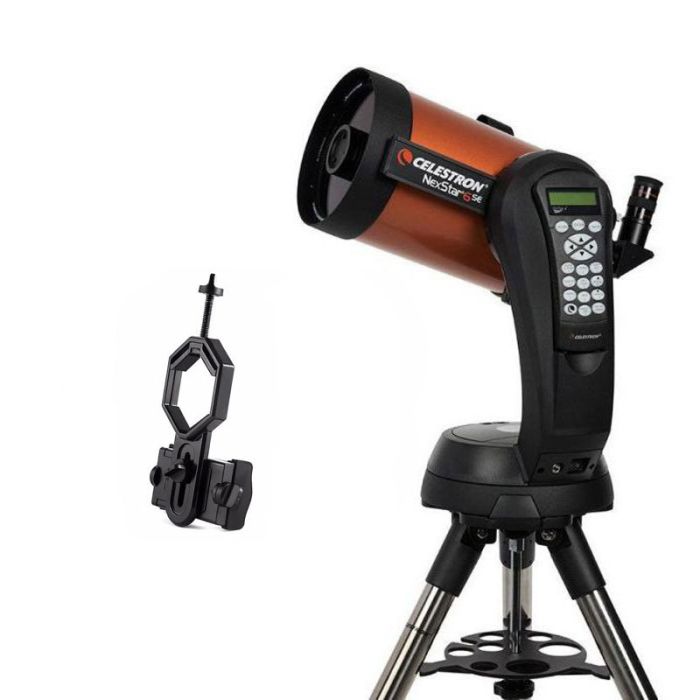

Celestron NexStar 6SE vs Meade ETX Series: Which Computerized Telescope Wins?
Choosing between the Celestron NexStar 6SE and the Meade ETX Series can be a challenging decision for buyers seeking a computerized Schmidt-Cassegrain telescope with automated tracking. Both models target similar user groups—beginners to intermediate astronomers looking for automated object finding and reliable optics—but differ in key areas such as mount stability, optical coatings, price, and real-world reliability. This article offers a detailed side-by-side comparison to help you decide which telescope better fits your observing goals, budget, and setup preferences.
Quick Verdict
The Celestron NexStar 6SE stands out as the more balanced choice for most beginners and intermediate users, offering reliable mount stability, excellent optics with advanced coatings, and strong community support, all at a competitive price point. It is particularly well-suited for casual astronomy and entry-level astrophotography from home or backyard settings.
The Meade ETX Series competes closely with comparable optical performance and a compact design, but it falls short in mount reliability and community backing. Buyers prioritizing mount stability and long-term dependability are generally better served by the NexStar 6SE, while those who value compactness and slightly lower initial cost might consider the ETX with caution.
Key Differences at a Glance
- Mount Stability: NexStar 6SE uses a sturdy alt-azimuth GoTo mount with proven reliability; Meade ETX mounts have reported durability concerns and less consistent tracking.
- Optical Quality: Both offer Schmidt-Cassegrain optics with quality coatings, but Celestron’s patented XLT high-transmission coatings provide a slight edge in brightness and contrast.
- Price Range: NexStar 6SE typically priced between $400-$650; Meade ETX models vary but often overlap this range, sometimes slightly cheaper at entry-level.
- Community Support & Software: NexStar 6SE benefits from a larger user base and continuous software updates; Meade ETX has less active community and slower software improvements.
- Portability: Both designs are moderately portable, but ETX models tend to be more compact, making them somewhat easier to transport.
Price and Value
Pricing is a critical factor for many telescope buyers, and here the Celestron NexStar 6SE offers strong value for the features it delivers. Typical retail prices for the NexStar 6SE range from about $400 to $650 depending on the seller and included accessories. This price includes the optical tube assembly (OTA), a computerized GoTo mount, and compatibility with a variety of accessories such as camera adapters and sun protection covers, often with bundled extras like astrophotography adapters.
Meade ETX telescopes are generally priced in a similar range but can sometimes be found at slightly lower entry prices, especially for older or basic models. However, buyers should factor in potential additional costs related to mount maintenance or upgrades due to some reported reliability issues. The smaller user community around ETX means fewer readily available third-party accessories or firmware updates, which can affect long-term value.
- NexStar 6SE: Competitive mid-range pricing with included modern software and accessory compatibility.
- Meade ETX Series: Potentially lower initial cost but possibly higher maintenance and fewer upgrades.
For buyers focused on maximizing value without compromising reliability, the NexStar 6SE generally offers a better return on investment over time.
Performance and Practical Use
Performance in real-world astronomy depends heavily on mount stability, optical quality, and ease of object tracking. Both the NexStar 6SE and Meade ETX Series offer computerized GoTo mounts designed to locate and track thousands of celestial objects automatically. Optically, both use Schmidt-Cassegrain designs, which offer a good balance between aperture size and portability.
The NexStar 6SE’s 6-inch aperture combined with Celestron’s XLT high-transmission coatings yields bright, high-contrast images, especially for planetary and lunar observation. Users often praise the crisp views of Jupiter’s cloud bands, Saturn’s rings, and deep-sky objects like the Orion Nebula. The ETX Series provides comparable optical sharpness but without the same level of coating technology, resulting in slightly less brightness and contrast in some conditions.
Mount stability is where the NexStar 6SE holds a clear advantage. Its alt-azimuth mount is known for steady tracking and minimal vibration, critical when observing at higher magnifications or capturing planetary astrophotography. By contrast, Meade ETX mounts have been reported by some users to suffer from occasional tracking errors and mechanical issues, which can impact viewing quality and frustration levels during longer sessions.
- NexStar 6SE: Reliable, steady mount; excellent optical coatings; well-suited for planetary and lunar viewing.
- Meade ETX Series: Good optics but less advanced coatings; mount stability can be inconsistent.
For serious casual observers or beginner astrophotographers, the NexStar 6SE’s combination of stable tracking and optical clarity makes it the more practical choice.
Ease of Setup / Ease of Use
Both telescopes are designed with beginner-friendly computerized operation in mind. The NexStar 6SE uses Celestron’s SkyAlign technology, allowing users to quickly align the telescope on three bright objects without prior knowledge of the night sky. The intuitive hand controller features a database of over 40,000 celestial objects, simplifying navigation for new users.
Meade ETX models also provide automated GoTo functionality, but their alignment process can be more involved or less intuitive, depending on the specific model and firmware version. Some users report a steeper learning curve and more frequent need for recalibration during sessions.
Physically, the NexStar 6SE’s alt-azimuth mount is straightforward to assemble and balance. The Meade ETX’s compact size makes it slightly easier to transport but can be less stable when setting up on uneven surfaces. Both telescopes generally require less assembly than manual scopes, but the NexStar 6SE’s robust mount design reduces setup frustrations during use.
- NexStar 6SE: Quick, user-friendly alignment; simple physical setup; large object database.
- Meade ETX Series: Automated tracking present but less intuitive; smaller user base means fewer learning resources.
Buyers new to computerized telescopes will likely find the NexStar 6SE easier to get started with, especially for backyard or home use.
Accessories / Feature Completeness
The NexStar 6SE is sold as a complete package including the optical tube assembly and a computerized alt-azimuth mount with tripod. Its accessory compatibility is broad, supporting a range of eyepieces, camera adapters, sun protection covers, and focal reducers. The included hand controller supports firmware updates and integration with Celestron’s SkyPortal app for wireless control (with optional Wi-Fi adapter).
Meade ETX telescopes typically include the OTA and a computerized mount but vary in accessory bundles. Some models may lack bundled astrophotography adapters or require separate purchases for advanced accessories. The ETX’s software ecosystem is less active, meaning fewer enhancements or third-party tools are available. Portability features such as carrying cases may be included or optional depending on the package.
- NexStar 6SE: Comprehensive accessory support; firmware updates; option for wireless control via app.
- Meade ETX Series: More limited accessory ecosystem; less frequent software updates; fewer community-developed add-ons.
For users planning to expand their setup with astrophotography or advanced accessories, the NexStar 6SE offers a more future-proof platform.
Which Buyer Should Choose Which Option?
Choose the Celestron NexStar 6SE if you:
- Value a stable, reliable mount for steady tracking during observation and beginner astrophotography.
- Want the brightest, highest-contrast views courtesy of advanced optical coatings.
- Prefer a telescope with a large, active user community and ongoing software support.
- Are a beginner or intermediate user seeking a balance of ease of use and performance.
- Plan to use the telescope primarily at home or in a backyard setting where moderate portability is acceptable.
Consider the Meade ETX Series if you:
- Prioritize a compact, slightly lighter telescope for easier transport, such as for car trips or short hikes.
- Are on a tight initial budget and willing to accept some possible tradeoffs in mount stability.
- Prefer a classic Schmidt-Cassegrain design and are comfortable troubleshooting occasional tracking inconsistencies.
- Do not require a large accessory ecosystem or advanced software integration.
Overall, the NexStar 6SE suits the broadest range of users seeking dependable, automated astronomy equipment. The Meade ETX is more niche, appealing to users who prioritize portability over mount robustness and long-term support.
Conclusion: Final Recommendation
When deciding between the Celestron NexStar 6SE and the Meade ETX Series, the key consideration boils down to mount stability and long-term reliability versus portability and initial cost. The NexStar 6SE’s proven alt-azimuth mount offers superior tracking performance and fewer reliability concerns, making it a safer choice for users focused on consistent viewing experiences and beginner astrophotography. Its advanced XLT coatings enhance image brightness and contrast, giving users a clearer window into planetary and lunar details.
The Meade ETX Series, while optically competent and occasionally more compact, carries a risk of mount issues that can disrupt observing sessions, particularly at higher magnifications or longer durations. Its smaller community and slower software updates further limit its appeal for users looking to grow their skills or integrate astrophotography accessories.
For buyers prioritizing ease of use, dependable performance, and future expandability, the Celestron
More Shopping Guide Articles
- Celestron NexStar 6SE Review: Best Mid-Range Computerized Telescope for Beginners
- Buying Guide: How to Choose the Right Computerized Telescope Like the NexStar 6SE
- Celestron NexStar 6SE vs Sky-Watcher Maksutov-Cassegrain: Portability and Optics Compared
- Top 5 Alternatives to Celestron NexStar 6SE: Dobsonian and Astrophotography Setups Compared