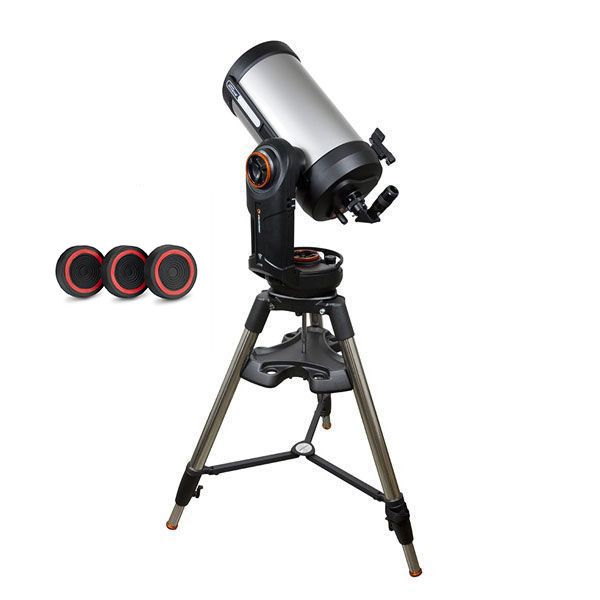

Celestron NexStar Evolution 9.25 Review: Balanced SCT for Visual and Casual Imaging
If you’re an intermediate to advanced amateur astronomer looking for a versatile, computerized telescope that balances aperture, portability, and features, the Celestron NexStar Evolution 9.25 is a tempting option. Positioned in the $2300–$2800 range, this Schmidt-Cassegrain telescope (SCT) aims to deliver strong visual performance with enough capability for casual astrophotography, all wrapped in a modern GoTo design with integrated Wi-Fi control and a built-in rechargeable battery. But does it strike the right balance for your observing style and imaging ambitions? This review dives deep into the Evolution 9.25’s strengths, compromises, and real-world usability to help you decide if it’s the right tool for your night sky adventures.
Quick Verdict
The Celestron NexStar Evolution 9.25 stands out as a well-rounded SCT offering a solid aperture-to-portability ratio and intuitive computerized controls. Its large 9.25″ mirror gathers ample light for detailed planetary views and bright deep-sky objects, while the Evolution mount’s integrated Wi-Fi and long-lasting battery simplify setup and operation. However, its alt-azimuth mount and f/10 focal ratio limit serious long-exposure astrophotography, and the scope’s weight and size make it less travel-friendly. Overall, it’s a compelling choice for intermediate observers focused mainly on visual astronomy and casual imaging without the complexity of equatorial mounts or specialized astro gear.
What This Product Does Well
The NexStar Evolution 9.25 excels in delivering a bright, sharp optical experience combined with modern convenience features that reflect thoughtful design improvements over earlier SCT models.
- Large 9.25″ Aperture: This aperture size is a sweet spot for many amateurs, providing roughly 1.3 times the light-gathering power of an 8″ SCT. This translates to more detailed views of planets, star clusters, and brighter nebulae—especially valuable at dark-sky sites.
- GoTo Computerized Mount with Integrated Wi-Fi: The Evolution mount integrates a reliable GoTo system controllable via Celestron’s SkySafari app or other compatible software, eliminating the need for hand controllers or additional cables. The built-in Wi-Fi hotspot streamlines star alignment and object targeting, making the setup smoother compared to older NexStar mounts.
- Built-in Lithium-Iron Phosphate Battery: The internal battery provides up to 10 hours of observing time on a single charge, sparing users from hauling external power packs or worrying about cables. This feature enhances portability and convenience for backyard or field sessions.
- Improved Mount Stability and Tracking: Compared to standard NexStar mounts, the Evolution’s mount offers enhanced tracking accuracy and smooth slewing, which benefits both visual observing and casual short-exposure astrophotography.
These elements combine to create a telescope package that feels modern and user-friendly while delivering optical performance that satisfies many intermediate astronomers’ demands.
The Compromises Buyers Need to Understand
Despite its strengths, the NexStar Evolution 9.25 involves notable tradeoffs that can influence whether it fits your astronomy goals and lifestyle.
- Weight and Portability Challenges: At nearly 30 pounds for the optical tube alone, plus the mount and tripod, the Evolution 9.25 is heavy and somewhat bulky. While manageable by a single person, it’s less portable than smaller SCTs or compact refractors. This can be a limiting factor for those prioritizing lightweight or travel-friendly setups.
- Alt-Azimuth Mount Limits Imaging Potential: The mount’s alt-azimuth design simplifies operation but inherently causes field rotation during long exposures. This makes it unsuitable for serious deep-sky astrophotography requiring precise tracking and long exposure times.
- F/10 Focal Ratio Restricts Wide-Field Imaging: The classic SCT focal ratio favors planetary and lunar observing but is slower for wide-field deep-sky imaging. Coupled with the mount’s limitations, this means casual astrophotography is possible, but ambitious imaging projects will demand additional equipment or different scope choices.
- Price Point Requires Justification: Priced between $2300 and $2800, the Evolution 9.25 sits in a mid-to-upper tier. Buyers need to assess whether the added aperture and features justify this investment over smaller Evolution models or other telescope types.
These compromises mean the NexStar Evolution 9.25 isn’t a perfect fit for everyone, especially if your priorities include ultra-portability or serious astrophotography.
Real-World Use Cases and Beginner Experience
In practical terms, the NexStar Evolution 9.25 shines during visual astronomy sessions where ease of use and aperture matter most. For example:
- Backyard Planetary and Lunar Observing: The large aperture and f/10 optics deliver crisp, high-contrast views of planets like Jupiter and Saturn, revealing cloud bands and ring details. The computerized GoTo mount quickly locates targets, letting users spend more time observing.
- Deep-Sky Observing at Dark Sites: When taken to darker skies, this scope can reveal rich details in star clusters, bright nebulae, and galaxies. The 9.25″ aperture balances light gathering with manageable setup times, making it suitable for weekend trips.
- Casual Astrophotography: Users report successful short-exposure imaging of bright objects like the Moon, planets, and some star clusters. The improved mount tracking and Wi-Fi control enhance the experience, although exposure length and sensor size remain limiting factors.
For beginners transitioning from smaller or manual telescopes, the Evolution’s computerized alignment and control system reduces the learning curve. However, the scope’s weight and somewhat complex setup might initially feel intimidating. Patience during initial assembly and alignment pays off with a rewarding observing experience.
Accessories such as a sturdy tripod, quality eyepieces, and optional focal reducers can further enhance the scope’s versatility, but these add to the overall investment and complexity.
Who Should Buy It
The NexStar Evolution 9.25 is a strong match for:
- Intermediate to Advanced Amateur Astronomers: Those who want a step up from smaller SCTs or manual scopes and appreciate a robust aperture with computerized convenience.
- Observers Prioritizing Visual Astronomy: Anyone focused on detailed planetary views, bright deep-sky objects, or regular backyard sessions will benefit from the scope’s optical performance and ease of targeting.
- Casual Astrophotographers: Users who want to dabble in astrophotography without investing in equatorial mounts or specialized optics will find the Evolution 9.25 capable for quick planetary shots and short exposures.
- Users Who Value Integrated Features: The built-in battery and Wi-Fi control system appeal to those wanting a clean, cable-free setup and longer uninterrupted observing sessions.
This telescope suits those who want a balance of aperture, smart features, and reasonable portability without pursuing deep-sky imaging as a primary goal.
Who Should Not Buy It
Potential buyers should reconsider if they fall into these categories:
- Travel-First Buyers: If you need a lightweight, ultra-portable scope for backpacking or frequent travel, the Evolution 9.25’s weight and size will be cumbersome.
- Serious Deep-Sky Astrophotographers: The alt-azimuth mount and f/10 optics limit imaging capability for long exposures. Such users should look towards EdgeHD models on equatorial mounts or specialized astro rigs.
- Beginners Seeking Simplicity: While easier than manual scopes, the setup and handling complexity might overwhelm absolute beginners who could benefit more from smaller, simpler telescopes or smart scopes.
- Budget-Conscious Buyers: At its price point, those prioritizing maximum aperture per dollar might find Dobsonian alternatives more attractive for pure visual use.
In these cases, alternatives like smaller Evolution series scopes, GoTo Dobsonians, or smart telescopes focused on imaging might be better fits.
Final Recommendation
The Celestron NexStar Evolution 9.25 represents a well-engineered midpoint in the SCT lineup, combining a large aperture with modern computerized controls and convenient integrated features. Its bright optics and reliable GoTo system make it an excellent choice for intermediate users who want to elevate their visual observing and explore casual astrophotography without the complexity of equatorial mounts or specialized imaging equipment.
However, buyers must accept the compromises of its weight, alt-azimuth mount, and classic f/10 focal ratio. If you prioritize portability or aspire to serious deep-sky imaging, this model may not meet your needs. Likewise, beginners who prefer ultra-simple setups or those on tight budgets might find better value or ease of use elsewhere.
For those who fit the profile—intermediate astronomers seeking a robust, feature-rich SCT with a balanced aperture and smart controls—the NexStar Evolution 9.25 offers a compelling, future-proof package that can serve as a long-term backyard companion and a gateway into casual astrophotography.
More Shopping Guide Articles
- Buying Guide: How to Choose the Right Computerized Telescope for Intermediate Astronomers
- Celestron NexStar Evolution 9.25 vs 8 EdgeHD: Which SCT Fits Your Astrophotography Needs?
- Celestron NexStar Evolution 9.25 vs Orion SkyQuest XT10g: GoTo SCT or Dobsonian for Visual Observing?
- Top 5 Alternatives to Celestron NexStar Evolution 9.25 for Intermediate Astronomers