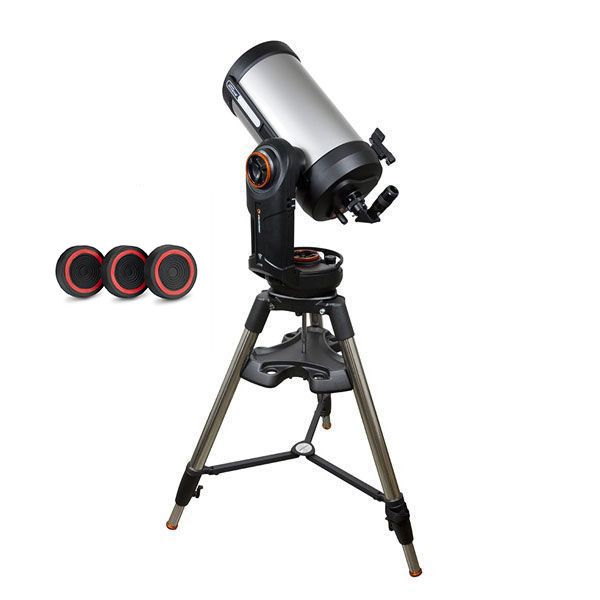

Celestron NexStar Evolution 9.25 vs 8 EdgeHD: Which SCT Fits Your Astrophotography Needs?
Choosing the right Schmidt-Cassegrain telescope (SCT) for astrophotography can be challenging, especially when comparing models within the same Evolution series. The Celestron NexStar Evolution 9.25 and the NexStar Evolution 8 EdgeHD both offer computerized mounts and premium optics but differ in key areas that impact imaging quality, portability, and overall user experience. This comparison focuses on helping intermediate to advanced astrophotographers understand the optical and performance tradeoffs to make an informed choice suited to their imaging goals.
Quick Verdict
The Celestron NexStar Evolution 9.25 offers a larger aperture and solid mount performance, making it better suited for users prioritizing light gathering and visual versatility with occasional casual imaging. In contrast, the NexStar Evolution 8 EdgeHD features specialized EdgeHD optics designed to deliver flatter fields and superior edge-to-edge image quality, positioning it as the stronger choice for serious astrophotographers focused on long-exposure deep sky imaging with large sensors. Portability and mount features are comparable, but optical corrections and imaging readiness are where the 8 EdgeHD stands out.
Key Differences at a Glance
- Optical Quality: 8 EdgeHD utilizes EdgeHD optics for flat, coma-free fields optimized for astrophotography; 9.25 has standard Schmidt-Cassegrain optics with minor field curvature.
- Aperture & Light Gathering: 9.25-inch aperture provides roughly 33% more light than the 8-inch, beneficial for visual brightness and resolution.
- Astrophotography Capability: 8 EdgeHD is tailored for imaging with better correction and compatibility with large sensors; 9.25 is more casual imaging-friendly.
- Portability & Weight: Both have similar mount systems and weight profiles; 9.25 is heavier and bulkier but manageable by one person.
- Mount Features: Both include GoTo computerized mounts with Wi-Fi control and long battery life, with no significant difference in tracking performance.
- Price: The 8 EdgeHD commands a premium price due to its enhanced optics and imaging focus, whereas the 9.25 offers more aperture per dollar.
Price and Value
The Celestron NexStar Evolution 9.25 typically ranges from $2300 to $2800, offering a substantial 9.25-inch aperture combined with a modern computerized mount, integrated Wi-Fi, and a built-in lithium-iron phosphate battery. This price point delivers strong value for users who want a versatile telescope that can handle visual observing and casual astrophotography without the complexity or cost of specialized optics.
Meanwhile, the 8 EdgeHD commands a higher price, reflecting its advanced EdgeHD optical design tailored specifically for astrophotographers demanding flat, coma-free images across large sensors. Although its aperture is smaller at 8 inches, the premium optics justify the cost for imaging enthusiasts seeking better star shapes and reduced field aberrations.
In practical terms, buyers prioritizing aperture size and general use will find the 9.25 delivers better value per inch of aperture. However, for those who place optical precision for imaging above aperture, the 8 EdgeHD’s price premium aligns with its specialized performance.
Performance and Practical Use
From an astrophotography standpoint, the 8 EdgeHD significantly outperforms the 9.25 due to its optical design. EdgeHD optics correct for coma and field curvature, resulting in sharper stars from center to edge—which is critical for astrophotographers using large-format cameras or performing mosaic imaging. This flat field reduces the need for corrective field flatteners or additional optics, simplifying setups and improving image quality.
In contrast, the 9.25 Evolution uses a classic Schmidt-Cassegrain optical design with an f/10 focal ratio. While excellent for visual use and casual planetary imaging, it exhibits more field curvature and coma, which can degrade star shapes at the edges during deep-sky imaging. This limits its appeal for users intending serious long-exposure astrophotography, especially with large sensors.
However, the 9.25’s larger aperture means it gathers roughly 33% more light than the 8-inch model, enhancing visual brightness and resolution for planetary and deep-sky targets. This makes it a solid performer for mixed visual and casual imaging use, particularly under dark skies.
- 8 EdgeHD: Superior for imaging with large sensors, excels at astrophotography requiring flat fields and minimal star distortion.
- 9.25 Evolution: Better suited for visual observers and casual astrophotographers who prioritize aperture and portability over optical perfection.
Ease of Setup / Ease of Use
Both telescopes share the same Evolution series computerized mount platform, making setup and operation comparable in user experience. Each includes integrated Wi-Fi, allowing wireless control via apps like SkySafari, and comes with a built-in rechargeable lithium-iron phosphate battery for extended use without external power.
Neither model features an equatorial mount, relying instead on an alt-azimuth GoTo system. While this simplifies setup and reduces weight, it limits long-exposure astrophotography potential due to field rotation, unless additional field derotation equipment is used. For many users, this is a practical tradeoff balancing ease of use and imaging capability.
Because of their similar mount systems, neither scope has a clear advantage in tracking accuracy or ease of alignment. Both require star alignment procedures typical of computerized alt-azimuth mounts.
In summary:
- Setup complexity and mount operation are effectively equal for both models.
- Casual astrophotographers will appreciate the integrated battery and wireless control on either option.
- Neither is ideal for serious deep-sky astrophotography without additional equipment due to alt-azimuth mount limitations.
Accessories / Feature Completeness
The 9.25 Evolution includes a robust package with GoTo computerized mount, integrated Wi-Fi, long-lasting built-in battery, and standard SCT accessories. Its large aperture opens possibilities for visual accessories such as high-quality eyepieces and planetary cameras. However, it does not include specialized astrophotography accessories out of the box.
The 8 EdgeHD shares the same mount and basic accessory set but benefits from a design that inherently supports astrophotography needs better. While it typically does not come bundled with field flatteners or reducers, its optics reduce the need for such add-ons, effectively increasing completeness for imaging applications.
For both models, buyers may consider adding:
- Focal reducers or field flatteners for faster imaging (especially for the 9.25).
- Dedicated astrophotography cameras and autoguiders.
- Additional eyepieces for visual use.
Neither telescope includes equatorial wedges or mounts, which would be necessary for extended astrophotography sessions but are sold separately.
Which Buyer Should Choose Which Option?
Choose the Celestron NexStar Evolution 9.25 if you:
- Prioritize a larger aperture for brighter visual views and more detailed planetary observations.
- Want an all-in-one solution for casual astrophotography combined with strong visual performance.
- Value integrated features like Wi-Fi control and built-in battery in a moderately portable package.
- Are willing to accept some optical compromises for imaging in exchange for aperture and versatility.
Choose the Celestron NexStar Evolution 8 EdgeHD if you:
- Focus primarily on astrophotography, especially with large sensors and demanding imaging targets.
- Need optics that provide flatter, coma-free fields for sharper star images across the frame.
- Are comfortable with a slightly smaller aperture in exchange for superior optical correction.
- Plan to invest in imaging accessories and possibly field flatteners to maximize image quality.
Both scopes suit intermediate to advanced users but serve distinct priorities. The 9.25 is a strong choice for users who want a “do-it-all” SCT with more light-gathering power, while the 8 EdgeHD is tailored for those who place astrophotography optical precision above aperture size.
Conclusion
Deciding between the Celestron NexStar Evolution 9.25 and the 8 EdgeHD ultimately hinges on your primary astrophotography goals and tolerance for tradeoffs. The 9.25’s larger aperture enhances visual brightness and resolution, making it a versatile telescope for observers who also want casual imaging capabilities. However, its standard SCT optics and alt-azimuth mount limit its suitability for serious long-exposure deep-sky astrophotography.
The 8 EdgeHD’s superior optical design offers clear advantages for astrophotographers demanding high-quality, coma-free images with large sensors, despite its smaller aperture. While it shares the same mount platform and ease of use as the 9.25, its imaging-optimized optics come at a higher price and reduced light gathering.
If your priority is visual observing with occasional casual imaging, the 9.25 Evolution provides a well-rounded package with good value and performance. Conversely, if astrophotography is your main focus and you want optics that minimize field aberrations without complex modifications, the 8 EdgeHD is the better fit despite the aperture sacrifice.
For buyers who plan to push the limits of imaging quality on a computerized SCT platform, the 8 EdgeHD stands out. For those seeking a larger aperture and simpler, multipurpose use with some imaging flexibility, the 9.25 remains a compelling option.
More Shopping Guide Articles
- Celestron NexStar Evolution 9.25 Review: Balanced SCT for Visual and Casual Imaging
- Buying Guide: How to Choose the Right Computerized Telescope for Intermediate Astronomers
- Celestron NexStar Evolution 9.25 vs Orion SkyQuest XT10g: GoTo SCT or Dobsonian for Visual Observing?
- Top 5 Alternatives to Celestron NexStar Evolution 9.25 for Intermediate Astronomers