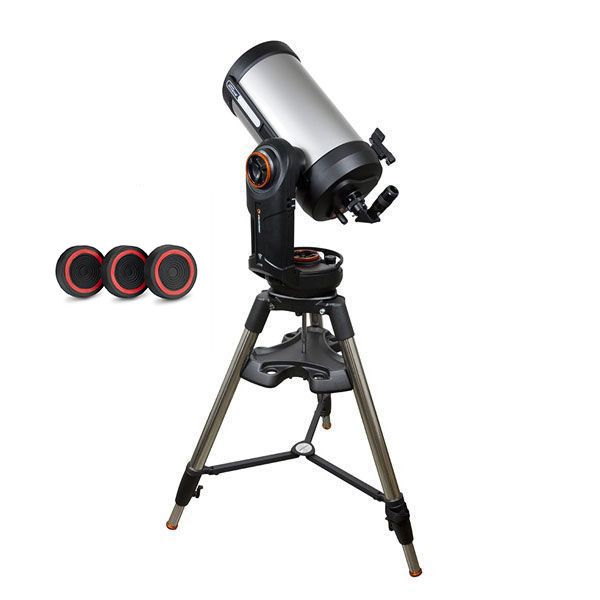

Celestron NexStar Evolution 9.25 vs Orion SkyQuest XT10g: GoTo SCT or Dobsonian for Visual Observing?
Choosing between the Celestron NexStar Evolution 9.25 and the Orion SkyQuest XT10g involves a fundamental decision about telescope design, use case, and priorities. Both offer computerized GoTo functionality, but one is a Schmidt-Cassegrain Telescope (SCT) and the other a Dobsonian reflector. This comparison focuses on visual astronomy, weighing aperture, portability, price, and ease of use to help you decide which approach fits your stargazing style and setup needs.
Quick verdict
The Celestron NexStar Evolution 9.25 delivers a compact, computerized SCT with a balanced aperture that suits intermediate to advanced users who want a versatile telescope for planetary and deep-sky observation with moderate portability and modern tech conveniences like integrated WiFi and a rechargeable battery.
The Orion SkyQuest XT10g GoTo Dobsonian offers a larger aperture and excellent value for visual observers focused on deep-sky performance but demands more space and is less portable. Its Dobsonian design prioritizes aperture and simplicity over compactness and advanced mount features.
Key differences at a glance
- Optical design: NexStar Evolution 9.25 uses Schmidt-Cassegrain optics with 9.25″ aperture and f/10 focal ratio; Orion XT10g is a 10″ Dobsonian reflector with f/4.7 focal ratio.
- Aperture & light gathering: Orion XT10g has a slightly larger aperture (10″ vs 9.25″), providing better light gathering for faint deep-sky objects.
- Mount and GoTo system: Both have computerized GoTo but the NexStar Evolution 9.25 has a fully motorized alt-azimuth mount with integrated WiFi and long battery life; the XT10g uses a Dobsonian base with GoTo but no integrated battery.
- Portability: NexStar Evolution 9.25 is heavy but more compact and manageable by one person; XT10g is bulkier, heavier, and less convenient to transport.
- Price and value: XT10g typically offers more aperture and value for visual observation at a lower price point; NexStar Evolution 9.25 costs more but adds computerized convenience and portability.
Price and value
The Orion SkyQuest XT10g GoTo Dobsonian generally comes at a significantly lower price than the Celestron NexStar Evolution 9.25, especially when factoring in aperture size. For buyers prioritizing aperture-to-dollar ratio for visual deep-sky observing, the XT10g presents a compelling value proposition. Its 10″ mirror gathers approximately 20% more light than the 9.25″ SCT, enhancing views of faint nebulae and galaxies.
Conversely, the NexStar Evolution 9.25 is priced in the $2300–$2800 range, reflecting its computerized mount, integrated lithium battery, and WiFi control. This offers convenience and features that many users find worthwhile, but at a premium compared to the Dobsonian. Buyers should weigh whether these conveniences justify the higher cost relative to the aperture gain from the XT10g.
- Orion XT10g: Higher aperture per dollar, excellent for budget-conscious deep sky visual observers.
- Celestron NexStar Evolution 9.25: Higher price but includes advanced computerized mount, rechargeable battery, and portability benefits.
Performance and practical use
Performance in visual observing depends heavily on aperture, optical quality, and focal ratio. The Orion XT10g’s 10″ f/4.7 Dobsonian optics provide a wide, bright field ideal for deep-sky objects such as nebulae and star clusters. Its fast focal ratio enables lower magnification views with wider fields, which many observers prefer for extended objects.
The NexStar Evolution 9.25 SCT, with its 9.25″ aperture and longer f/10 focal ratio, excels in delivering high-contrast views of planets, the Moon, and smaller deep-sky targets requiring higher magnification. Its closed tube design reduces stray light and protects optics, which benefits contrast and image sharpness on planets.
However, the SCT’s longer focal length means narrower fields of view and potentially less brightness for large extended objects compared to the Dobsonian. Also, the Evolution 9.25’s computerized mount includes precise tracking and pointing, making it easier to locate and follow objects once aligned.
- Orion XT10g: Larger aperture and faster optics favor bright, wide-field deep-sky observation.
- Celestron NexStar Evolution 9.25: Sharper planetary views, better contrast, and precise GoTo tracking for targeted objects.
Ease of setup / ease of use
Both telescopes offer computerized GoTo functionality, but their setup differs substantially due to design. The NexStar Evolution 9.25 comes with an integrated mount, built-in rechargeable battery, and WiFi control. This allows quick setup without external power, and users can control the scope wirelessly via apps like SkySafari. The mount’s computerized alignment routines are straightforward for those comfortable with digital astronomy gear.
In contrast, the Orion XT10g is a Dobsonian with a GoTo base that requires external power (typically via AC or battery pack) and manual assembly of the optical tube and base. While the GoTo system aids in object location, the bulkier tube and base require more physical effort to transport and set up. Also, the Dobsonian mount lacks the integrated wireless control and battery convenience of the Evolution 9.25.
Beginners may find the NexStar Evolution 9.25’s integrated system easier if they are comfortable with app-based control, while those favoring a simpler mechanical design may prefer the XT10g despite its heavier setup.
- Celestron NexStar Evolution 9.25: Integrated power and WiFi, streamlined digital alignment, better for users comfortable with technology.
- Orion XT10g: Requires external power and more manual setup; bulkier components may slow setup time.
Accessories / feature completeness
The NexStar Evolution 9.25 includes multiple features aimed at enhancing user convenience and observing sessions. Key accessories and features include:
- Integrated lithium-iron phosphate rechargeable battery providing long sessions without external power.
- WiFi module built into the mount for wireless control via smartphone or tablet.
- GoTo computerized mount with precise tracking and pointing accuracy.
- Star diagonal and a quality 25mm eyepiece included, offering a good starting point for planetary and deep-sky viewing.
The Orion SkyQuest XT10g comes with a 2″ Crayford focuser, a 25mm Plossl eyepiece, and a red dot finder. It also includes a GoTo computerized Dobsonian base. However, it lacks an integrated battery, and users must provide external power. The XT10g’s simple design means fewer integrated tech features but a robust optical system.
Choosing between the two means deciding if you value integrated convenience and wireless control (NexStar Evolution 9.25) or prioritize aperture and straightforward optics with fewer electronics (XT10g).
Which buyer should choose which option
Choose the Celestron NexStar Evolution 9.25 if you:
- Are an intermediate or advanced visual observer wanting a versatile, computerized telescope with integrated power and wireless control.
- Prefer a compact, manageable telescope that balances aperture and portability for trips to dark sites or backyard sessions.
- Value precise GoTo tracking and easy alignment via smartphone apps.
- Want a scope optimized for planetary observation and bright deep-sky targets with high contrast.
Choose the Orion SkyQuest XT10g GoTo Dobsonian if you:
- Prioritize maximum aperture and light gathering for deep-sky visual observation on a budget.
- Are comfortable with a bulkier, less portable setup and willing to manage external power sources.
- Prefer the simplicity and ruggedness of a Dobsonian mount with computerized pointing.
- Focus almost exclusively on visual astronomy and want the most aperture per dollar.
Both telescopes are poor fits for serious astrophotography due to their alt-azimuth mounts and design limitations. For astrophotography, consider dedicated equatorial mounts or specialized optical designs.
Conclusion
The decision between the Celestron NexStar Evolution 9.25 and the Orion SkyQuest XT10g GoTo Dobsonian comes down to a tradeoff between computerized convenience and aperture size. The NexStar Evolution 9.25 offers a modern, integrated SCT experience with features designed for ease of use, portability, and versatile visual performance. It is well suited for observers who want a robust computerized system that can be used comfortably in a variety of locations without cumbersome setup.
In contrast, the Orion XT10g delivers more aperture and light gathering for the money, making it a strong choice for dedicated visual observers focused on deep-sky objects who do not mind the larger size and manual power management. Its Dobsonian design maximizes aperture in a simple, durable form but sacrifices portability and integrated tech features.
Ultimately, if your priority is a computerized, portable, and versatile telescope with good all-around performance, the Celestron NexStar Evolution 9.25 is the better fit. If you want the best aperture for visual observing at a lower cost and are willing to accommodate a bulkier setup, the Orion SkyQuest XT10g provides excellent value and deep-sky capability.
More Shopping Guide Articles
- Celestron NexStar Evolution 9.25 Review: Balanced SCT for Visual and Casual Imaging
- Buying Guide: How to Choose the Right Computerized Telescope for Intermediate Astronomers
- Celestron NexStar Evolution 9.25 vs 8 EdgeHD: Which SCT Fits Your Astrophotography Needs?
- Top 5 Alternatives to Celestron NexStar Evolution 9.25 for Intermediate Astronomers