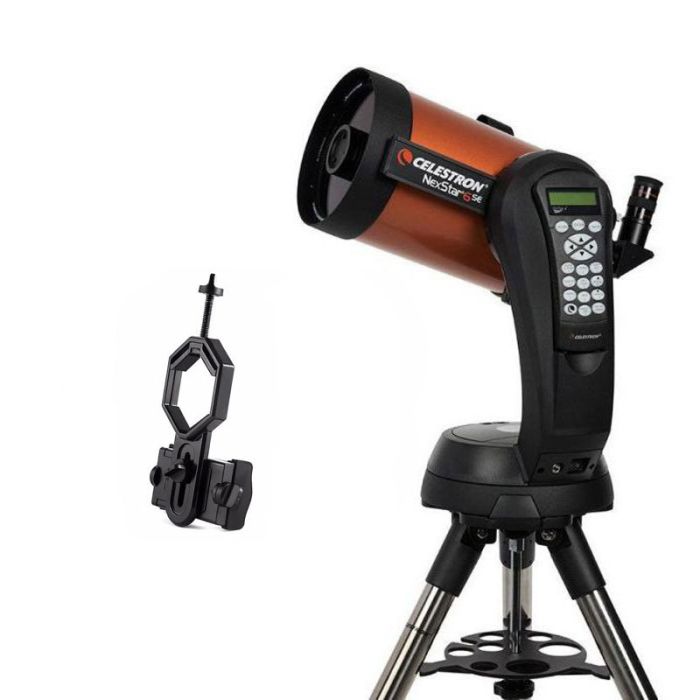

Top 5 Alternatives to Celestron NexStar 6SE: Dobsonian and Astrophotography Setups Compared
If you’re exploring telescope options beyond the popular Celestron NexStar 6SE, understanding where it stands in the broader market is key to making the right choice. The NexStar 6SE is a mid-range computerized Schmidt-Cassegrain telescope known for its automated GoTo mount, solid 6-inch aperture, and beginner-friendly features. However, depending on your priorities—whether it’s aperture size, astrophotography ambitions, ease of use, or portability—there are distinct alternatives worth considering. This guide breaks down five top alternatives, spanning manual Dobsonian telescopes and specialized astrophotography setups, to help you pinpoint the best fit for your observing or imaging goals.
Where the Celestron NexStar 6SE Fits in the Telescope Market
The NexStar 6SE occupies a mid-level niche catering primarily to beginner and intermediate users who want a balance of automation and optical quality without a steep learning curve. Priced around $400 to $650, it offers a computerized GoTo mount with access to over 40,000 objects, combined with Celestron’s XLT high-transmission coatings that enhance brightness and contrast. This makes it an excellent choice for casual visual observation of the Moon, planets, and some brighter deep-sky objects.
Its alt-azimuth mount design simplifies setup and navigation, while the included tripod keeps the overall weight under 30 pounds, offering moderate portability for backyard use. The package often comes with accessories like camera adapters, which support beginner astrophotography, particularly of planets and lunar features. However, the 6-inch aperture limits deep-sky performance compared to larger manual scopes, and the mount’s alt-azimuth tracking is not ideal for extended deep-sky imaging sessions.
In summary, the NexStar 6SE targets users seeking a straightforward, automated telescope with decent aperture and beginner-friendly tech. Yet, those wanting larger apertures for visual astronomy or more dedicated astrophotography capabilities might find its specifications limiting or seek different designs entirely.
Comparison on Key Buying Factors
Aperture and Optical Performance
Aperture size directly impacts light-gathering power and resolution. The NexStar 6SE’s 6-inch aperture is versatile but modest compared to manual Dobsonian telescopes, which typically offer larger apertures (8 to 12 inches or more) at similar or lower price points. This difference translates into brighter and more detailed views of faint deep-sky objects with Dobsonians, but without computerized object location.
Dedicated astrophotography refractors paired with equatorial mounts usually have smaller apertures—often 80mm to 130mm—but their optics are optimized for flat fields and low chromatic aberration, essential for sharp imaging. These setups prioritize optical quality for long-exposure imaging rather than raw aperture size.
Mount Type and Stability
The NexStar 6SE features an alt-azimuth GoTo mount that automates object finding and tracking, ideal for beginners. However, alt-azimuth mounts inherently limit astrophotography potential, especially for deep-sky objects, due to field rotation during tracking.
Manual Dobsonian telescopes use simple alt-azimuth mounts without tracking. While sturdy and stable, they require the user to manually locate and follow objects, which can be challenging for beginners but rewarding for learning the night sky.
Astrophotography setups use equatorial mounts, which align with Earth’s rotation axis allowing precise tracking necessary for long exposures. These mounts are heavier, more complex, and more expensive but essential for serious deep-sky imaging.
Ease of Use and Learning Curve
The NexStar 6SE’s computerized interface and SkyAlign technology significantly reduce the learning curve for newcomers, enabling users to quickly locate thousands of celestial objects with minimal manual navigation.
Dobsonian telescopes trade automation for simplicity and aperture, requiring users to learn star-hopping and sky navigation. This manual approach demands more time investment but builds foundational astronomy skills.
Astrophotography setups require advanced knowledge of polar alignment, mount balancing, and camera control software. Setup and operation are more complex and time-consuming, making them better suited to experienced users or those committed to learning.
Portability and Setup Complexity
The NexStar 6SE offers moderate portability with a compact optical tube and integrated tripod, suitable for backyard use and occasional transport. Its setup is straightforward, typically taking under 15 minutes.
Dobsonian telescopes, especially those with large apertures, tend to be bulky and heavy. They are less convenient for frequent transport but excel as stationary backyard scopes.
Dedicated astrophotography rigs are the least portable due to heavy equatorial mounts, counterweights, and multiple accessories. Setup can take 30 minutes or more, requiring patience and precision.
Price and Value Proposition
- NexStar 6SE: Mid-range pricing with solid automation and optics, ideal for casual observers who want convenience.
- Dobsonian Telescopes (Apertura, Sky-Watcher): Comparable or lower cost for larger apertures, offering excellent value for visual astronomy but no automation.
- Dedicated Astrophotography Setups: Higher cost reflecting specialized optics and mounts needed for advanced imaging.
Price-sensitive buyers focused on visual performance may prefer Dobsonians, while those prioritizing astrophotography require higher budgets and readiness to invest time in complex setups. The NexStar 6SE strikes a middle ground between these extremes.
Best Fit Scenarios for Each Alternative
Dobsonian Telescopes (Apertura, Sky-Watcher)
- Users seeking maximum aperture for visual observation: Ideal for deep-sky enthusiasts wanting large, bright images of nebulae, star clusters, and galaxies.
- Beginners eager to learn the night sky manually: Great for those who want to develop hands-on skills in star-hopping and celestial navigation.
- Observers on a budget prioritizing aperture over automation: Dobsonians deliver exceptional value for the price in raw optical performance.
Dedicated Astrophotography Setups with Equatorial Mounts and Refractors
- Serious deep-sky astrophotographers: Users aiming for long-exposure images of faint galaxies and nebulae benefit from precise tracking and optimized optics.
- Experienced hobbyists with time to invest: Those comfortable with complex polar alignment, camera control, and post-processing workflows.
- Users with dedicated space and budget: These setups require stable platforms and financial commitment but deliver superior imaging results.
Computerized Schmidt-Cassegrain Telescopes like NexStar 6SE
- Beginners wanting an easy-to-use, automated telescope: The NexStar 6SE reduces barriers to observing with its computerized GoTo and alignment technology.
- Casual backyard observers: Those valuing portability and quick setup for planetary and lunar viewing.
- Entry-level planetary astrophotographers: Suitable for imaging bright objects with modest exposure times.
Less Ideal Scenarios for Each Alternative
Dobsonian Telescopes
- Users seeking automated object tracking: Manual operation means no GoTo or tracking capabilities, making astrophotography and long viewing sessions more challenging.
- Travel-focused buyers: Large size and weight reduce portability and convenience for field trips or remote observing.
- Astrophotographers wanting deep-sky imaging: Without equatorial tracking, Dobsonians are not suited for long-exposure astrophotography.
Dedicated Astrophotography Setups
- Beginners unfamiliar with complex setups: The learning curve and setup time can be discouraging without prior experience.
- Users prioritizing casual visual observation: These rigs are overkill for simple planetary viewing and less portable.
- Budget-conscious buyers: Higher costs for mounts, optics, cameras, and accessories may exceed available funds.
Computerized Schmidt-Cassegrain Telescopes (NexStar 6SE and Similar)
- Observers needing larger apertures for deep-sky viewing: Limited by 6-inch aperture and smaller than many Dobsonians.
- Astrophotographers requiring long-exposure deep-sky imaging: Alt-azimuth mount limits tracking precision and exposure duration.
- Buyers who prioritize ultra-portability: While compact for its class, it’s less travel-friendly than smaller Maksutov-Cassegrain or refractor scopes.
Final Shortlist Recommendation
Choosing the right telescope alternative to the Celestron NexStar 6SE hinges on your primary goals and willingness to manage tradeoffs between aperture, automation, complexity, and portability.
For Visual Observers Focused on Aperture and Value: Manual Dobsonian telescopes from Apertura or Sky-Watcher are compelling. They deliver significantly larger apertures at comparable or lower prices, ideal for deep-sky observation under dark skies. The tradeoff is manual operation and reduced portability. If you enjoy learning the night sky hands-on and want the brightest views for your budget, a Dobsonian is the best alternative.
For Dedicated Astrophotographers Seeking Imaging Excellence: Specialized refractors paired with equatorial mounts are unmatched for deep-sky imaging. These setups offer superior tracking and optimized optics but require investment in time, money, and learning. If astrophotography is your main focus beyond planetary targets and you’re ready for advanced equipment, this path outperforms the NexStar 6SE by a wide margin.
For Beginners and Casual Users Valuing Automation and Ease: The NexStar 6SE remains a solid choice, balancing moderate
More Shopping Guide Articles
- Celestron NexStar 6SE Review: Best Mid-Range Computerized Telescope for Beginners
- Buying Guide: How to Choose the Right Computerized Telescope Like the NexStar 6SE
- Celestron NexStar 6SE vs Meade ETX Series: Which Computerized Telescope Wins?
- Celestron NexStar 6SE vs Sky-Watcher Maksutov-Cassegrain: Portability and Optics Compared